Sabalenka eyes fourth straight Wuhan triumph

Back from a restorative Greek escape, the world No. 1 arrives in her unbreakable Wuhan stronghold, where a perfect record meets the thrill of chasing WTA immortality amid a high-stakes draw.
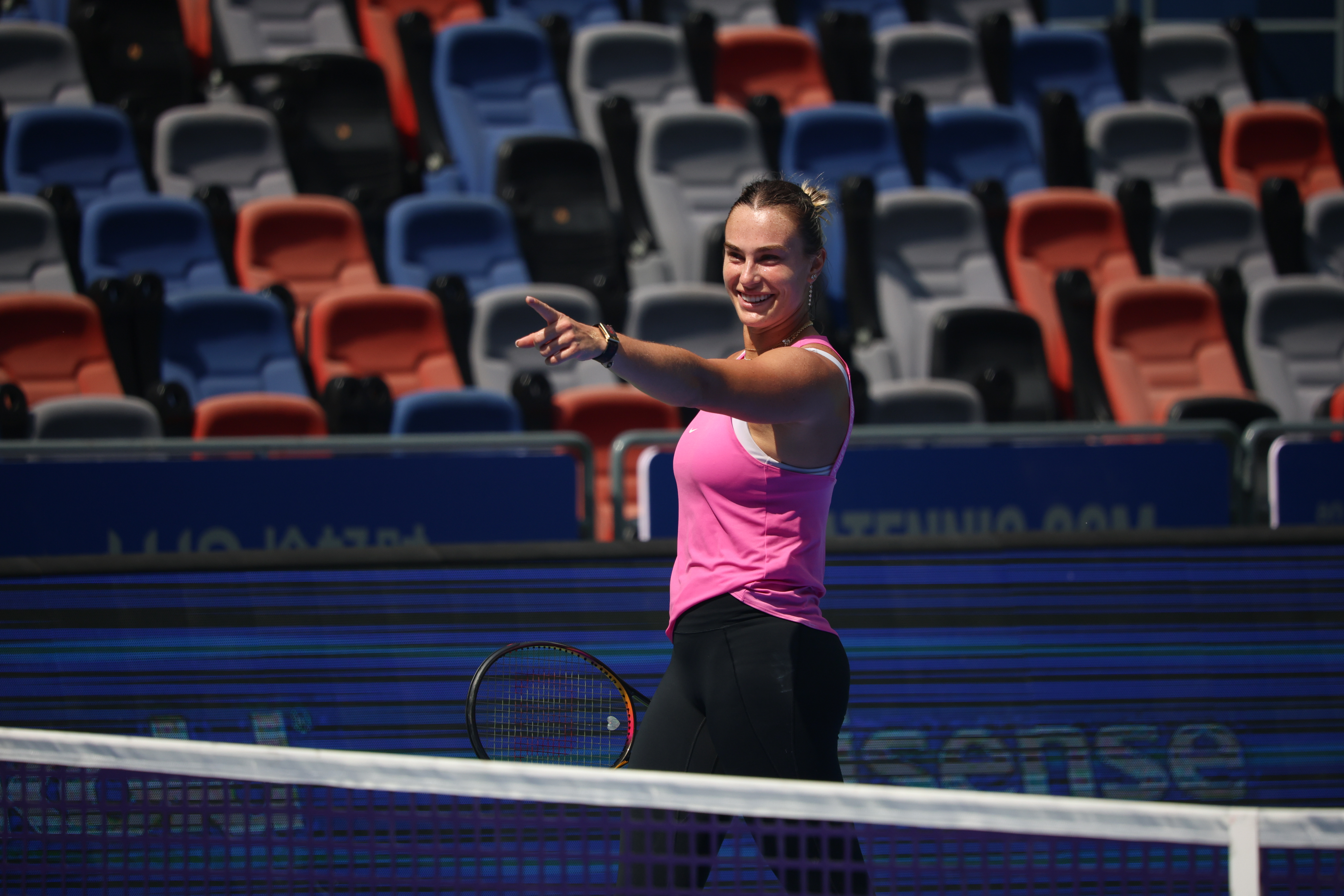
Aryna Sabalenka steps onto the sun-baked hard courts of the Optics Valley International Tennis Centre, the humid Wuhan breeze carrying echoes of her flawless legacy here. The Mediterranean pines of her recent getaway dissolve into the Yangtze’s steady flow, as the tournament’s energy pulses with her return. After her second US Open title, this fortress by the river calls her to extend an unbeaten run that blends raw power with unshakeable poise.
Recovery sharpens her tournament edge
Sabalenka’s deliberate break followed a minor injury from New York, leading her to skip Beijing and embrace a sunlit reset in Greece. Her Instagram glimpses captured team gym sessions amid coastal serenity, a nod to balancing the tour’s demands. This pause refined her preparation, ensuring her explosive groundstrokes regain rhythm on these medium-fast surfaces.
She arrived revitalized, her body attuned to the week’s intensity. On Sunday, Sabalenka shared her readiness with reporters.
“I feel good,” she said. “I just didn’t want to rush my body into the tournament. So I think we made the right decision to take extra time for recovery and for the preparation. Physically, I feel ready to go.”
With 56 wins, four titles, and over $12 million in earnings this year, she commands a nearly 2,500-point lead over Iga Swiatek in the rankings and a 1,500-point edge in the race to the WTA Finals. Three major finals and four semifinals mark her season, yet this interlude tempers the mental weight of sustained excellence. As the eighth Wuhan Open unfolds in its revived one-week format—drawing eight top-10 players into a 64-player field—her focus turns to channeling that renewal into every baseline exchange.
Unbeaten streak ignites historic resolve
Sabalenka’s Wuhan dominance stands unmatched: 17 victories, zero defeats, with titles in 2018, 2019, and last year. Her recent finals here toppled Coco Gauff and Zheng Qinwen, both later WTA Finals contenders in Riyadh. This run rivals Serena Williams’ 21 straight wins in Rome from 2012 to 2019, a benchmark of rare control on a single stage.
At age 20, she claimed the youngest Wuhan crown, now poised for a feat unseen in WTA 1000 history—no woman has won four consecutive editions in their 17-year span. Precedents across the tour include Monica Seles at the Canadian Open from 1995 to 1998, Venus Williams in New Haven from 1999 to 2002, and Caroline Wozniacki there from 2008 to 2011. Sabalenka absorbs the city’s essence to stay grounded, mastering fried rice on Saturday and admiring pink lavender fields en route to the venue, moments that fuel her mental edge amid the hype.
The DecoTurf courts suit her power game, amplifying inside-out forehands that stretch opponents wide and down-the-line backhands that pierce defenses. She varies with underspin slices to disrupt high-bouncing topspin, setting up her 1–2 punch from a serve that often kicks wide to the deuce side. As the crowd’s anticipation builds from Monday’s start, her streak transforms pressure into propulsion, each practice rally a step toward etching her name deeper into the event’s lore.
Loaded draw tests her supremacy
The tournament, founded in 2014 and back after a four-year hiatus, heightens stakes beyond the trophy—three WTA Finals spots remain in play. Jessica Pegula and Mirra Andreeva, early Beijing exits to Sonay Kartal, lead the chase, while Elena Rybakina or Jasmine Paolini could claim the eighth based on their runs here. By late October, Sabalenka will hit 52 weeks at No. 1, her season’s momentum a psychological anchor against the field’s depth.
Her opener awaits the winner of Rebecca Sramkova and Anna Kalinskaya, a first match in over a month where deep returns will neutralize serves and force errors. Projections place Rybakina in the quarters, her flat groundstrokes demanding Sabalenka’s return aggression to counter that booming delivery. The semifinals could bring Amanda Anisimova, whose inside-in forehands call for crosscourt variety and slice to break tempo, while Swiatek shadows the final, her movement forcing shorter points via net approaches or wide serves.
Naomi Osaka and Linda Noskova add intrigue to her quarter, Osaka’s baseline firepower echoing her own in intense rallies, Noskova’s upset flair a wildcard threat. On these courts, where tempo favors her aggressive patterns, Sabalenka blends tactics with the crowd’s rising roar, turning potential clashes into opportunities. In her opening presser, she weighed the four-peat with honest drive.
“Am I confident about winning for the fourth time?” she mused. “I don’t know about that, but I can assure you that I will do my best, and hopefully I can claim this beautiful title again.”
As lights illuminate the centre court, her resolve sharpens, the psychological pull of history met by tactical fire—poised to thunder through the draw and claim another chapter in Wuhan’s unyielding saga.