Muchova’s Doha Triumph Blends Craft and Resilience

Karolina Muchova ended a six-year title drought at the Qatar TotalEnergies Open, using variation and mental steel to outmaneuver power hitters and claim her second WTA trophy in a gripping final.
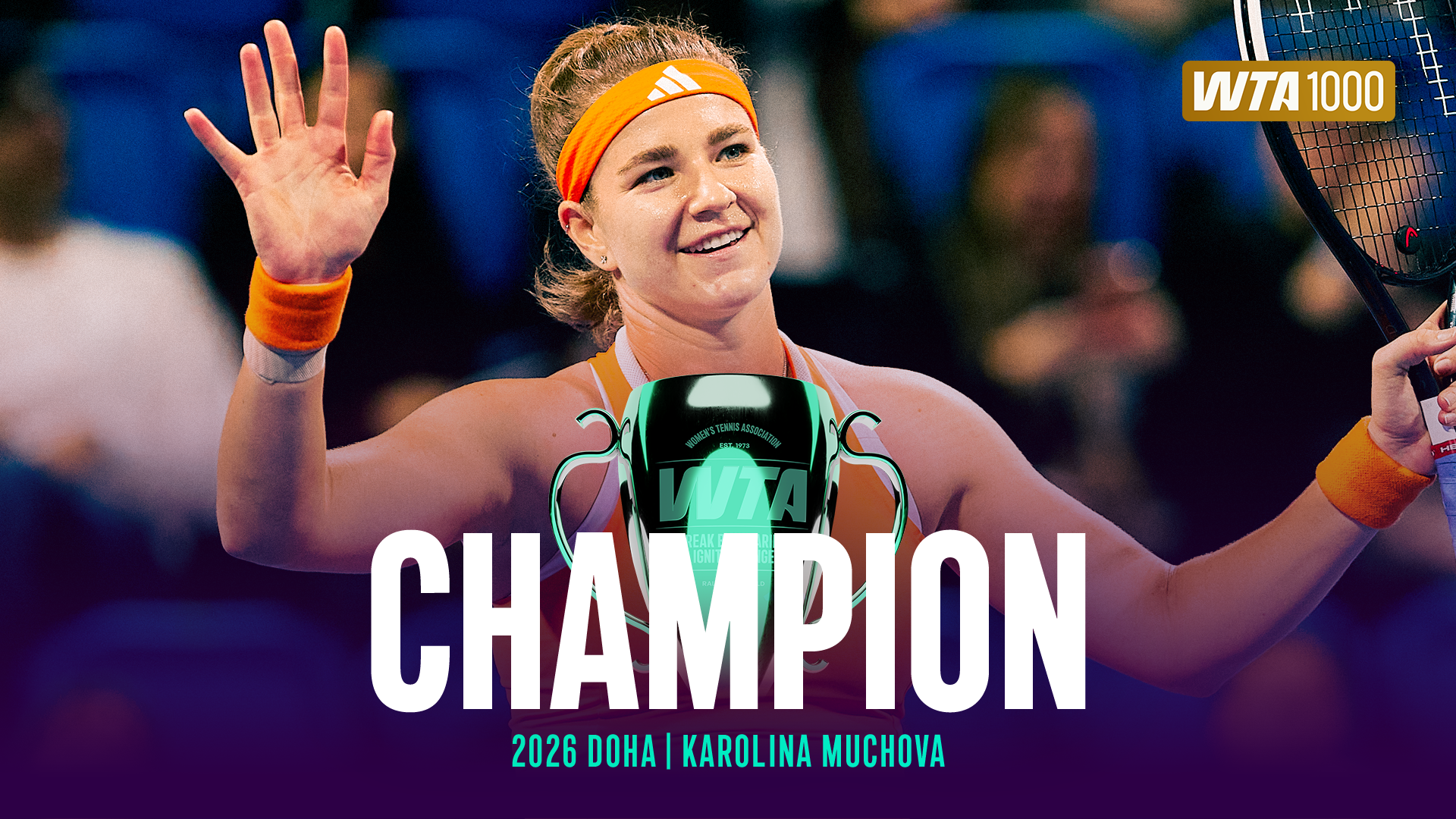
In the thick Doha air, Karolina Muchova sealed her second WTA title with a 6-4, 7-5 victory over Victoria Mboko at the Qatar TotalEnergies Open. At 29, after wrist surgery in February 2024 kept her sidelined for nearly 10 months, she turned a week of elite matchups into a showcase of subtlety over strength. Her path echoed the promise of her 2019 Seoul win at age 23, when ranked No. 36, she dropped just two games against Magda Linette—yet injuries had stretched that joy to an eternity in tennis years.
Muchova’s body had betrayed her repeatedly: thigh issues, ankle problems, and that wrist setback derailing momentum. She entered her 27th WTA 1000 main draw with the highest winning percentage among non-champions, holding a 3-2 edge over Aryna Sabalenka and 2-1 over Elena Rybakina, but a 0-4 finals record lingered like unfinished business. Against powerhouses in Doha, she leaned on disguise and touch, reminding the tour of her all-court threat on these medium-paced hard courts.
“A little bit overwhelmed, to be honest,” Muchova told reporters afterward. “Everything is happening so fast. I’m incredibly happy that I was able to win a title. I would say I nearly forgot the winning feeling because it’s been really quite a while.”
Breaking the finals shadow
The weight of those lost finals—to Iga Swiatek, Zheng Qinwen, and Coco Gauff twice—pressed on her entering the decider. Muchova admitted the nerves hit hard, but she channeled belief, patiently probing for openings while serving out key games with steady topspin. In the semifinal against Jelena Ostapenko, she disrupted the Latvian’s flat inside-in winners with slice backhands that skidded low, forcing errors in prolonged rallies and converting five of seven break points.
Mboko, the 19-year-old with 13 match wins leading the tour, brought explosive pace to her second WTA 1000 final after Montreal last summer. Muchova countered as a human changeup, mixing heavy topspin forehands crosscourt to stretch the court before dropping underspin shots that died at the teen’s feet. The second set’s tension built through deuce holds, Muchova’s one–two patterns—serve into a sharp return—turning defense into sudden offense as the crowd’s murmurs swelled.
“I thought about it,” she said of her finals history. “I’m feeling in the past that I was playing great tennis and I can take the win as well, but I never did. I played against quality opponents that had a great day on that day. For sure, it stuck with me, and I was nervous. But I was just trying to give myself a shot—if I lose, I lose but let’s try to go for it.”
Health unlocks peak form
At 29, Muchova feels her best tennis emerging, her body holding firm after daily matches in Doha’s grind. Unlike past peaks cut short by injury, she now builds continuity, carrying preparation from preseason tweaks into event after event. “I’ve had some continuity,” she reflected. “In the past, when I’ve felt really great on the court, something stopped me—mostly injury-wise. So I think now the difference is I’m building my game, I feel better and I can still go home and do preparation and go to another tournament and keep the consistency.”
Her quarterfinal against Rybakina highlighted this edge: facing flat bombs, Muchova varied serve placement, kicking to the body then slicing wide, winning 68 percent of first-serve points. She pulled the Kazakh off the baseline with crosscourt angles, finishing points down-the-line when opportunities arose, the grippy acrylic surface letting her underspin skid unpredictably. Mboko later noted the completeness: “She has a pretty all-around game, a pretty complete game. She can play offense, defense, and she can slice and change things up, so it really caught me off guard.”
Post-match elation hit as she smiled at her team, tilting her head back with eyes closed—a mix of pride and relief after the preseason work paid off. “It’s a big win for me and my team as well, my coaches,” she shared. “I was just very excited for myself and for them that we were able to work on some things at the start of the year and the preseason. That I am and they are able to lift the trophy after a while and get the win. I was just very proud of myself and happy for all of us—it was just a mix of everything.”
WTATennis.com writer Cole Bambini caught up with Muchova after her victory, capturing her unguarded thoughts on health’s fragility. “I don’t even want to talk about it, you know? I need to knock on the wood. I still try to take very good care of my body, which I did in the past. It’s a hard-court sport, the intensity of the sport is so tough. The competition is so tough that sometimes injuries happen. I was maybe a little bit more unlucky than the others, but I’m just trying to be as best prepared as I can. I feel good. I don’t know when I could say that the last time after playing a 1000 in a week, every day a match at the end of the tournament and I’m fine to continue.”
An incredible week for Karolina Muchova 💚#QatarTotalEnergiesOpen pic.twitter.com/Ai2qkesBLQ
— wta (@WTA) February 14, 2026
Momentum eyes Slam horizons
Muchova’s gap between titles—six years and five months—stands among the widest, longer only than Sorana Cirstea’s 13 seasons or Viktorija Golubic’s eight, yet her 12 match wins trail just Mboko’s tour-leading 13. The teen’s run, her sixth WTA 1000 main draw yielding this final, sets her for Top 10 entry Monday alongside Mirra Andreeva—the first such teen pair in 17 years, since Victoria Azarenka and Caroline Wozniacki. “She has this boom,” Muchova said succinctly of Mboko’s power, but her own variation tipped the scales in the clutch.
Craving fries, mayo, and a cheeseburger after the win, she stayed loyal to team plans for a recommended spot, her thoughts already drifting forward. “When was the last time you felt this proud of yourself? It’s hard to say, but yeah, today is for sure going to be at the top,” she added. Even pre-match nerves over her finals record melted into resolve as she served it out, a feeling she called “really nice.”
Dubai awaits tomorrow, where she’ll assess her body before committing, extending the Middle East swing. A Grand Slam remains the dream, after reaching the Roland Garros final in 2023 and semis at the 2021 Australian Open, 2023 and 2024 US Open. “To win a [Grand] Slam was always a dream of mine,” she said. “I don’t think you need to win a 1000 to be able to win a Slam. I got once to the final, three times to the semifinals. It’s so hard—everyone is playing so great. You need a lot of things to happen in those two weeks, you need to carry the good tennis with you all the time to be able to lift the trophy there. For sure, it’s a dream of mine and I’ll be working for it.”
The tour has evolved since 2019, with half the year-end Top 10 retired—Ashleigh Barty, Simona Halep, Petra Kvitova, Serena Williams, Kiki Bertens—and mothers like Naomi Osaka, Elina Svitolina, and Belinda Bencic returning transformed. Muchova’s resilience cuts through, her craft on Doha’s courts a reminder that touch can topple pace when health and mind align. As she heads to the next hard-court test, this breakthrough fuels a season of unbroken stride, Slams squarely in sight.