Zhu Lin’s notebook steadies her comeback fire

Amid Beijing’s crisp autumn light, a wildcard’s ritual of handwritten cues transforms doubt into dominance, bridging injury scars with on-court clarity.
Full screen
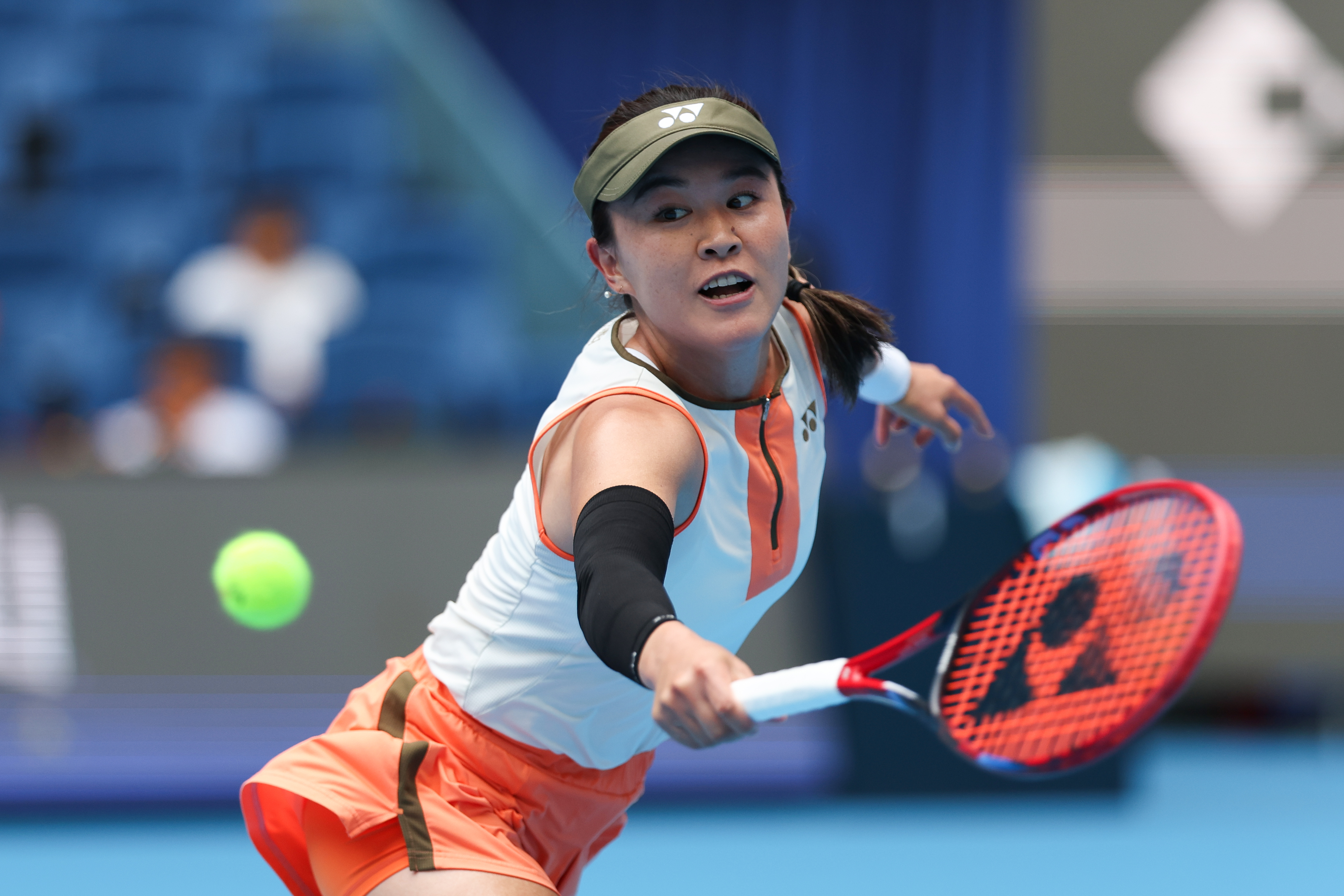
Under the golden hues of an October afternoon at the China Open, Zhu Lin glided across the hard courts, dismantling Moyuka Uchijima with surgical precision in a 6-1, 6-3 rout. The sparse crowd stirred as she claimed her first main-draw win in Beijing since 2014, a milestone echoing her debut breakthrough after outlasting Anastasia Pavlyuchenkova. Between points, she retreated to her chair, unfolding a modest notebook whose pages held the quiet power to refocus her amid the match’s mounting intensity. This ritual, simple yet profound, revealed itself as the heartbeat of her resurgence, turning personal whispers into tactical resolve on a surface that rewards unflinching rhythm.
She reflected on slipping into rhythm swiftly, the first set a blur of early breaks exploiting second-serve frailties, though she knew the fight would intensify. “I really get into the game very quick,” Lin added. “I was able to find my rhythm. Yeah, the first set went well and quick. I know it’s not going to be like this. She start to play well in the second set. We had a lot of rallies. I had to really focus on my service game and really focus on the decisions on every point. I’m really happy with the result.”
Notebook anchors mid-match resolve
The 31-year-old, ranked No. 253, carries this notebook to every tournament, its contents a mosaic of strategy and solace penned by her husband. Opponent statistics blend with mental recalibration tips and uplifting messages, consulted during changeovers to pierce the fog of competition. On Beijing’s Plexicushion, where balls skid and demand immediate aggression, these cues proved vital against a familiar rival from her practice club, allowing Lin to anticipate slices pulling wide and underspin lobs that test depth. As the second set unfolded with lengthening rallies, her glances to the pages sharpened decisions, fortifying service games with varied placements that set up one–two combinations—crosscourt forehands inside-out to stretch the court. The air thickened with tension, each hold a testament to reclaimed focus, the crowd’s murmurs building as she navigated Uchijima’s deepening groundstrokes.“It has some scribbles from my husband,” Lin told reporters afterward. “Opponents’ stats. Some encouraging words from my husband. How to adjust my mentality. Just some encouraging messages. If I’m not clear enough, I will just look at the notebook to look at these reminders so I can be focused in the match. Yes, it’s all from my husband.”