Riyadh lights up WTA Finals’ forgiving evolution

Desert nights in Saudi Arabia host a championship where top players chase glory through resilience, not ruthlessness, as the round-robin format turns early setbacks into semifinal surges amid echoing baseline rallies.
Under Riyadh’s piercing floodlights at King Saud University Indoor Hall, the WTA Finals ignite on a Saturday evening, the court’s hard surface humming with the promise of decisive strokes. Eight elite women, their seasons etched in sweat from clay’s deliberate slides to grass’s fleeting volleys, now face a format that tempers the terror of instant elimination with the grit of sustained combat. The air thickens with crowd murmurs—local voices blending with global accents—as serves crack sharply, marking a shift from the 1994 knockout’s cold finality to today’s round-robin rhythm, where consistency carves paths through tension.
Navratilova’s one-and-done exit lingers
In 1994, the single-elimination draw with 16 players crushed dreams in a single afternoon, as Martina Navratilova learned during her retirement match at Madison Square Garden. She fell to Gabriela Sabatini in the opening round, her prediction of the Argentine’s triumph proving spot-on when Sabatini unseeded stormed to the final, defeating Lindsay Davenport 6-3, 6-2, 6-4 in a best-of-five showdown that stretched endurance on the faster New York hard courts. The era’s $3.7 million purse divided among 32 players yielded Sabatini $250,000 for her victory—a sum that now equals what singles alternates earn just for attendance, while top competitors claim $335,000 for qualifying and $350,000 per group win.
“It was a single elimination draw with 16 players,” Navratilova said recently from her home in south Florida. “I lost to Gabby [Sabatini] in the first round -- and that was my retirement. I said, `If she keeps playing like this, she’ll win the whole thing.’ And she did.”
That abrupt end underscored the old format’s brutality, where a probing slice backhand or mistimed inside-out forehand could silence a career’s crescendo, leaving no space for tactical recalibration amid the arena’s roar.
Muguruza reveals round-robin’s mental edge
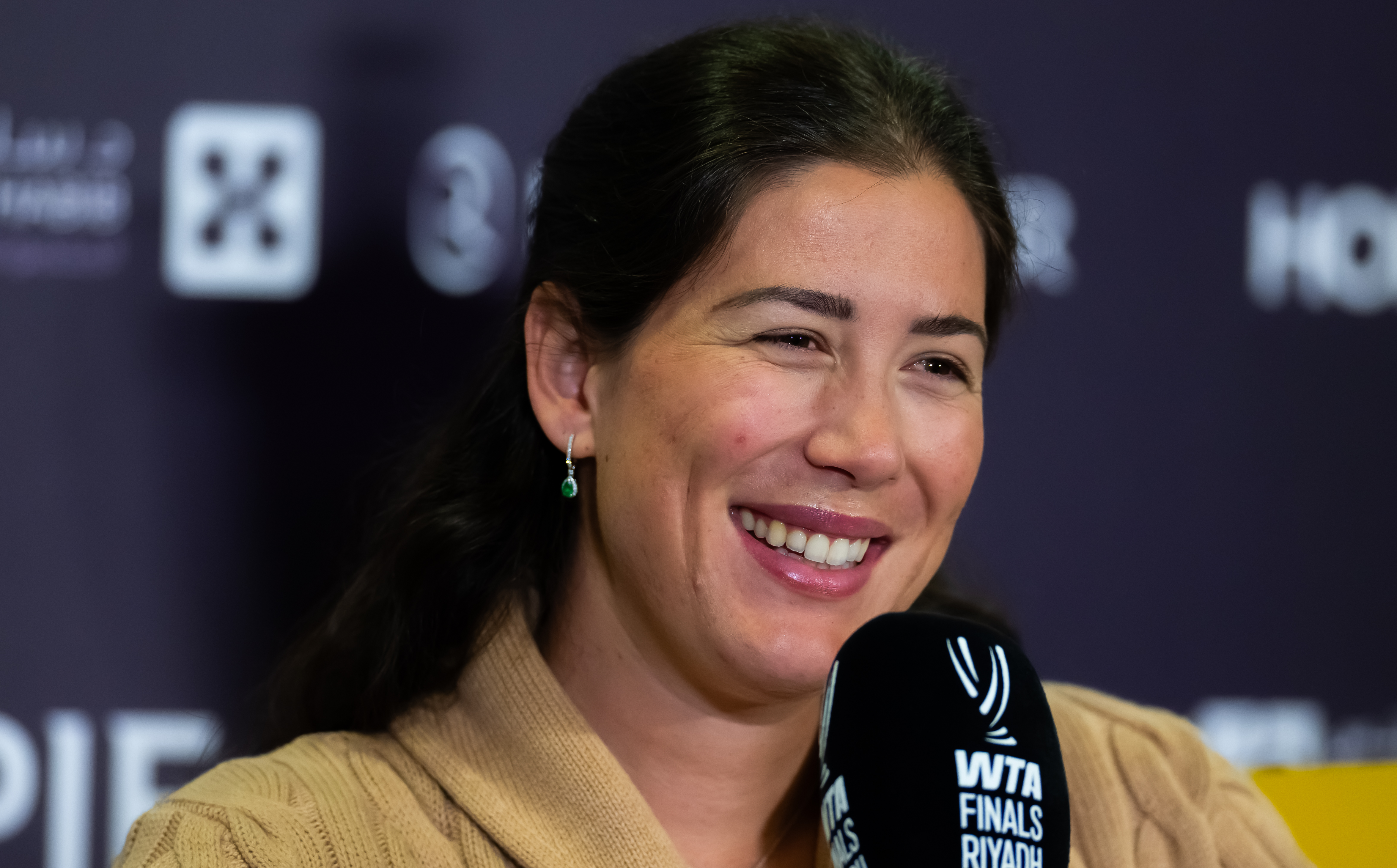
Garbiñe Muguruza, who claimed the singles title four years ago in Guadalajara before ascending to tournament director, dissects the current setup’s psychological demands from her vantage in Riyadh. The round-robin divides the top eight into two groups, each player facing the others once to fuel semifinal hopes, allowing adjustments like deepening crosscourt returns to counter heavy topspin or varying one–two punch rhythms against slice defenses on the indoor hard’s true bounce. WTA Finals: Groups detail these pairings, setting tactical puzzles where early losses don’t doom campaigns, echoing Muguruza’s own path through a mid-tournament defeat resolved by points math.
She stresses the unrelenting focus required, with rest days consumed by scouting rivals’ down-the-line weapons or surface-specific patterns honed across the tour’s clay-to-hard transitions. This structure injects resilience into the pressure cooker, transforming potential despair into calculated rebounds as the crowd’s energy swells with each prolonged rally.
“It’s mentally very tough because you know there is not one day that you can even relax a little bit,” Muguruza said Friday. “If it’s not the day of the match, the day in between you already need to prepare and know that now I’m playing against this other player, all the achievements they’ve done. It’s mentally tough knowing that every single match you have to be on your 100 percent or at least 80 percent. The round-robin format, this is something so interesting. It gives you that opportunity to still win even if you lose the match. It happened to me. When I won Guadalajara, I lost a match. I was like, `Oh, man, am I still going to make it?’ I did because of the points, the math that you have to do.”
Aryna Sabalenka, in her fifth singles outing, embodies this format’s tease after 2-1 group records across the past three years, only to falter in two semifinals and the 2022 final against Caroline Garcia in Fort Worth. She recounts overthinking those stages, where third matches dragged with hesitant inside-in attempts instead of bold crosscourt drives, her power muted by arithmetic distractions amid the venue’s vibrating cheers. WTA Finals: Scores track these shifts, highlighting how she now aims to erase the math, treating each clash as vital to unleash full aggression on the Riyadh hard.
“Honestly,” Sabalenka said, “I think I don’t know the answer. I think before I was thinking too much about the round-robin matches. I was just focusing. I would win couple matches, then really tricky for me to play full in the third one. I think the goal is just to completely forget about round robin and just play like a tournament. Every match matters, and you have to go and fight and not waste your energy of thinking, counting, doing this math situation.”
Second chances fuel dramatic advances
Navratilova’s pre-round-robin reign remains unmatched, with eight titles from 1978 to 1986 across 10 events, including both that split year from scheduling tweaks, outshining Serena Williams and Steffi Graf’s five apiece in the winner-take-all grind. Revived in 2003, the current model splits eight into groups for round-robin play, demanding readiness from the opener while permitting two losses to still snag semifinal berths—or two wins to miss if head-to-heads sour—against Top 10 foes on the consistent indoor surface. She praises this balance as fitting for the fifth major’s payday allure, where fatigue from a year’s tactical evolutions meets the season’s end, promising recovery in early November’s quiet aftermath.
History validates the drama: WTA Finals: History logs how three players since 2003 reached semifinals after dropping their first two—Venus Williams as 2009 finalist, Agnieszka Radwanska as 2015 champion, and Dominika Cibulkova as 2016 victor—each flipping scripts through net-rushing pivots or underspin disruptions that broke opponents’ baseline tempos. These arcs highlight the format’s human core, where mental resets amid Riyadh’s surging crowd turn vulnerability into velocity, as serves echo and rallies build toward knockout clarity.
“It’s a great way to go,” Navratilova said. “You have to be ready from the first round. The format is unforgiving and forgiving at the same time. It’s possible to lose two matches and still get to the semifinals. You can also win two matches and not advance. You need to beat top players, but you can squeak through with one win. It gives you some leeway, but at the same time you’ve got to beat a Top 10 player. Everybody’s in the same boat. This is the fifth major, and it’s a nice little payday. Playing the last tournament of the year, no matter how tired you are, you see the end of the road. You leave it all hanging out. It’s early November, so you have some time to put your feet up, take a vacation and recover.”
As groups unfold, players who master these dualities—blending aggressive inside-out winners with probing down-the-line slices—will channel the season’s scars into triumph, the lights fading on a champion who thrives in imperfection’s embrace.