Sabalenka’s blueprint for sustained No. 1 dominance

In Riyadh’s charged WTA Finals, Aryna Sabalenka has turned raw power into a refined edge, clinching back-to-back year-end No. 1 rankings through tactical evolution and unyielding focus amid the season’s closing pressures.
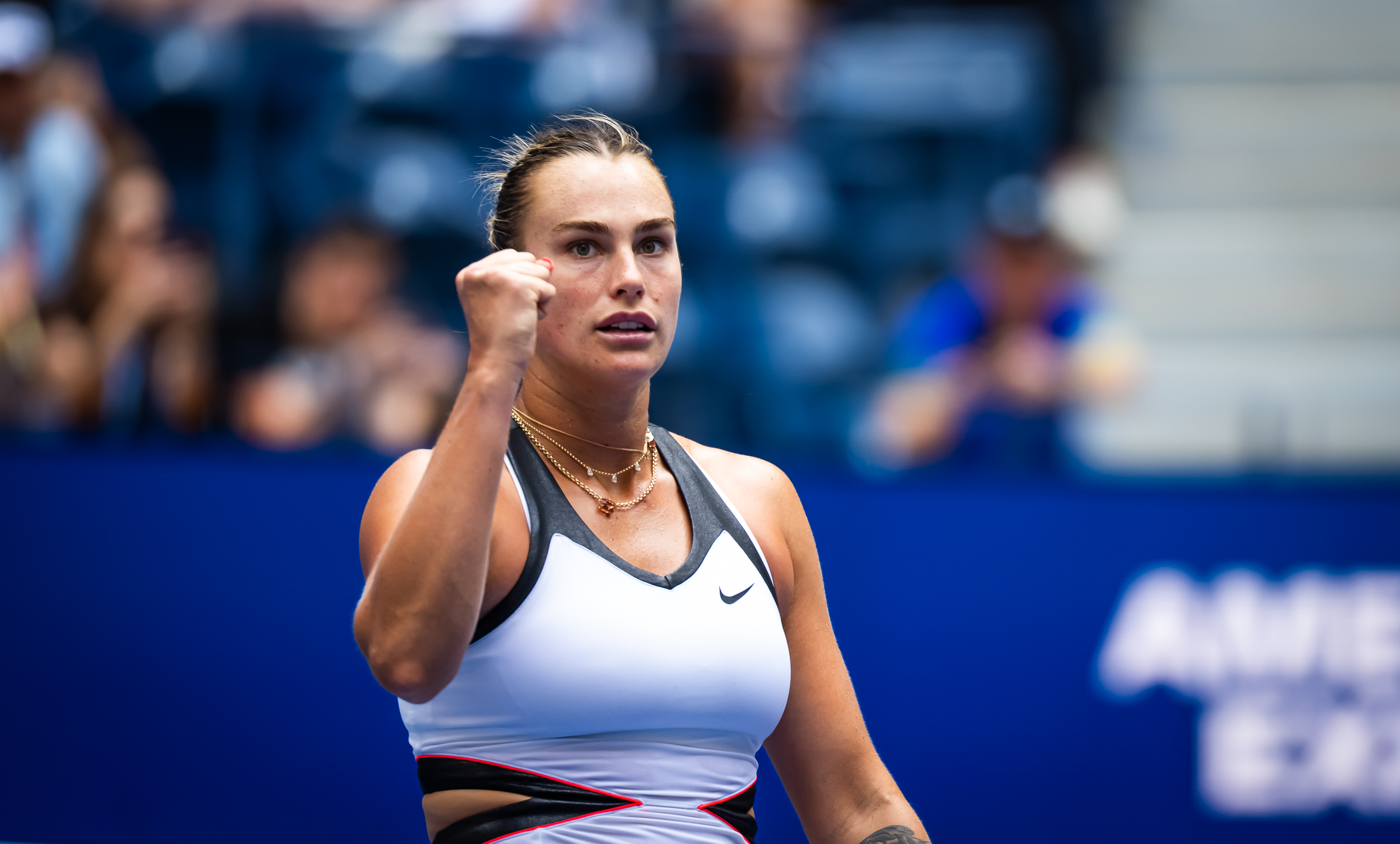
In the intense glow of Riyadh’s indoor arenas, where the WTA Finals capture the tour’s final throbs, Aryna Sabalenka emerges as a redefined force. Her journey this year, from early Grand Slam heartbreaks to a commanding rankings lock, showcases a game that now pairs explosive serves with a steely mental grip. The Belarusian star’s second straight year-end No. 1 finish, announced amid the tournament’s rhythm, underscores her shift from volatile talent to enduring champion.
Power fused with match-long focus
Chris Evert, the 18-time Grand Slam winner, took a beat before pinpointing what elevates Sabalenka during a recent chat from her Boca Raton academy. That serve unleashes points outright or ignites one–two combinations that pin foes deep, blending raw velocity with pinpoint placement across surfaces. What stands out, Evert added, is the lock-in she brings to every exchange, channeling aggression into consistent crosscourt drives and inside-out forehands that wear down opponents without unraveling.
This fusion has transformed her baseline dominance; on clay, she varies topspin depth to extend rallies, while hard courts amplify her flat backhand slices for disruption. Early finals losses—to Madison Keys in Melbourne and Coco Gauff in Paris—exposed vulnerabilities, yet those setbacks honed her recovery, turning probing crosscourt patterns into decisive winners by mid-season. Her evolution keeps rivals guessing, as that initial power now sustains through grueling three-setters.
“Power,” she finally said the other day from the Evert Tennis Academy in Boca Raton, Florida. “I just think she unleashes power better than anyone. Sabalenka wins a lot of free points on her serve -- it’s so good, right off the bat or plus one. What I see is how she’s really locked into her matches. It’s incredible, really. Sabalenka has added that focus and consistency to the power of her game. That’s why she’s No. 1.”
Legacy embraced amid rising stakes
The Chris Evert Trophy, marking the WTA’s first No. 1 from 50 years back, now symbolizes Sabalenka’s back-to-back triumphs, a milestone that hit during the Finals’ buzz. She spoke to reporters the day prior, marveling at her own consistency—a far cry from doubts five years ago—crediting off-court discipline for this steadiness. Her path mirrors elite trails: first to enter the WTA Finals as top seed for three-plus years since Steffi Graf’s four from 1993-1996, and only the fourth since 1972, joining Evert, Martina Navratilova, and Graf.
Jason Stacy, her performance coach, watched her soak up the pressure on Saturday, noting how it fuels rather than fatigues her vibrant personality. Anton Dubrov, the tactical coach, highlighted her fearless response to the spotlight, a drive to claim a spot in history that others will admire. In 2026, she eyes a third consecutive year-end No. 1, aligning with Serena Williams and Ashleigh Barty as the century’s third such force, her inside-in approaches and down-the-line passes ready to etch deeper marks.
Sabalenka told reporters on Friday how this achievement validates her grind, a quiet affirmation that propels her forward without complacency. Stacy elaborated that her joy in the process turns legacy into an energizing pursuit, one where poise under fire becomes her signature. Dubrov reinforced this boldness, as she steps into the glare declaring her readiness to lead.
“It means a lot,” Sabalenka told reporters on Friday. “It just tells how consistent I am as a player, which is crazy to think. If you go back like five years ago, if someone would tell me I’ll be that consistent, I would be shocked. It just tells me that the hard work pays off. I really hope that I will just keep doing what I’m doing.”
“She’s living it, she’s loving it,” her performance coach Jason Stacy said on Saturday. “She gets a lot of enjoyment out of this. It’s partly personality, but it also energizes her. I think having that legacy, this wanting people to look back at her, look up to her, saying, `Look how she carried herself, how she held up to this,’ … pretty cool.”
Said Sabalenka’s tactical coach Anton Dubrov, “This kind of attention, I can say, she’s like `Yeah, I can do it. I want to show people I can be here.’ She’s not afraid or scared to show up. “Talking about her legacy, she’s saying, `Yeah, this is me. I want to be someone everyone’s going to look for.’ ”
Strategic rests sustain the edge
Martina Navratilova credits Sabalenka’s selective scheduling for her freshness, a savvy move that flips the rankings chase to her advantage. Skipping Wimbledon last year with a shoulder not at 100 percent primed her for the late-season surge, while bypassing Beijing post-US Open victory this year preserved her punch on hard courts. These breaks, backed by a wide points cushion, let her return sharper, her serve’s low trajectory and follow-up underspin backhands disrupting rhythm where others fatigue.
Sunday’s round-robin against Jasmine Paolini in the Stefanie Graf Group hits another mark: her 500th Hologic WTA Tour match, excluding team events, with a 364-135 record at .729. Paolini’s speed calls for varied serves to jam returns, blending flat power with slice to open angles on the indoor hard. Navratilova noted how such pacing—choosing spots amid ample wins—keeps her ahead, fresher than pursuers locked in fuller slates, her one–two setups crisp in the deciders.
Entering 2026, Sabalenka ties Caroline Wozniacki’s 71 weeks at No. 1 for 11th all-time, targeting Lindsay Davenport’s 98 for 10th, her total built on rebounds from those opening Grand Slam finals. She reflected on the season’s start as a proving ground, where openness to tweaks—like enhanced footwork for clay crosscourts and patient rally-building—fueled her pride. In Riyadh’s roaring confines, where aces cut through tension and crowds swell with each point, her arc points to deeper runs, a blueprint for mastery that beckons historic depths ahead.
“She could have played Wimbledon last year, but her shoulder wasn’t 100 percent,” Navratilova said. “That set her up for the backside of the season. This year, after winning the US Open, she didn’t play Beijing. When you win enough, it gives you a lot of freedom to choose your spots and take those breaks. She’s not going to lose the No. 1 ranking when you have that much of a cushion. It gives you that rest and you’re fresher than the other guys who are chasing her. That’s smart to pace herself.”
“It’s all about how you recover after tough losses, how open you are to improvement and to learn something new,” Sabalenka said. “When I look back in the season, I am super proud because I had tough experience at the beginning, but I never stopped working hard, I never stopped trying my best.”