Swiatek’s bold evolution claims new ground

From a crushing clay defeat to an unprecedented grass conquest, Iga Swiatek’s tactical risks and mental steel have forged a season of breakthroughs, priming her for a defining WTA Finals run.
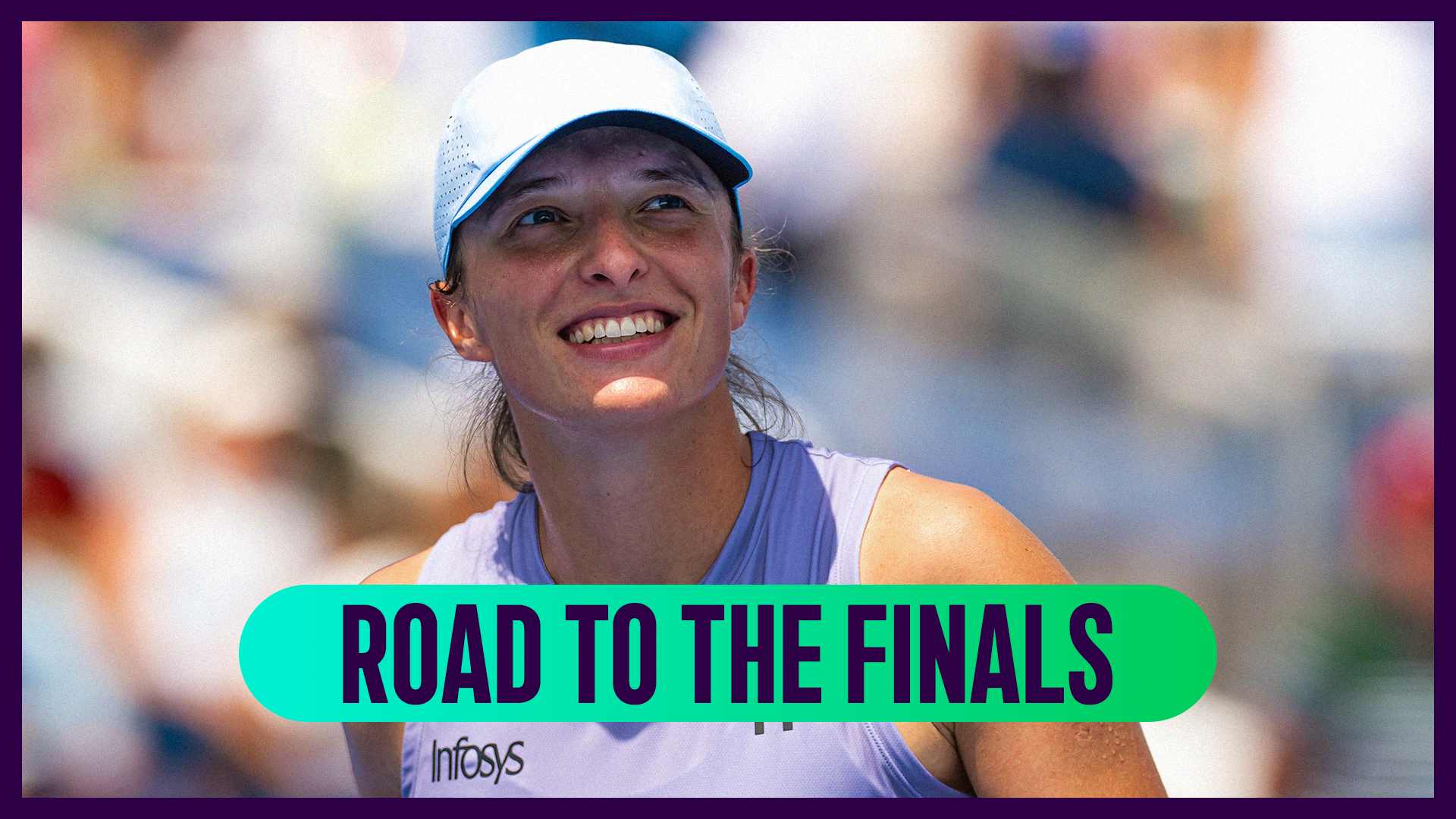
Iga Swiatek stepped onto the Roland Garros courts as the unchallenged queen of clay, eyeing a fourth straight title and her fifth major overall. But Aryna Sabalenka’s gritty three-set semifinal victory upended that path, leaving the 24-year-old Pole to confront a season packed with unfamiliar challenges and the weight of proving her game transcended red dirt. What unfolded was a masterclass in adaptation, as she sharpened her weapons and embraced risk, turning vulnerability into a versatile arsenal that now eyes Riyadh’s stage.
Grass challenges spark tactical fire
Swiatek’s detour to Bad Homburg for the second time in three years exposed her 15-8 grass record, a tally that masked struggles against the surface’s skidding bounces. She battled to the final, where Jessica Pegula edged her out, but those matches ignited a shift toward quicker, flatter strokes—inside-out forehands slicing angles wide, crosscourt backhands keeping points brief. Drawing from Rafael Nadal’s playbook, she pumped up her serve’s pace and flattened her signature forehand, creating one–two patterns that disrupted returns and forced early errors, all while the tournament’s humid air thickened the tension on those outdoor lawns.
This grass immersion built her confidence for Wimbledon, where the stakes hummed through the Centre Court stands. Dropping just one set over seven matches, she imposed her will with penetrating down-the-line winners and aggressive first-strike tennis, the crowd’s murmurs giving way to roars as her evolution took hold.
“I was really going for it. I just needed to be brave with my decisions on the court. The years before I tried to play more of my clay-court game. I’d still spin the ball as much as possible, which didn’t really do a lot because the effect was it just bounced higher, and opponents were playing from the top. This year I decided that I’m just going to use my intuition more, just react to what the grass brings me. I think this was the best decision. I was more aggressive in the first points of the rally and that puts a lot of pressure on my opponents.” -- Swiatek after her Wimbledon final
Wimbledon mastery unlocks historic path
Nothing foreshadowed the dominance Swiatek unleashed at the All England Club, culminating in a 6-0, 6-0 final dismantling of Amanda Anisimova that left the sunlit crowd in hushed awe. Her heavier serve kicked up awkwardly on the slick turf, setting up inside-in forehands that pinned the American deep, while crosscourt exchanges built unrelenting pressure without the heavy spin that once faltered on grass. This victory, the first complete shutout in 114 women’s finals there, crowned her as the second-youngest player this century to secure majors on hard courts, clay, and grass, following only Serena Williams in that rare company.
With six Grand Slam singles titles, she now eclipses Maria Sharapova and Martina Hingis in the record books, trailing just Venus Williams among active players. That London breakthrough, as explored in the series opener Monday, Oct. 20: Road to the WTA Finals: How Sabalenka has set the standard in 2025, reframed her rivalry with the world number one, easing the shadow of constant comparisons and fueling a psychological surge into the hard-court season.
Hard-court consistency builds finals momentum
Post-Wimbledon, Swiatek flanked a US Open quarterfinal with titles in Cincinnati and Seoul, racking up 14 wins in 15 matches that highlighted her refined tactics on faster surfaces. Her serve, now clocking fiercer speeds under coach Wim Fissette’s guidance, anchored longer rallies, often teeing up down-the-line backhands or inside-out forehands to exploit gaps against power baselines. This haul—a Grand Slam at Wimbledon, a 1000 in Cincinnati, a 500 in Seoul—lifted her 2025 ledger to 61-15 across three trophies, a testament to sustained fire amid a grueling calendar.
A year prior, she skipped the Asian swing and ceded the top ranking; now, fortified at number two, these adjustments position her to chip away at Sabalenka’s lead. Greg Garber notes her steadier form makes Riyadh pivotal, a platform to assert dominance without the top-spot pressure. Brad Kallet adds that surpassing those historical benchmarks in London has elevated her trajectory, with her WTA Finals history—group exits in 2021 and 2024, a 2022 semifinal loss, and the 2023 Cancun crown over Pegula—setting up a shot at redemption. As the Saudi lights flicker on, Swiatek arrives with versatility as her sharpest blade, ready to etch another chapter in a career defying limits.