Paolini channels grit into Riyadh pursuit

Jasmine Paolini arrives in Riyadh battle-hardened from a season of near-misses and triumphs, her dual prowess in singles and doubles setting the stage for a deeper run at the WTA Finals.
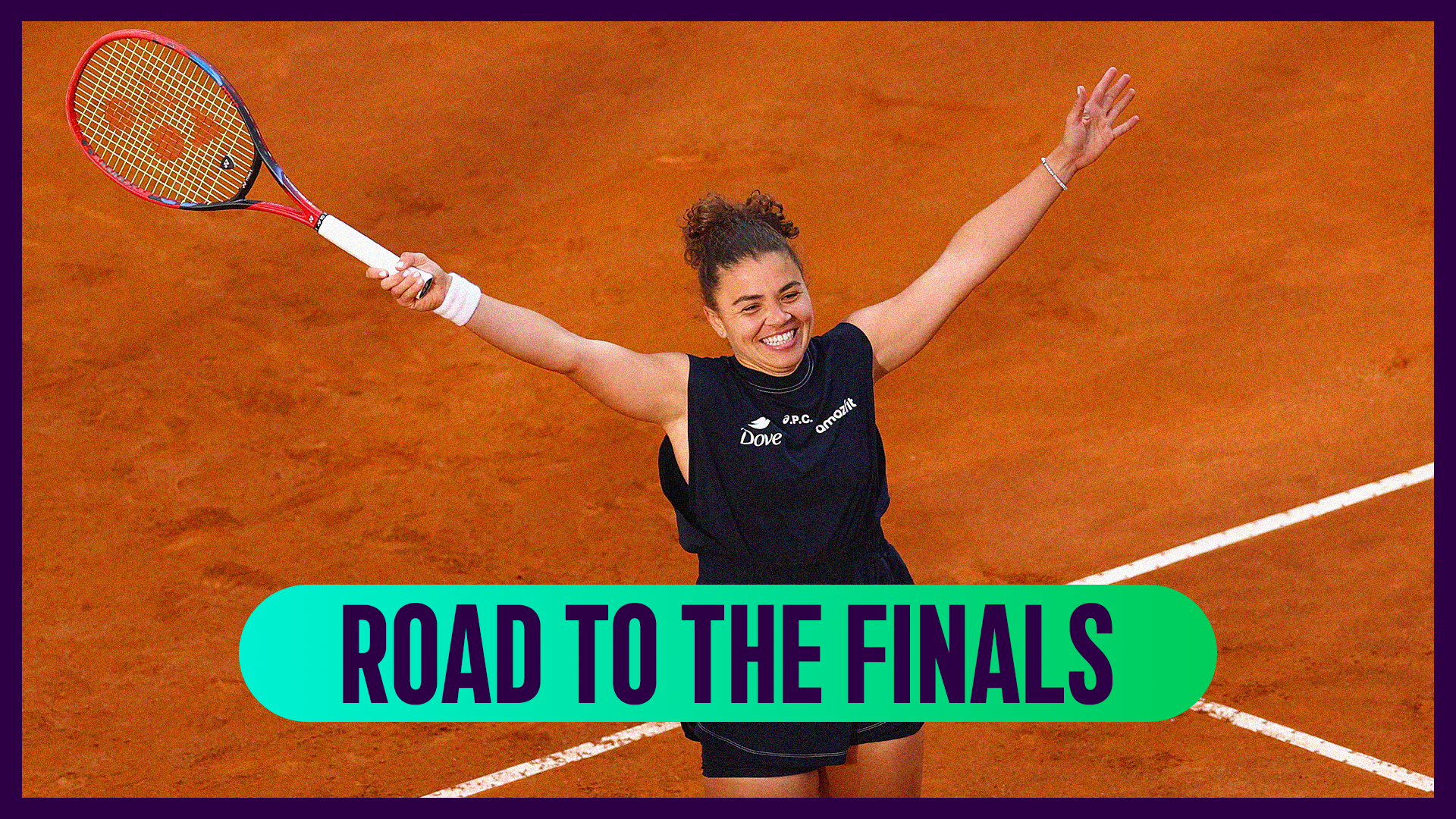
Jasmine Paolini stepped into 2025 as the World No. 8, carrying the weight of two Grand Slam finals from the previous year that had eluded her grasp. Expectations swirled around whether she could seize a singles major, but the Italian navigated a path marked by resilience, securing a doubles Grand Slam while maintaining elite consistency in singles. Her campaign unfolded with semifinals in Miami, a final in Cincinnati, and a recent push to the Wuhan semifinals, all underscoring a player who thrives under pressure on varied surfaces.
Shouldering pressure on home clay
The psychological echoes of those 2024 runner-up finishes at Roland Garros and Wimbledon tested Paolini from the start, yet she transformed anticipation into action. In Rome, her season’s defining moment arrived as she captured her second WTA 1000 singles title, defeating Coco Gauff in an 89-minute final to become the first Italian woman to win the Internazionali BNL d’Italia in 40 years. Dropping just one set throughout the tournament, she wielded inside-out forehands and underspin slices to control rallies, turning the Foro Italico’s fervent energy into an extension of her resolve before an audience that included Italian president Sergio Mattarella.
This triumph resonated nationally, evoking memories of Raffaella Reggi’s 1985 victory, and Paolini extended her dominance by also claiming the doubles title with Sara Errani, mirroring Monica Seles’ sweep in 1990. As explored in Wednesday, Oct. 22: Road to the WTA Finals: How Gauff course-corrected and played her way back into form, Gauff’s own journey through setbacks highlighted the mental fortitude Paolini displayed in reversing that dynamic on clay. Her Rome success boosted her match wins beyond 2024 levels and elevated her winning percentage, proving her adaptability amid a demanding schedule.
“It doesn’t seem real to me. I came here as a kid to see this tournament but winning it and holding up this trophy wasn’t even in my dreams.”
Balancing dual commitments with tactical poise
Paolini’s year intertwined singles ambition with a rigorous doubles slate, yielding four titles that propelled her to No. 3 in the world, including the French Open Grand Slam alongside Errani and WTA 1000 events in Doha, Rome, and Beijing. This 32-10 doubles record complemented her 43-18 singles ledger, demanding shifts between aggressive net play and baseline endurance across clay and hard courts. Her one–two combinations off the serve added unpredictability, while crosscourt probes preserved energy during grueling weeks.
Singles progress remained steady, with no advances beyond the fourth round at majors, but her consistency shone in key hard-court stops. Semifinals in Miami highlighted her quick footwork against top seeds, and the Cincinnati final showcased prolonged rallies turned decisive through down-the-line backhands. As detailed in Monday, Oct. 20: Road to the WTA Finals: How Sabalenka has set the standard in 2025, Sabalenka’s dominance raised the bar, yet Paolini matched it by incorporating mental coaching to sustain focus, varying her patterns to counter power games.
Incorporating mental resets helped her manage the toll, much like the peace Madison Keys discovered en route to her breakthrough, as covered in Wednesday, Oct. 29: Road to the WTA Finals: Keys found peace, then a Grand Slam breakthrough. Paolini’s likable on-court presence—always smiling amid the intensity—belies a ferocious competitor, as Brad Kallet observes, capable of locking in to dominate foes. Greg Garber notes her developing big-game aura at 29, evident in a Chinese swing where she reached quarterfinals in Beijing and semifinals in Wuhan and Ningbo, securing eight of 11 matches to clinch her Finals spot.
That momentum peaked in Wuhan’s quarterfinals against Iga Swiatek, where Paolini overcame a 0-6 head-to-head by dropping just three games in 65 minutes, using short crosscourt balls to force errors before unleashing inside-out forehands. This clinic, adapting to hard-court speed with serve-volley elements and targeted slices, exposed vulnerabilities in Swiatek’s versatile arsenal, as examined in Tuesday, Oct. 21: Road to the WTA Finals: Swiatek proved versatility is her greatest weapon. Her first-strike efficiency echoed Amanda Anisimova’s approach, per Thursday, Oct. 23: Road to the WTA Finals: Amanda Anisimova’s season built on first-strike efficiency, refining Paolini’s game for indoor battles.
Riyadh calls for group-stage breakthrough
Returning to the WTA Finals for the second straight year in both draws, Paolini eyes advancement after last year’s group-stage exits, where she won two of six matches, including a 7-6(5), 6-4 singles victory over Elena Rybakina bookended by losses to Zheng Qinwen and Aryna Sabalenka. Riyadh’s indoor hard courts favor her precision, with lower bounces suiting down-the-line backhands and 1–2 serves to disrupt footing. Her doubles synergy with Errani, built on complementary slices and drives, promises net poaching opportunities against power pairs.
Matchups will test her evolution: deeper returns against Sabalenka’s thunder, crosscourt lobs to reset against Swiatek’s topspin. Jessica Pegula’s elite maintenance, as in Monday, Oct. 27: Road to the WTA Finals: Jessica Pegula and the art of staying elite, parallels Paolini’s win-rate gains, while Rybakina’s late surge, from Tuesday, Oct. 28: Road to the WTA Finals: Rybakina’s power game catches fire at the right time, sets up a potential rematch where Paolini’s agility could exploit pace. Under the desert lights, her season’s arc—from Rome’s roar to Wuhan’s whisper of dominance—positions her to extend rallies into triumphs, her unyielding smile signaling a player primed for the next level.