Madison Keys unlocks major glory through quiet resolve

A decade of top-tier tennis shadowed by Slam droughts gave way to Madison Keys’ 2025 epiphany, where mental clarity fueled her Australian Open conquest and primed a rested charge into Riyadh’s spotlight.
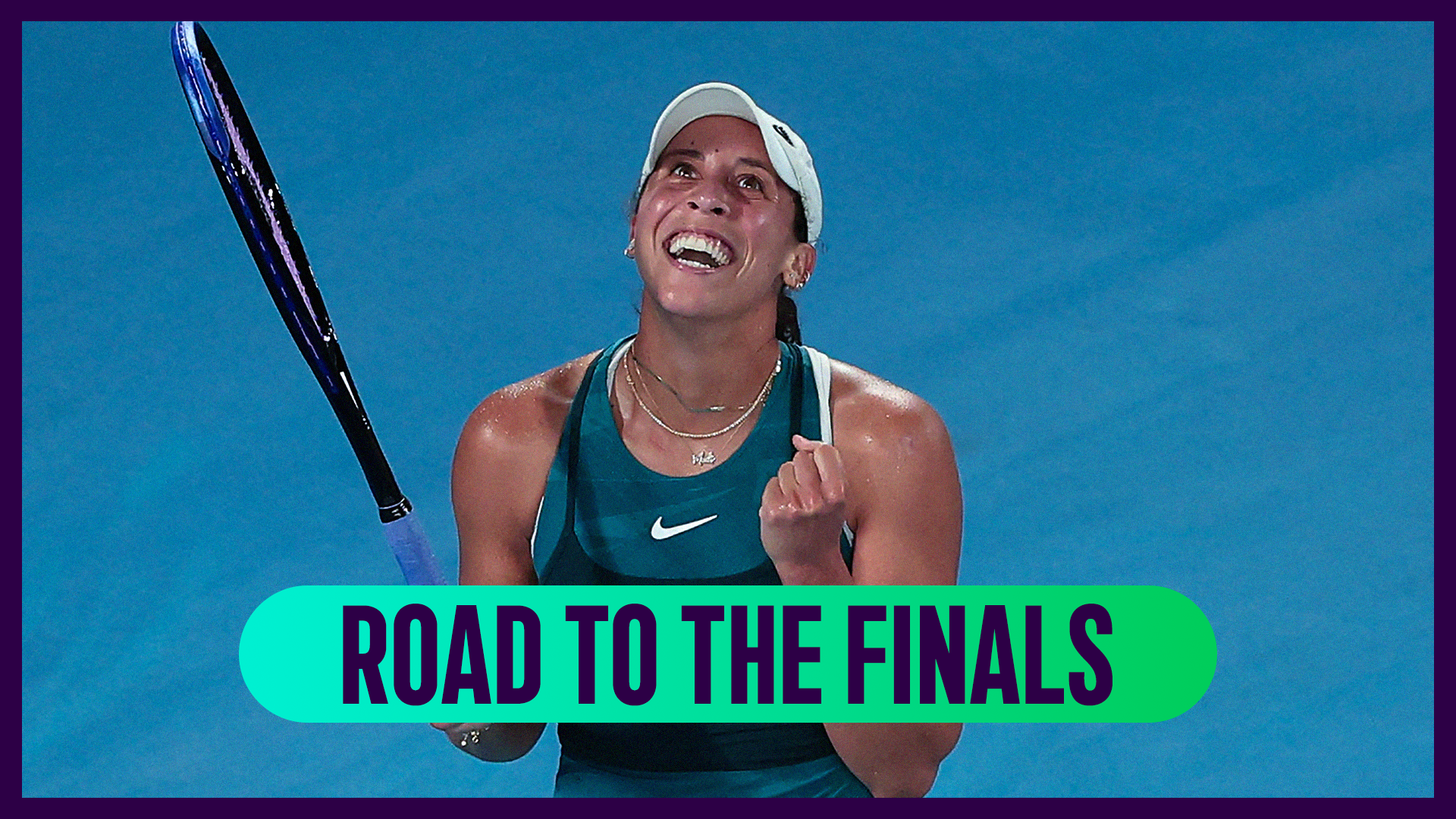
Madison Keys entered 2025 with a career etched in consistency yet haunted by major disappointments. Eight titles and a steady top-10 perch had built financial security, but the absence of a Grand Slam crown gnawed at her self-perception, turning deep runs into sources of quiet frustration. Supported by her husband and coach Bjorn Fratangelo, along with therapy that reshaped her expectations, she shed the weight of that pursuit, arriving in Australia focused on the joy of competition rather than redemption.
Embracing peace amid high stakes
This inner shift allowed Keys to play with unforced aggression from the season’s outset. In Adelaide, she claimed the 500-level title by dictating points with penetrating groundstrokes, her serve setting up inside-out forehands that stretched opponents across the baseline. The humid courts amplified the crowd’s energy as she converted break points with clinical precision, signaling a player liberated from past pressures.
Therapy sessions, as Fratangelo later reflected, helped her view tournaments as opportunities rather than mandates, fostering a mindset where desire outpaced desperation. This psychological foundation carried into Melbourne, where the Australian Open draw tested her resolve early and often. Spectators under the arena lights felt the tension build with each advancing round, her poise contrasting the high-decibel roars.
“I still really wanted to win a Grand Slam. I just wasn’t lying in bed at night thinking I’m a failure if I don’t win one anymore. At the end of the day, I want to win every tournament that I’m in the draw of. I feel like I’m getting a lot better with that being enough, and that being OK, and I can just play tennis. As long as I can continue to want to win matches and tournaments and not need them, then I think things will be good.” -- Keys after winning the Australian Open
Breakthrough under Melbourne lights
Keys powered through the Australian Open with tactical maturity, upsetting Elena Rybakina in the fourth round by returning deep to jam the Kazakh’s serve and forcing errors on crosscourt exchanges. Against Elina Svitolina in the quarterfinals, she varied her backhand with underspin slices to draw the Ukrainian into net play, then passed her with flat down-the-line shots on the quicker hard courts. The semifinals against Iga Swiatek demanded constant adaptation to the Pole’s topspin; Keys saved a match point with a resilient one–two serve-forehand combination, prevailing in three sets amid the electric atmosphere of Rod Laver Arena.
The final against two-time defending champion and World No. 1 Aryna Sabalenka unfolded as a power duel, Keys edging a 7-5 third set through opportunistic defense and timely inside-in winners that exploited gaps in the Belarusian’s coverage. This victory, just before her 30th birthday, marked her first major after 45 main-draw appearances, including four quarterfinals, five semifinals, and a 2017 US Open final loss to Sloane Stephens. The triumph reshaped her season, blending raw emotion with strategic depth as confetti fell and cheers echoed into the night.
Post-Melbourne momentum saw her reach the Miami semifinals, where improved footwork on the slower hard courts let her construct rallies with crosscourt depth before unleashing inside-out forehands. On clay, quarterfinal runs in Madrid and Roland Garros highlighted her adjustments—heavier topspin to handle the bounce, looping high to reset defensive positions without sacrificing aggression. Summer hard courts brought a Montreal quarterfinal and Cincinnati fourth round, but a first-round US Open exit to Renata Zarazua on Aug. 25 prompted a strategic shutdown, her 37-13 record and two titles securing qualification.
Rested return to the year-end stage
With over two months off, Keys arrives in Riyadh as the freshest in the field, her body recharged for the indoor hard courts that favor her efficient point-making. This marks her first WTA Finals since 2016, when she went 1-2 in Singapore, defeating Dominika Cibulkova but falling to Angelique Kerber and Simona Halep. Now a veteran respected on the Hologic WTA Tour and Grand Slam champion, she eyes the event as a perseverance payoff, the desert arena poised to amplify her composed power.
Greg Garber observes it’s been nine years since her last year-end championship, celebrating her growth from a 21-year-old Top 10 entrant to a mature force ready for a victory lap. Brad Kallet expresses keen anticipation for her Riyadh showing, noting the contrast to that earlier era of Halep, Kerber, Svetlana Kuznetsova, and Garbiñe Muguruza. To bookend 2025 with a Finals title would cap her arc, turning rested instincts into a narrative of quiet dominance.
The Road to the WTA Finals series captures the qualifiers’ journeys, from Monday, Oct. 20: Road to the WTA Finals: How Sabalenka has set the standard in 2025, Tuesday, Oct. 21: Road to the WTA Finals: Swiatek proved versatility is her greatest weapon, Wednesday, Oct. 22: Road to the WTA Finals: How Gauff course-corrected and played her way back into form, Thursday, Oct. 23: Road to the WTA Finals: Amanda Anisimova’s season built on first-strike efficiency, Monday, Oct. 27: Road to the WTA Finals: Jessica Pegula and the art of staying elite, to Tuesday, Oct. 28: Road to the WTA Finals: Rybakina’s power game catches fire at the right time. Keys’ rested poise promises to disrupt the round-robin fray, her tactical clarity setting the stage for potential desert magic under the Riyadh lights.