Jessica Pegula’s blueprint for enduring excellence

Through a season of relentless matches and surface shifts, Jessica Pegula has forged a path of quiet dominance, her consistency a quiet force as the WTA Finals in Riyadh beckon.
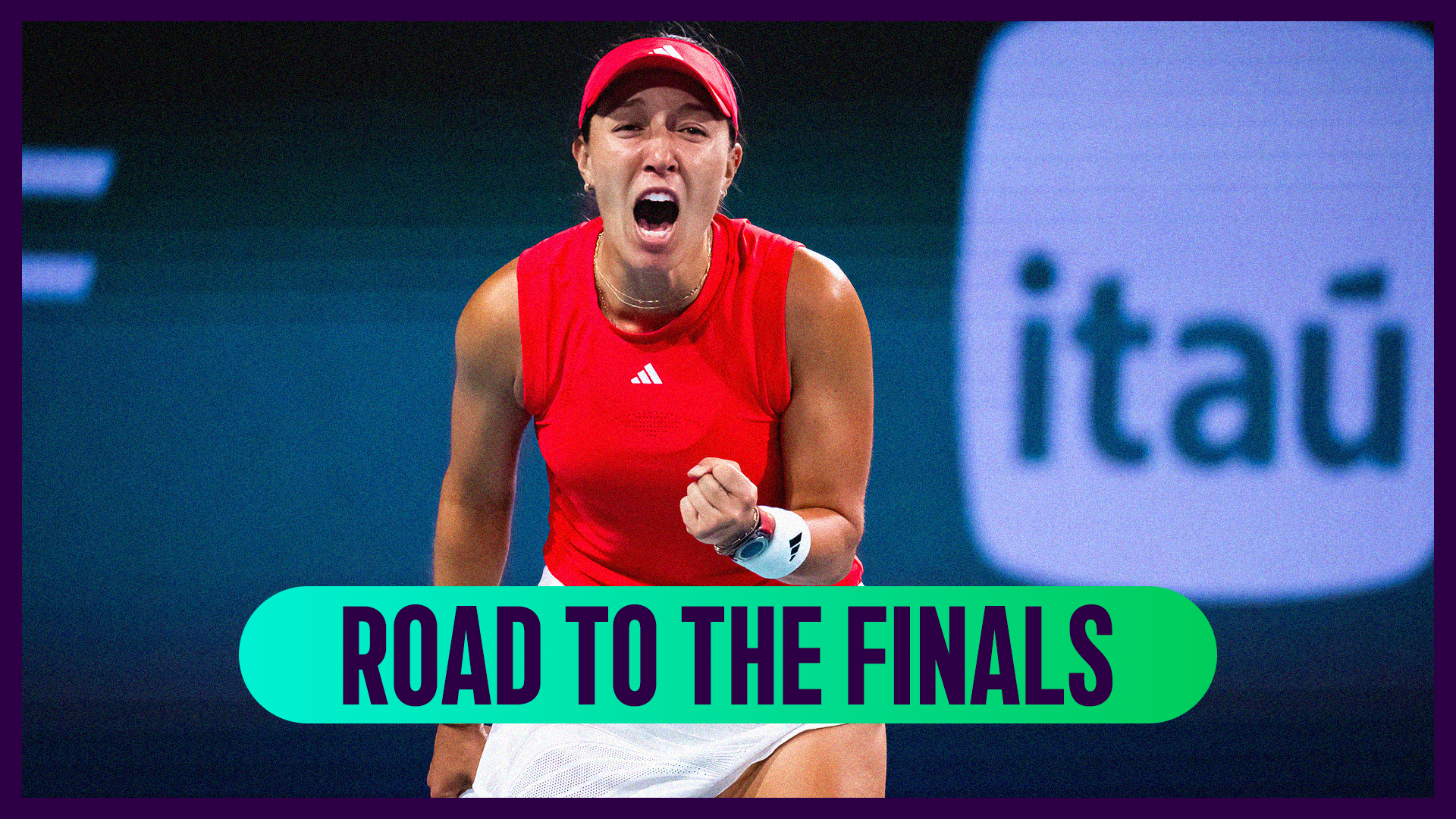
Jessica Pegula steps into the WTA Finals with the poise of a veteran who has weathered every twist of the tour’s demands. At 31, she has navigated 22 tournaments—the most among qualifiers—and 69 matches, securing 50 victories that span hard courts, clay, and grass. Her career, anchored in repeatable professionalism rather than fleeting surges, positions her as the elder stateswoman ready to challenge the field’s firepower in Riyadh.
Surface mastery fuels her titles
Pegula’s three titles in 2025 underscore her adaptability, each win a tactical adjustment to the court’s character. In Austin on hard courts, she varied her serve to the deuce side with slice, opening inside-in forehand angles that pressured returns and built her 250-level triumph. Charleston’s clay demanded deeper crosscourt rallies laced with underspin, her baseline patience wearing down opponents en route to the 500-point prize, while Bad Homburg’s grass rewarded quick one–two combinations, her inside-out forehands slicing through low bounces for another 500 victory.
These successes, spread across continents, highlight her ability to recalibrate patterns mid-season, turning potential fatigue into focused execution. After a subdued summer, she reignited in New York, reaching the US Open semifinals without dropping a set until a three-set duel with Aryna Sabalenka, the crowd’s energy pulsing through Arthur Ashe Stadium as Pegula’s deep returns absorbed power and countered down-the-line.
“I’m one of the top players in the world. I always feel I can go out and I can beat these girls. Even though I maybe don’t have the massive weapon that some of them have or the flashiness that some of them have, I feel like I’m always right there every time I play them.” -- Pegula after her 4-6, 6-3, 6-4 loss to Sabalenka in the US Open semifinals
Asia swing tests her resolve
Momentum from Flushing Meadows propelled Pegula into Asia, where she won eight of 10 matches, including semifinals in Beijing and a final in Wuhan. Eight of those encounters stretched to three sets, with Pegula claiming seven by outlasting rivals through extended rallies, her footwork a steady rhythm amid the humid courtside haze. In Wuhan, she exacted revenge on Sabalenka, deploying early underspin slices to disrupt aggressive approaches and drawing the world No. 1 into net exchanges that favored her precise passing shots.
This grind revealed her psychological edge, resetting after losses like the US Open semifinal to maintain a 50-19 record. Her run marked a defining pivot, transforming earlier major frustrations—six straight Grand Slam quarterfinal exits—into renewed threat, the air thick with anticipation as she pushed deciders deep. Beijing’s semis followed suit, her crosscourt backhands off high balls extending points until opponents faltered, a blueprint for the endurance needed in Riyadh’s round-robin format.
Consistency sharpens Finals preparation
Pegula’s streak of quarterfinals or better at all 10 WTA 1000 events stands as a testament to her strategic consistency, a rare achievement shared only with Sabalenka and Elena Rybakina among active players. From a year-end No. 62 in 2020 to No. 18 in 2021, she has logged four consecutive Top 10 finishes since breaking in at age 28 in 2022, her volume of play building a rankings buffer against dips. Previous WTA Finals appearances—a group-stage exit in 2022, a dominant straight-sets run to the 2023 final halted by Iga Swiatek, and another group struggle in 2024—have honed her approach to high-pressure clashes.
As the editor’s note outlines, starting Monday, Oct. 20, we’re publishing Road to the WTA Finals, an eight-part snapshot of the qualifiers and the form they bring to Riyadh; check back all week for new installments. These include Monday, Oct. 20: Road to the WTA Finals: How Sabalenka has set the standard in 2025, Tuesday, Oct. 21: Road to the WTA Finals: Swiatek proved versatility is her greatest weapon, Road to the WTA Finals: Gauff overcame adversity, added to championship resume, and Road to the WTA Finals: Amanda Anisimova’s season built on first-strike efficiency. Pegula draws from these narratives, her stamina after a packed month a key watchpoint, yet her body’s familiarity with the load suggests resilience against top-tier foes.
Greg Garber notes her game-student mindset shone in Wuhan’s upset over Sabalenka, a victory built on applied strategy amid the chaos. Brad Kallet sees Riyadh as the crowning jewel for a career rich in output but light on majors, her composure in late-night rallies and tactical tweaks—like tightening 1–2 patterns to exploit backhands—poised to turn last year’s disappointments into triumph. Under the desert lights, Pegula’s blend of mental fortitude and matchup chess could finally deliver that signature breakthrough, her steady presence a reminder that elite status endures through calculated persistence.