Aryna Sabalenka holds firm after a year at the summit

One year into her reign as world No. 1, Aryna Sabalenka faces the tour’s unrelenting demands with sharpened focus, turning finals heartbreaks into fuel for her explosive style.
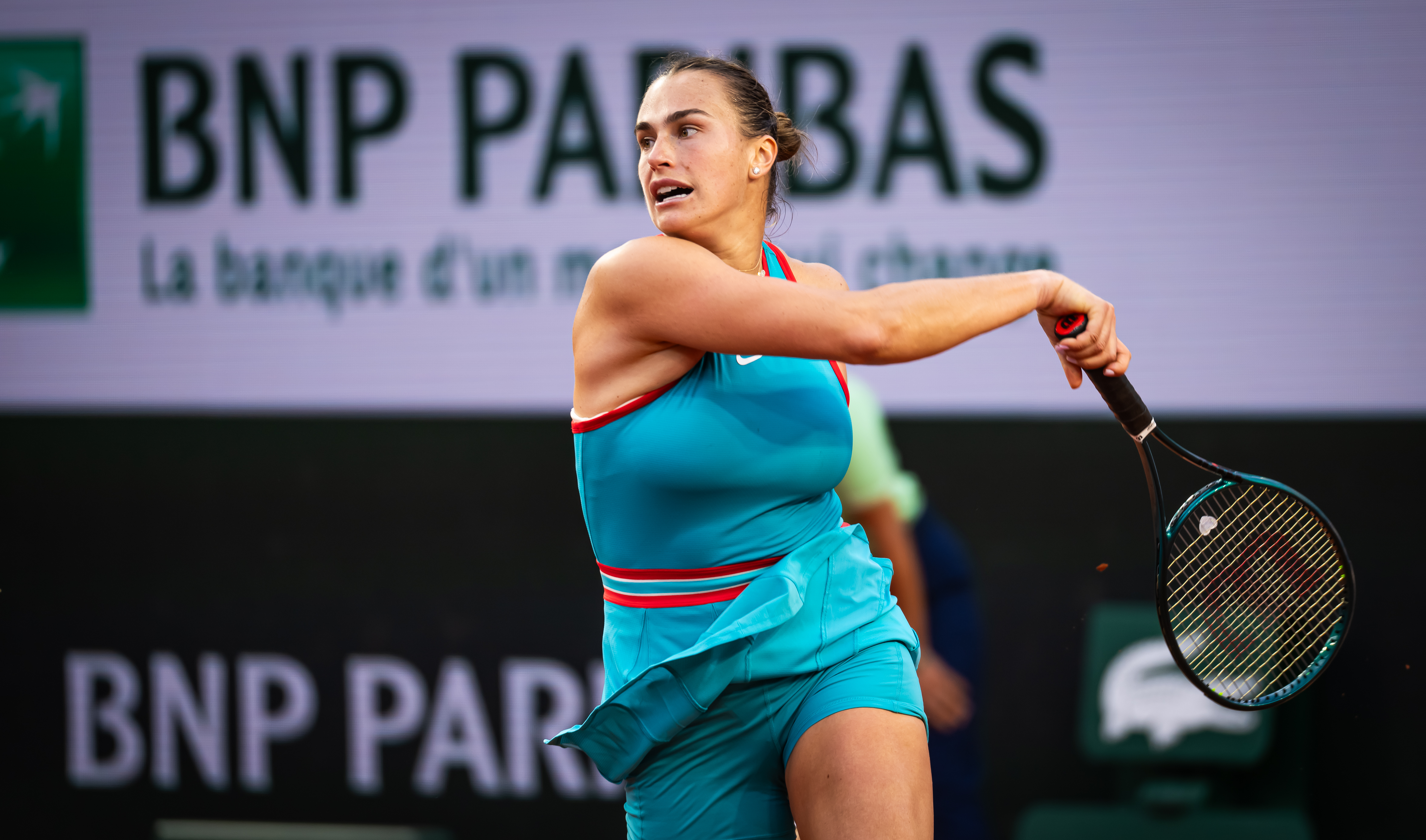
On October 21, 2024, ten days after clinching her third Wuhan title, Aryna Sabalenka quietly overtook Iga Swiatek for the top spot in the PIF WTA Rankings. A year later, she remains there, her 60 weeks at No. 1 surpassing the combined 52 weeks held by Venus Williams, Maria Sharapova, and Kim Clijsters, who together won 16 Grand Slam singles titles. This staying power highlights not just her athletic gifts but a deeper evolution in handling the position’s isolation and intensity.
Forging path through persistent setbacks
Sabalenka’s rise contrasted sharply with the rapid breakthroughs of recent teens like Maya Joint, who took Eastbourne and Rabat, or Victoria Mboko, who dominated the WTA 1000 in Montreal. At 17, she earned her first three ITF titles, and nearing 19, she entered the Hologic WTA Tour main draw in 2017, reaching the Tianjin final against Sharapova to break into the Top 100 by year’s end. Those early steps demanded grinding through defeats, building a mentality that today’s Top 10 depth would still test fiercely.
Her rare mix of power and mobility shone young, yet consistency eluded her until 2019, when she joined the Top 10 four months before turning 21. Double faults undermined her in 2022, revealing pressure cracks, but by 2023 at 25, she captured her first Australian Open crown and ascended to No. 1, halting Swiatek’s 75-week hold that started at 20 after Ashleigh Barty’s retirement. Swiatek’s own short initial eight-week stint there underscored the spot’s precariousness, pushing her to refine emotional control amid roaring arenas.
“It was difficult for me, wasn’t easy at all,” Sabalenka said. “I had to go through a lot of tough losses, a lot of tough lessons, and it’s not like I broke that wall and I start winning everything -- that didn’t happen to me. I had to work really hard to be where I am right now, and I don’t know if I would have to do it now against [today’s] Top 10 players. I would be struggling the same because I think to make this break it’s more about your mentality.”
Adapting tactics amid finals pressure
The 2024 PIF WTA Finals in Riyadh marked her first event post-reclaim, where exhaustion led to a semifinal loss against champion Coco Gauff, the court’s lights harsh on her fading volleys. An offseason reset propelled her to the Australian Open final, chasing a third straight title, but Madison Keys countered with deep returns in a three-set battle, stalling her drive on the hard courts’ steady bounce. She dropped two of three matches in Dubai and Doha, the desert winds carrying echoes of doubt before she regrouped.
Storming the next WTA 1000s, she won 11 of 12 matches to take Miami, her inside-out forehands whipping crosscourt to force errors from defenders. Clay in Madrid yielded a third title, her flatter shots piercing topspin walls, setting up Paris where she upset three-time defending champion Swiatek 7-6(1), 4-6, 6-0 in the quarters, the tiebreak’s edge coming from aggressive net rushes under the clay’s red dust. Gauff, however, flipped the final in three sets, her speed turning Sabalenka’s drop shots into passing opportunities, leaving the Belarusian shattered on the baseline.
Wimbledon semis brought defeat to Amanda Anisimova, the grass’s skid exposing brief focus slips in slice exchanges, yet the US Open hard courts revived her, repeating the title with down-the-line backhands overpowering foes amid Arthur Ashe’s thunderous cheers. The Wuhan semifinal against Jessica Pegula delivered a season-highlight three-setter, looping topspin rallies giving way to Pegula’s edge, but it affirmed her court’s pulse. At 27, with 10,400 points in the Race to the WTA Finals—only the sixth to top 10,000—she leads Swiatek by over 1,700, her one–two serves booming with tactical variance.
“Of course I would love to change a couple of finals,” she said, “but looking back, I think it was, it was needed to learn, learn those lessons, and to, yeah, to become a better player.”
Chasing legacy with daily resolve
Sabalenka’s endurance outstrips Naomi Osaka and Dinara Safina’s combined 51 weeks at No. 1, equaling Victoria Azarenka’s solo mark, and approaches Simona Halep’s 64 and Caroline Wozniacki’s 71. On varied surfaces, she adjusts: underspin slices disrupt on clay against heavy hitters, while inside-in forehands jam speedsters on hard courts, her movement pinning opponents deep in humid night sessions. The tour’s rhythm—from Montreal’s upsets by Alexandra Eala in Miami semis to Andreeva’s Top 10 youth at 17 after Dubai and Indian Wells—raises the bar, yet her experience turns pressure into precision.
“I definitely feel different,” she reflected in Wuhan. “I think those tough losses and things that I had to deal with this year definitely made me stronger as a person and better as a player. And you know, it’s a learning process. And what I learned throughout the years is to accept everything and just do your best at the moment. And that’s it. Basically, that’s all you can control.”
As Riyadh readies for the year-end championship, she rates the season successful, committed to daily gains in maintaining No. 1 and pushing limits. Legacy questions draw honest fire: emulating Serena Williams’ 23 majors tempts, but self-focus drives her, promising pride in a career etched by relentless points. “I think everything came with experience, with a lot of pressure,” she added earlier, her emotional toolkit now a weapon for the battles ahead, racket gripped tight under stadium lights.
“I would rate my season as pretty successful,” she shared in Wuhan. “The goal is the same, to improve myself every day, to keep the position of World No. 1, to see how far I can get in this sport and how, how much I can win. Hopefully I can keep doing what I am doing and keep winning.” Pressed on all-time status, she replied plainly: “Almost all of us want to beat all the records, and I think it’s so obvious.” By honing game and character, titles follow, her path a model for sustaining the throne’s weight, one resilient rally at a time.