Madison Keys One Year After Her Australian Open Glory

Nearly 365 days since lifting the Daphne Akhurst Memorial Cup, Madison Keys returns to Melbourne as defending champion, her reflections blending tactical grit with the thrill of a dream realized.
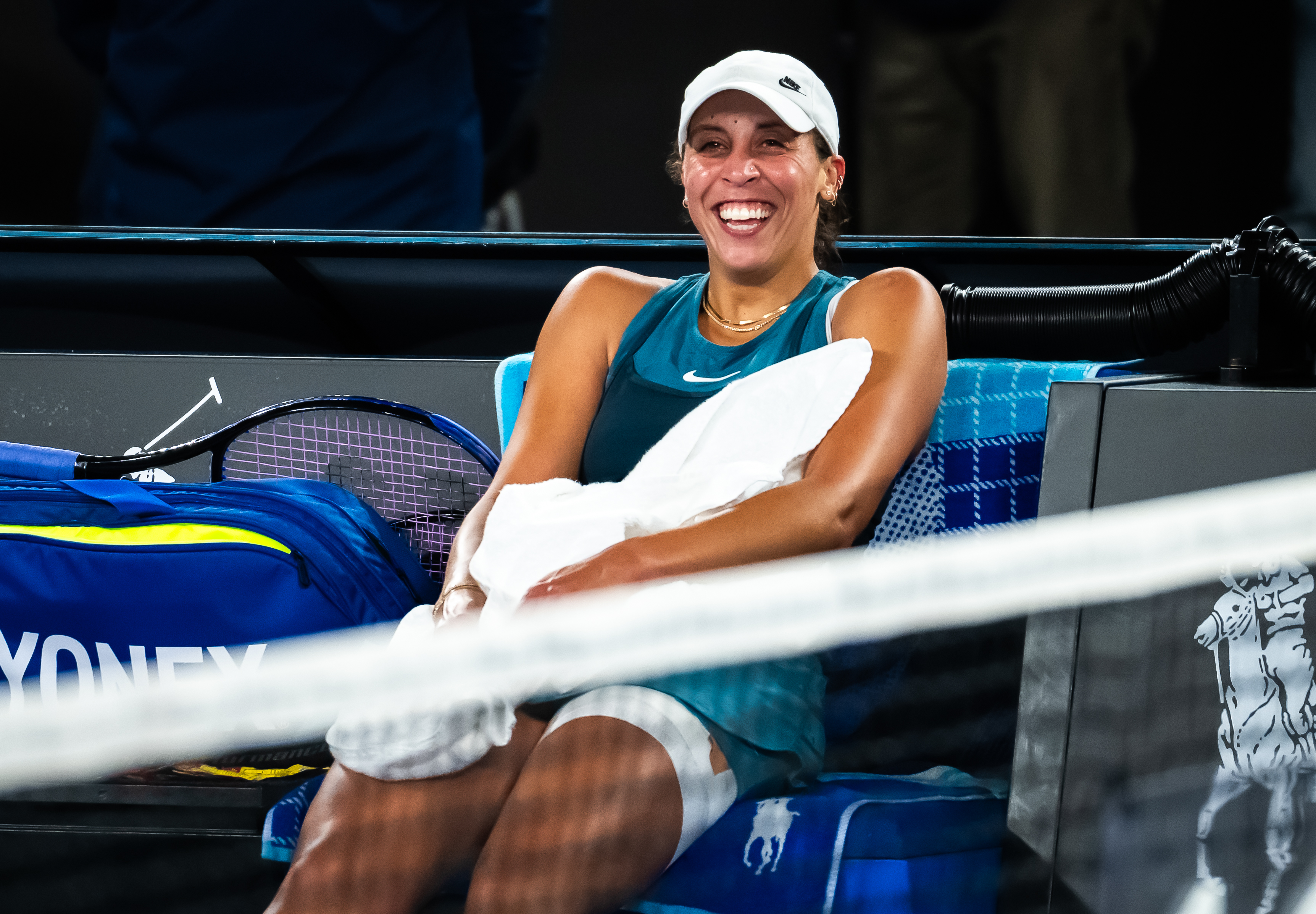
In Melbourne’s steady January heat, Madison Keys prepares to defend the Australian Open title she claimed exactly 365 days ago, a breakthrough that ended years of near-misses. She outlasted Aryna Sabalenka 6–3, 2–6, 7–5 in the 2025 final, capping a dominant summer with titles in Adelaide and Brisbane alongside a 16-match win streak into Indian Wells. Now the World No. 9, she opens Tuesday against qualifier Oleksandra Oliynykova, her flat groundstrokes and serve primed for the Plexicushion’s skid.
Last year, I felt really good coming into the Australian Open swing. I had a really, kind of, long offseason, so I was able to break it up and have two different blocks. I got married in the middle of it, so I was riding high (laughing).
Offseason rhythm sets the tone
Keys arrived in Australia last year refreshed from an extended break, her wedding adding unexpected lift to the grind. She skipped round-specific goals, zeroing in on daily execution—unleashing inside-out forehands to stretch courts, following with crosscourt backhands to reclaim center. This fluid approach turned the hard courts’ pace into an ally, her heavy topspin forehands dipping just over the baseline to pin opponents deep.
The Adelaide title came in straight sets, her 1–2 punch—wide serve to the forehand, then down-the-line return—disrupting early rhythm. Brisbane followed suit, where she mixed underspin slices on second serves to draw errors from aggressive returners. That streak’s momentum carried into Melbourne, her footwork sharper on the surface’s moderate bounce, allowing quick transitions from defense to offense in extended rallies.
Personal joy bled into professional edge; the offseason blocks let her refine patterns without burnout. Against top-20 foes, she adjusted mid-match, perhaps flattening her backhand for penetration when topspin looped too high. This process-driven mindset insulated her from the summer’s building pressure, each win reinforcing a baseline game that thrived on the hard courts’ true rebound.
Relentless path through three-set wars
The 2025 Australian Open unfolded as a gauntlet of three-set battles against elite players, Keys’ focus narrowing to the ball in front of her. She often tuned out draw sheets, staying locked on immediate tactics—like angling serves to the body then ripping inside-in forehands to exploit openings. Even in the final, security never settled; at 5-all, 30-all in the third, Sabalenka’s deep return demanded a reflex lob that kissed the line, shifting to 40–30.
That pivotal point, captured at 33:02 in broadcasts, ignited her surge—she held with aggressive returns, deep and crosscourt, neutralizing Sabalenka’s power baseline. Keys never sensed the title locked, the match’s swings mirroring her path: from quarters’ grinds where she shortened rallies with drop shots, to semis demanding varied spin to counter flat hitters. The Plexicushion rewarded her depth, but only through constant tweaks, like layering more underspin to slow Sabalenka’s rhythm in key games.
I don’t think I ever thought I had it in the bag (laughing). That was honestly the most insane three weeks, including the week before in Adelaide. I had to play so many great players. I played so many three-set matches. I really kept my head down and I never really knew who I was playing the next round. I was just so focused on the match directly in front of me.
Post-match haze hit fast, press pulling her from euphoria into duty, yet raw connections pierced through. She shared silent words across the net with childhood friend Laura Robson, courtside for Sky Sports, their junior-era bond amplifying the roar of Rod Laver Arena. Under new seating rules, her team sat inches away, their immediate embraces turning victory into a shared pulse rather than solitary triumph.
Evaluating runs beyond results became her anchor; tennis’s outcome bias—rankings dictating worth—clashed with the sport’s chaos, where a rival’s hot streak overrides perfect plans. Keys gauges success by game-plan adherence: Did the one–two open angles? How swiftly did she pivot, say, from crosscourt loops to down-the-line winners when opponents anticipated? This introspection, honed in Orlando alongside Ben Shelton, reframes pressure as process, warding off the madness of weekly win-loss obsessions.
I try to evaluate myself more so on was I doing what the game plan was, how did I execute it. If I wasn’t executing it, how did I try to change the game plan or how did I adjust throughout the match. Just worrying about winning and losing every singles week, we’d all be even more crazy than we are (smiling).
Champion’s return stirs old dreams
As defending champion, Keys braces for heightened nerves in her 2026 opener, the target on her back sharpening every exchange. Yet excitement edges out dread; fans’ shared tears during her run echo her five-year-old visions of Slam glory, transforming defense into a celebrated encore. The Walk of Champions, first walked as victor on January 25, 2025, beckons again, lined with Melbourne’s fervent energy.
First time down the Walk of Champions as a champion! Enjoy it, @Madison_keys! #AO2025 pic.twitter.com/dLxpRgUlQ2 — #AusOpen (@AustralianOpen) January 25, 2025
First time down the Walk of Champions as a champion!
Enjoy it, @Madison_keys!#AO2025 pic.twitter.com/dLxpRgUlQ2— #AusOpen (@AustralianOpen) January 25, 2025
Shelton’s reset philosophy—every year starting at zero—grounds her amid points to defend, shifting focus to the forward race over rankings math. Orlando sessions refined her serve’s flat trajectory for the hard courts’ skid, prepping inside-out setups against qualifiers like Oliynykova, whose grinding style tests patience early. Deeper in the draw, tactical vigilance will matter: varying 1–2 patterns to counter reloaded fields, using slice to disrupt power games much like against Sabalenka.
The summer’s insanity—Adelaide’s sweep to the final’s brink—built resilience, her adjustments under duress forging a champion’s poise. Now, with opportunities to eclipse last year’s haul or rebound from off weeks, Keys enters solid, her power game suited to the surface’s speed. Melbourne’s cauldron awaits, where emotional anchors meet strategic fire, propelling her toward another chapter in a career defined by breakthrough and beyond.
I’m actually really looking forward to it because I grew up dreaming of being able to win a Grand Slam. The fan support and the amount of people that told me that they cried watching me, just I feel that was so cool. This is going to be such a cool experience to go back and be a defending champion because it’s literally something that I dreamed of.