Anisimova battles through pain to claim Beijing title

Fresh from a wisdom tooth extraction and hobbled by foot discomfort, Amanda Anisimova turned adversity into triumph at the China Open, securing her second WTA 1000 crown of 2025 with a display of grit and precision.
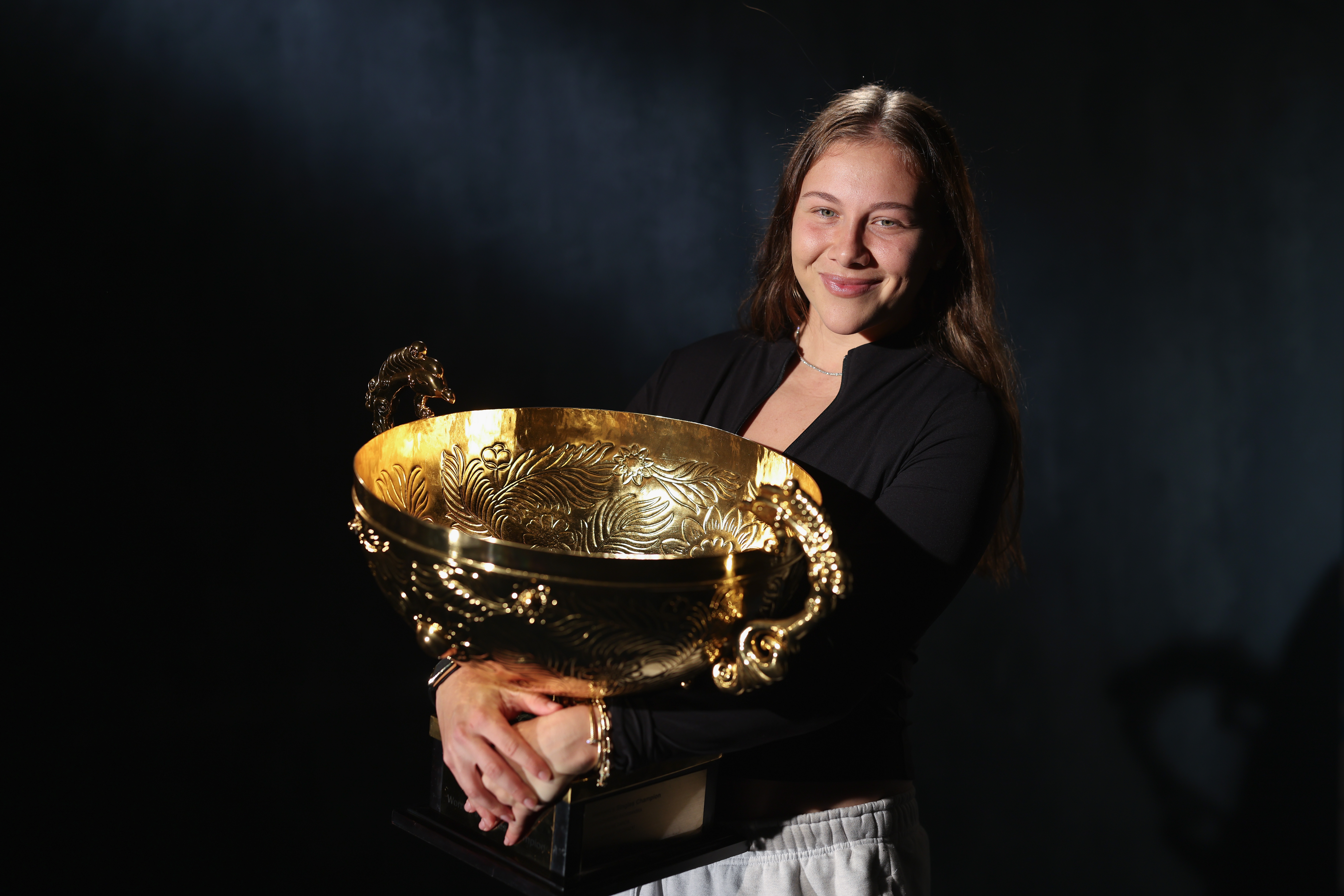
Amanda Anisimova arrived in Beijing carrying the weight of her US Open final exertions, compounded by a last-minute wisdom tooth extraction that left her jaw throbbing on the flight from New York. The hard courts awaited under the autumn sun, their brisk pace demanding sharp reflexes, but a sharpening pain in her foot and calf soon turned every step into a negotiation with her body. At 24, she chose to press on, her game a blend of raw power and newfound resolve that transformed a week of doubt into one of dominance.
Forging mental steel in the face of injury
The opening rounds tested her limits early. She dispatched her first opponent with ease, but the discomfort escalated, forcing her to tape her foot and recalibrate her movement during practice. In one match, the pain was evident, her strides shortened as she battled internally over whether to continue, a far cry from the paralyzing doubts that once led her to step away from the tour.
“I think it was obvious in one of the matches where I was in pain,” she reflected later. “I was just hurting all day when I was walking. Those were the hardest moments because you’re trying to have a conversation with yourself and figure out what’s the best decision to make.”
“I think it was obvious in one of the matches where I was in pain,” she reflected later. “I was just hurting all day when I was walking. Those were the hardest moments because you’re trying to have a conversation with yourself and figure out what’s the best decision to make.”
That choice to persevere echoed through the draw. A few years prior, such hurdles might have unraveled her completely, but now her mental fortitude matched the sting of her down-the-line backhand. The sparse crowds in Beijing sensed the shift, their murmurs growing as she willed herself forward on the outdoor hard courts.
Navigating tough draws with tactical precision
The third round against Zhang Shuai stretched into a 24-point tiebreak in the decider, where Anisimova’s focus held firm despite the ache. She mixed crosscourt forehands to pull her opponent wide, then unleashed inside-out backhands to finish points swiftly, saving set points with winners that skidded low on the true-bouncing surface. The evening air cooled her taped foot, but adrenaline fueled her one–two combinations, keeping rallies short to conserve energy.
Karolina Muchova posed another puzzle in the fourth round, her slice and drop shots exploiting any mobility lapse. Anisimova countered by stepping inside the baseline for aggressive returns, redirecting spin with flat groundstrokes and underspin approaches that disrupted rhythm. The comeback unfolded under the stadium lights, her adjustments turning defense into dominance as the crowd’s energy built with each exchanged baseline bomb.
Top-10 clashes followed with Jasmine Paolini in the quarters, where Anisimova varied her patterns—dipping low for slices before ripping inside-in forehands—to exploit defensive gaps on the fast hard courts. Coco Gauff fell in the semifinal in just 58 minutes, her backhand targeted relentlessly with down-the-line probes that forced errors, the surface speed amplifying Anisimova’s penetrating serves. These victories, her third over top-10 players in three months, propelled her into the final having beaten each of the three women ranked above her this season.
The championship match against Linda Noskova began with a 6-0 rout, Anisimova dictating with relentless pressure and crosscourt winners that hugged the lines. Noskova rallied to take the second set 6-2, but at 3-2 in the third, with pain flaring, she reset—trusting her team’s guidance on her limits—and reeled off four straight games. Clutch aces down the T and net approaches minimized footwork, sealing a 6-2 decider amid swelling cheers.
A second WTA 1000 title for Amanda Anisimova! 👏
She comes out on top 6-0, 2-6, 6-2 against Noskova to become champion in Beijing 🏆#2025ChinaOpen pic.twitter.com/fMdYzFzQW2— wta (@WTA) October 5, 2025
Breakthrough season built on resilience
In her eighth year on the Hologic WTA Tour, Anisimova has claimed her first two WTA 1000 titles—Doha in February and now Beijing—marking her as the first and youngest American to secure multiple in a season since Serena Williams in 2002 and 2015. Ranked No. 4, her 2025 stats dazzle: since the June grass swing, only Iga Swiatek’s 27 match wins surpass her 26, a run spanning Wimbledon’s slick surfaces to the US Open’s grind and Beijing’s pace.
She joins just three women over 1,500 winners this year, behind Aryna Sabalenka’s 1,772 and Elena Rybakina’s 1,557 with her 1,542, including 187 in Beijing—second only to Clara Tauson’s 196. These figures highlight her evolution, blending power with strategic depth across hard courts that reward flat hitting over heavy spin.
“I think your mind can play tricks on you,” she said, emphasizing the psychological edge. “Tell yourself you can’t keep going, if there’s certain pains you’re having. I think the mental game is so important for an athlete. I’m still constantly learning and trying to get better in that department.”
Reflecting on the whirlwind—from New York’s intensity to the surprise dental procedure—she saw progress in facing challenges head-on. “Yeah, it’s been quite a few weeks for me here, for sure,” Anisimova noted. “I feel like I’ve learned a lot about myself. I think I can take a lot of positives and look at it as a lot of progress for me just figuring out ways to face certain challenges and push myself in moments when it feels like I can’t go any further. I feel like in that sense I learned that I’m stronger than I think.”
Comparing Beijing to Doha, she pointed to similarities in unexpected joy but differences in team presence—Doha with just her coach, this week shared with the full squad, including Hendrik Vleeshouwers, whose emotions nearly overflowed on match point. Lighter touches, like her fondness for pandas—a nickname from friend Priscilla that rhymes with her name—added warmth, plush gifts accumulating as symbols of support.
Noskova’s praise post-match, calling her play too good at times, landed differently now. “I feel like now I’m really able to take it like a compliment,” she responded. “I feel like I’m playing to my full potential. I’m doing all the right things and working really hard as opposed to a few years ago when I felt like I wasn’t competing or performing to my full potential.”
“We as athletes don’t feel great day in, day out,” Anisimova added. “I think that’s just part of the learning process. With each match, I’ve been surprising myself and trying to learn how to work with physical pain, pushing myself in tough matches. I’m just really happy that I was able to stick it through and also trust myself and my team, who informed me about my body. Yeah, just trusting and believing in them and myself.”
As the tour heads into its final hard-court stretch, Anisimova’s blend of tactical savvy and unyielding mindset positions her to challenge for more majors, her panda-filled bag a whimsical counterpoint to the serious ascent ahead.
A victory to savor. A second WTA 1000 title in the bag for @AnisimovaAmanda. #2025ChinaOpen pic.twitter.com/KmHKk21l1Y
A victory to savor 🏆
A second WTA 1000 title in the bag for @AnisimovaAmanda.#2025ChinaOpen pic.twitter.com/KmHKk21l1Y— wta (@WTA) October 5, 2025