Madison Keys circles back to the WTA Finals

Nine years after debuting amid icons and injury, the American arrives in Riyadh as a Grand Slam champion, her game evolved and her mindset unbreakable, ready to seize the moment she once let slip.
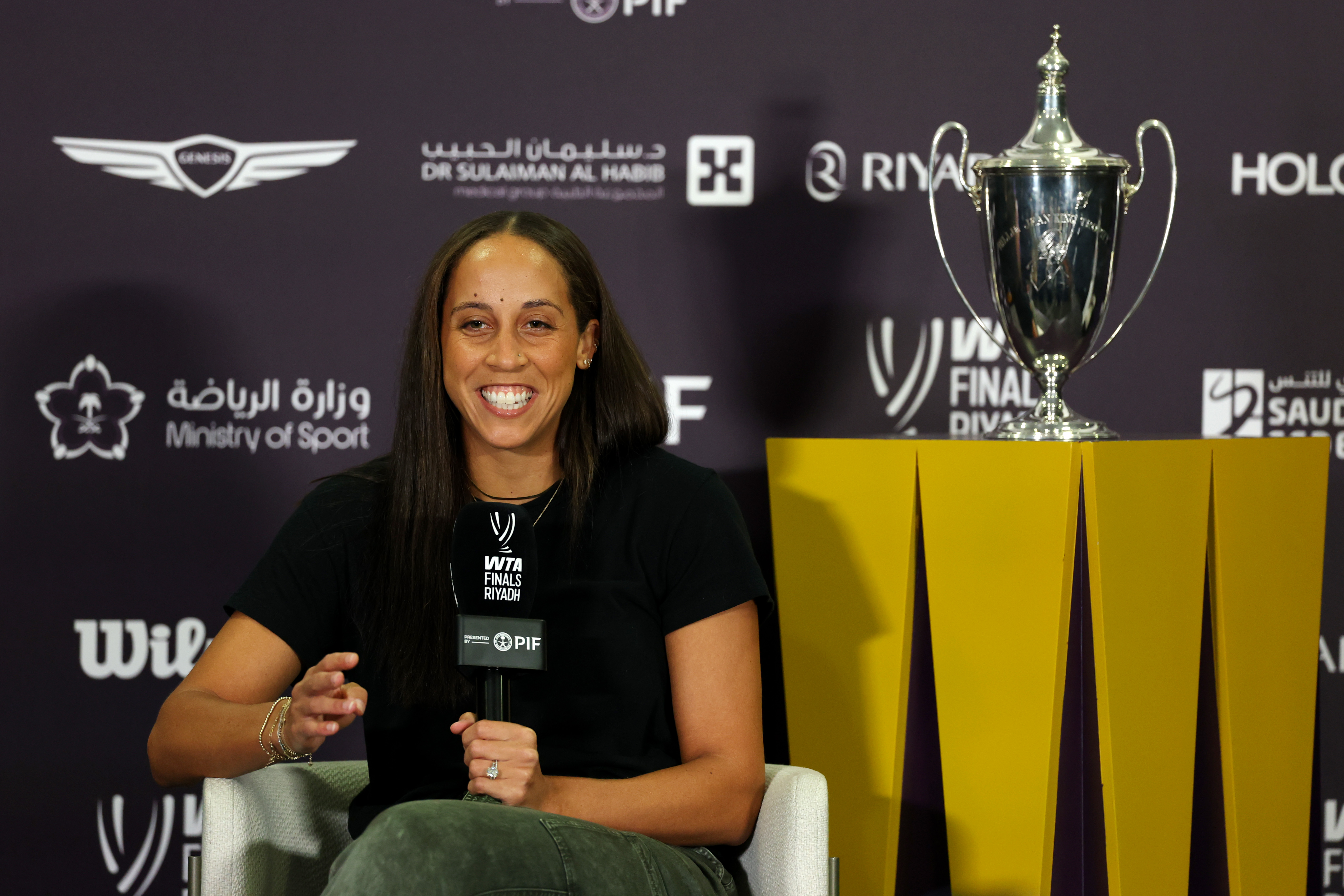
In the sweltering air of Singapore’s Kallang Arena in 2016, a 21-year-old Madison Keys made her WTA Finals debut as the field’s youngest player and sole American, with Serena Williams sidelined by withdrawal. Surrounded by luminaries like Angelique Kerber, Agnieszka Radwanska, Simona Halep, and Garbine Muguruza, she navigated the pressure with wide-eyed determination, securing her lone group-stage victory against eventual champion Dominika Cibulkova. That experience, though cut short, ignited a drive that simmered through years of near-misses, now reigniting at 30 in Riyadh’s indoor confines as the reigning Australian Open winner.
Bridging a decade of determination
Keys reflects on her 2016 entry with a mix of nostalgia and clarity, viewing it as an honor to share the stage with the era’s top talents. She admits youth led her to assume quick returns to the Finals, a complacency shattered by seasons of close calls that tested her resolve. Her 2025 breakthrough in Melbourne, claiming her first major after eight WTA titles, transformed that frustration into fuel, propelling her back to the elite event with the poise of someone who has rewritten her timeline.
“That was obviously an amazing experience,” Keys said of her debut. “It was all of the people that, growing up, were always at the top of the game. So just to be associated with all of them was a huge honor. After that I always wanted to make it back, so being here again, on the flip side of things, is really cool.”
The World No. 7 now savors the significance of this gap, her voice carrying the weight of battles won off the court as much as on it. In Riyadh’s controlled atmosphere, where the crowd’s murmurs build like a gathering pulse, she steps forward not as the newcomer but as a force tempered by time.
Healing body fuels tactical shifts
Entering as the freshest player in the draw, Keys has skipped matches since the US Open to mend lingering injuries, a deliberate reset that contrasts sharply with her 2016 grit. Back then, she pushed through three group encounters on a throbbing left wrist, the arena’s lights blurring into endurance tests; surgery followed just days after, forcing her to miss the next Australian Open. Today, recharged and unburdened, she has refined her serve for crisper angles—infusing slice on the second ball—and pledged more net approaches, turning baseline power into forward pressure on these swift indoor hard courts.
View this post on Instagram.
Her offseason work emphasized one–two combinations, pairing booming serves with inside-out forehands to dictate rallies, while underspin lobs add variety against deep returners. This evolution, honed in dry desert sessions mimicking the Finals’ tempo, positions her to disrupt patterns early, the court’s predictable bounce amplifying her aggressive intent as fans lean in, sensing the shift in her stride.
Navigating a gauntlet with veteran poise
Keys opens against World No. 2 Iga Swiatek, trailing 2-5 in their head-to-head but eyeing upsets through deep returns and crosscourt winners that exploit the Pole’s topspin on faster surfaces. She follows with a debut matchup versus fellow American Amanda Anisimova, where flat groundstrokes and 1–2 setups could spark baseline fireworks, her experience edging volleys to break rhythms. Closing the group, big-serving Elena Rybakina awaits, their 3-3 split often hinging on hold patterns under pressure—Keys countering with down-the-line backhands to stretch the court wide.
To reach the semifinals, two victories loom essential, a tactical tightrope where her longevity shines amid a younger field. She shares this perspective with quiet conviction, emphasizing that majors and peaks can arrive later, reshaping doubts into drive.
“it’s never too late for anything,” Keys told reporters in Riyadh. “I don’t think I would have believed that there would be a nine-year gap in the middle of it, but I’m playing some of my best tennis of my career. Sometimes as you start getting older, you start feeling like you’re running out of time. it’s been a little bit of a perspective change for me, where it’s like, there’s always time.”
Though the veteran tag draws a wince, it underscores her resilience—from wrist recoveries to mental pivots—that keeps her competitive at 30. In the enclosed roar of King Saud University Indoor Courts, her refined arsenal promises bold strokes, the air thick with possibility as she pats herself on the back for enduring, eyes fixed on deeper runs and future chapters yet to unfold.
“it’s definitely something that I’ve had to step back and appreciate,” she added. “I give myself a pat on the back for staying in the mix as long as I have, still being out here. I don’t want to say this is my last. Hopefully there’s more in the future. But yeah, I think it’s definitely giving myself a little bit of a pat on the back for being a 21-year-old, and now being plus nine.”