Sabalenka’s Insatiable Drive Powers Her Reign

Behind the glamour of beach posts and Vogue shoots, Aryna Sabalenka’s unyielding gym grind has locked in over 60 weeks at No. 1, turning 2025 into a year of raw dominance and quiet triumphs.
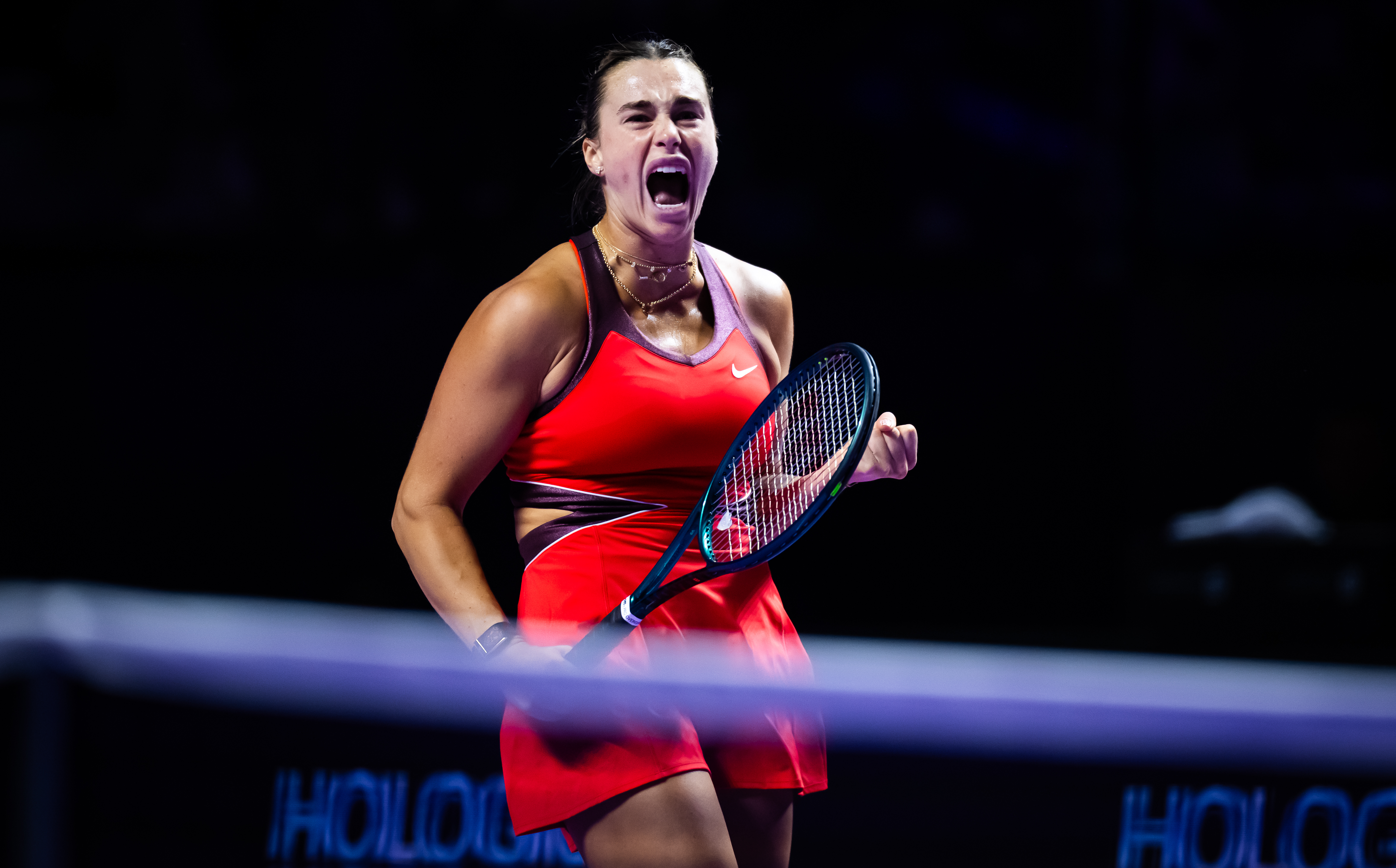
Aryna Sabalenka’s 2025 season didn’t unfold like a vacation reel from the Maldives. While those images capture fleeting escapes, her real story pulses in the gym’s heavy iron clangs and the burn of agility drills that start before dawn. Holding World No. 1 for more than 60 weeks demands this hidden rhythm, a daily commitment that her team calls the ultimate X-factor in her WTA Player of the Year honor.
Jason Stacy, her performance coach, watches her push through fatigue with a fire that borders on relentless. Even when the body whispers for rest, she waves it off, diving into sessions that build the explosive power behind her groundstrokes. This isn’t casual effort; it’s the foundation for turning matches into statements.
“She’s like, ‘No, no, I’m doing the workout,’” Stacy said at the WTA Finals. “She might complain about it, might not really want to do it sometimes, but she’ll always still do it. She has that drive in her, so we actually have to come in and manage it a little bit.”
Strength forges mental armor
Angelique Kerber sees the payoff in every rally Sabalenka dominates. That physical routine translates to court confidence, where heavy topspin forehands kick up dust on clay or bite low on hard courts, forcing returns into the net. it’s a blend of brawn and belief that leaves opponents scrambling.
“The routine is definitely working,” Kerber said recently. “She’s so strong physically. And that strength gives her confidence. And confidence is mental strength. It’s a tough combination to beat.”
Early in the year, losses in the Australian Open final to Madison Keys and the French Open final to Coco Gauff tested that armor. In Melbourne’s crisp air, emotions flared during a tight third set, her inside-out forehands occasionally sailing long under pressure. Paris’s slower bounce amplified the stakes, with Gauff’s defense absorbing her power until composure cracked in the decider.
Yet Sabalenka rebounded fiercely, claiming her fourth major at the US Open. There, on New York’s faster hard courts, she unleashed precise 1–2 patterns—serve followed by a crosscourt backhand—to dismantle defenses, her footwork slicing through the humid night sessions.
Clutch defenses turn tides
The WTA Finals in November brought the season’s tension to a boil under the arena lights. Serving for the first set against Jasmine Paolini, Sabalenka dropped the opening two points, the crowd’s murmur rising with the Italian’s growing belief. She answered with four aces in the next five points, her serve’s flat trajectory jamming returns and flipping the momentum to a 6-3, 6-2 rout.
Semifinal stakes escalated against Amanda Anisimova, who carved out five break points in the opener. Sabalenka erased them with deep down-the-line passes, her backhand’s underspin keeping the American off-balance. Saving 14 of 18 break points across the match, she sealed a three-set thriller, ending Anisimova’s run of 13 straight three-set wins and echoing the finals’ electric buzz.
These moments capped a year of extraordinary reach: finals in four of five majors, four titles overall, and nine final appearances. Her 10,870 ranking points led the tour, while prize money hit $15,008,519—the most in women’s tennis history—fueling a legacy built on resilience rather than flawless perfection.
Maturity closes the gap
At 27, Sabalenka has wrestled her early-career emotional surges into submission, though they surface as human reminders. Post-Paris, Anton Dubrov, her tactical coach, guided reflections without blame, mapping the divide between ideal execution and on-court reality. This honesty sharpened her approach, emphasizing adjustments like varying serve placement to counter aggressive returns.
“Just honest discussions,” Dubrov explained. “What you want is here [holding out his right hand]; what you experienced right now is here [left hand]. There’s this gap between the two and trying to work on it. She’s trying to work on it. She’s more honest about it. I like this. Even after Paris, she was open to talk about it, like ‘Yeah, I was wrong, this is my mistake. We are all humans. What’s next?’ Not everybody is like Roger Federer, always perfect all the time.”
Sabalenka first claimed No. 1 in fall 2023, only for Iga Swiatek to reclaim it eight weeks later at the Cancun WTA Finals. Regaining it 13 months ago, she approached the role with seasoned purpose, her humility driving consistency across surfaces—from Melbourne’s hard courts to Paris’s clay. Dubrov notes her evolution: more motivated to embody the ranking, not just hold it.
Stacy adds that she embraced the position’s weight, maturing into a professional who inspires her team and fans alike. This sense of legacy—carrying herself with poise under scrutiny—sets her apart, turning individual battles into collective triumphs.
Ons Jabeur, who has edged her in two of three Grand Slam encounters, boils down the threat to Sabalenka’s imposing presence. That serve’s pace and her groundstrokes’ depth create a pressure cooker, where even routine balls become traps.
“The way she hits the ball, the power that she has—her serve,” Jabeur said. “She puts a lot of pressure on the player. If you give her an easy ball, you’re going to pay the price. Or … you’re scared to give her an easy ball—and you miss.”
Sabalenka frames her ascent as incremental gains, each gym rep or tactical tweak compounding into dominance. “At this point, it’s just 1% at a time,” she said. “You work a little bit on something, get a little bit better—and it’s already a huge benefit.” As 2026 approaches, this drive positions her to extend her reign, her blend of power and poise keeping the tour on edge from the first serve.