Caty McNally’s Path from Pain to Partnership

Caty McNally clawed back from elbow surgery and a ranking slump to steal a set from Iga Swiatek at Wimbledon, now gearing up for a doubles alliance with Barbora Krejcikova that could redefine her 2026.
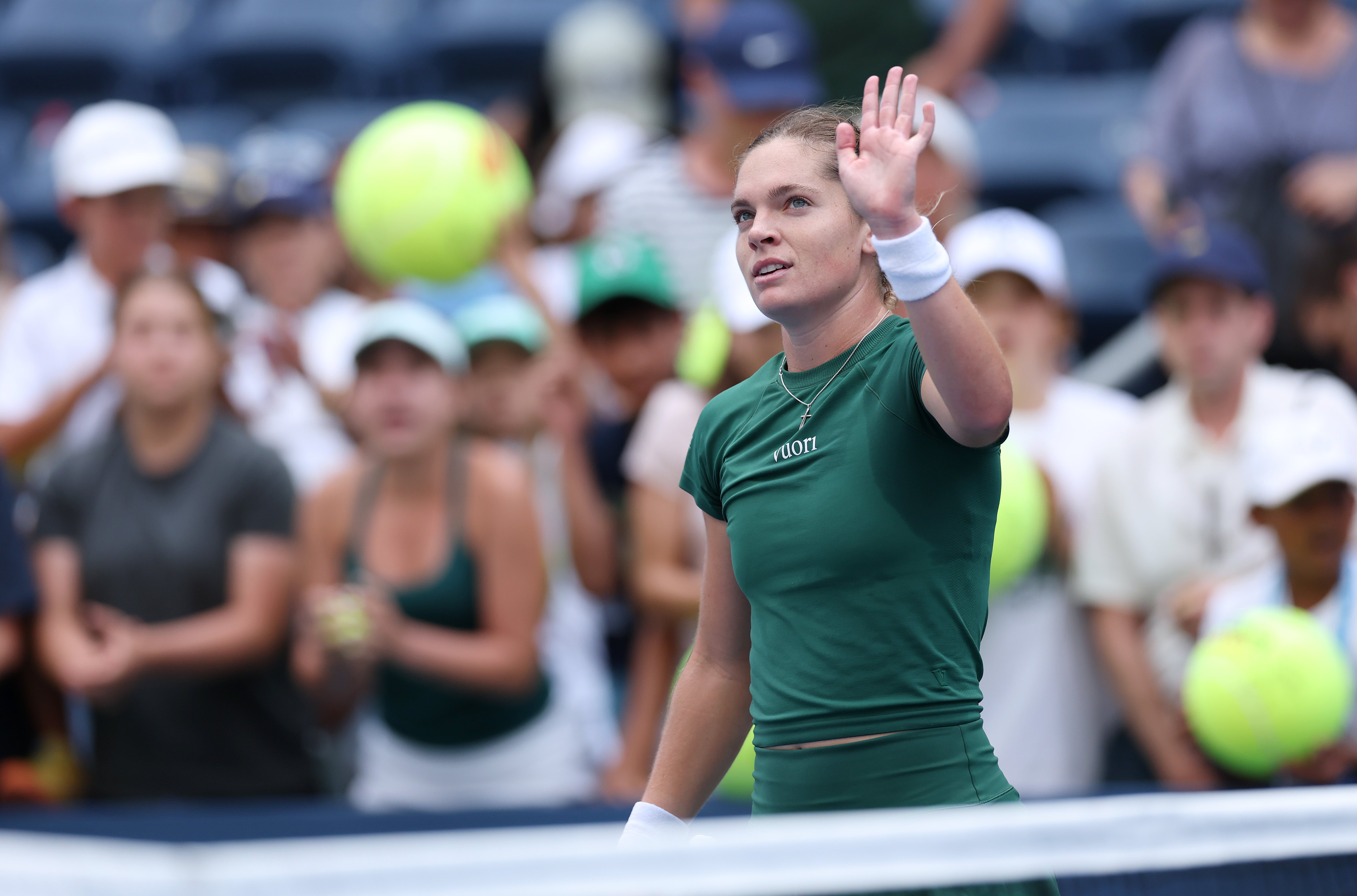
On the eve of 2026, Caty McNally surveys a career reborn from the brink. Her 2025 surge into the Top 100 capped a grueling rebuild, where chip-and-charge tactics on grass sliced through doubt and delivered defiance against the world’s best. From taped-up despair at Wimbledon two years prior to volleys that hushed Centre Court, she turned physical fractures into tactical fortitude, her story a pulse-quickener amid the WTA’s wave of resurgent talents.
Elbow shadows lengthen over the tour
McNally’s slide began in spring 2023, as her stock rose. She had cracked the Top 100 by late 2022, peaking at No. 54 in May 2023, and earned direct entry to Wimbledon for the first time. But a hamstring tear in her Paris WTA 125 semifinal against Katie Volynets forced her out of the final and sidelined her from Roland Garros, unraveling her debut full tour season.
The hamstring mended in Paris, yet elbow stiffness emerged after a Rome first-round win over Dalila Spiteri. It hampered serve acceleration and overheads during the grass swing, but she pressed on. By Wimbledon, pain erased the joy; she lost 6-1, 6-3 to Jodie Burrage, her body a map of tape under the London sun.
“Wimbledon 2023 was definitely the lowest point of my career,” McNally said via video from Cincinnati. “I just remember playing there, at such an amazing place, and there was no joy. I played the grass season in a lot of pain, I was very unhappy and I was just so consumed by having tape all over my body.”
That match ushered in over six months away. Diagnosis pinpointed an ulnar collateral ligament tear, unusual in tennis but familiar from baseball’s Tommy John repairs. Conflicting medical views piled on frustration as she chased non-surgical fixes.
She chose platelet-rich plasma injections, enduring a six-month break. Early 2024 brought three tournaments before the elbow rebelled again, an MRI revealing the retear. Rankings plunged outside the Top 1,000, the tour’s churn amplifying her isolation.
“I was told I was never going to need surgery,” she recalled. “And then the doctor was like, ‘You should start looking at surgeons.' Mentally, that was really difficult because I felt like I wasted eight months of my career when I was at such a good point.”
Surgery followed, her second comeback launching in November 2024. Doubts shadowed rehab’s middle stretch, when swings felt restrained, her net-rushing flair at risk. Yet she reframed the ordeal, prioritizing a body-wide overhaul to channel power from hips and ground up.
“The body in tennis is a chain, so you have to strengthen the whole thing,” she explained. “A massive thing is making sure my shoulders are as strong as they can be, and super stable. Anything that’s going to help the shoulder is going to go down the chain to the elbow, to the wrist. And it comes from the ground up, so I’ve learned a lot about not just my elbow, but my feet—trying to make my ankles more mobile, my hips, all of that. So the power can just come from those big areas, like my hips—and then my arm can just be like a whip, and not hold so much tension.”
This holistic shift elevated her routine, blending recovery with prevention. Her Tampa ITF W50 win—her third event back—ignited confidence, a humid Florida afternoon where volleys snapped clean and serves whipped free. The victory propelled her through 2025’s qualifiers and challengers, each point a reclamation.
Wimbledon redemption unfolds on grass
Grass courts suited her revival, low bounces amplifying slice depth and charge speed. Drawn against Burrage in Wimbledon’s 2025 opener—the same opponent from her 2023 low—McNally sensed fate’s twist. She dispatched the Brit 6-3, 6-1, underspin backhands skidding low, inside-in forehands pinning returns deep before net finishes.
“I was like, you can’t make this up,” she said of the draw. “This is crazy. To be able to go out there and win that first round was incredible.”
Momentum surged into the second round against Iga Swiatek, her 2018 Roland Garros girls’ doubles partner. From 1-4 down in the first set, McNally chipped approaches crosscourt, drawing the Pole forward off rhythm, then volleyed swashbuckling winners. She claimed it 7-5, Swiatek’s toughest hurdle en route to her first Wimbledon title, though the American fell 5-7, 6-2, 6-1.
That set—the champion’s only drop—validated her evolution. Centre Court’s roar built with each exchange, the air thick with tension as her topspin pulled wide, setting up down-the-line passes. It echoed a full-circle dream deferred, her childhood self beaming from the stands in memory.
“Little me would be so proud,” she posted on Instagram after the match.
July’s streak followed: 10 straight wins across Newport’s WTA 125 and Evansville’s ITF W100. In Newport’s final, she overcame Tatjana Maria 2-6, 6-4, 6-2, both net prowlers trading one-two rushes, McNally adjusting with deeper slices to outpace her rival’s chips. The grass sward yielded to her tempo, points flashing quick under coastal breezes.
“I truly enjoyed that match,” she said. “It was true grass-court tennis, that’s for sure.”
Winning a set off Iga was incredible—I can kind of give myself a pat on the back for that—and I watched her kick butt for the rest of the tournament.
These runs, amid the tour’s surface hops, tested her rebuilt chain. Mobility drills for ankles and hips grounded her power, serves kicking higher without elbow strain. Her story intertwined with the WTA’s comeback series, much like how a rare nervous condition helped Kaja Juvan reset her approach to tennis, where inner resets fueled outer gains.
Doubles alliance sparks new ambitions
As 2025 waned, an inbox surprise arrived: Barbora Krejcikova, seven-time doubles Slam winner and two-time singles major champion, proposed partnering in 2026. McNally, with eight doubles titles and two US Open finals, saw synergy in the Czech’s all-court craft matching her charges. The duo could unleash crosscourt setups into volley one-twos, blending precision with aggression on any surface.
“She’s a legend,” McNally said. “I’m honored to play with her. She’s honestly been one of my role models. You know, she had doubles success first. In a lot of my career, especially in juniors and maybe early on in my pro career, I had a lot more success in doubles. And she’s just one of those people that shows you, hey, you can go out there and win a Grand Slam in singles, too.”
“I don’t want to just be labelled as a doubles player,” she added. “Like, no, I’m a tennis player. I play both. I’ve had more success in doubles early on. But I can still play singles, and I still want to win Grand Slams in singles. She has a lot of experience in that, and I’m looking forward to learning from her.”
This pairing fits the scouting spotlight on 2026 risers, akin to a fresh outlook, a few tweaks and a major move led to Ann Li’s resurgence, and behind Joanna Garland’s globe-spanning, Radiohead-soundtracked 2025 rise. Post-surgery, her arm braced for six weeks, McNally couldn’t even tie her hair; now, strength flows unchecked.
The Tampa triumph lingered as a touchstone, her first post-op title amid Florida’s sticky heat. It bridged to fall events, where tactical tweaks—like mixing slice to force errors, then inside-out forehands—sustained momentum. With Krejcikova, 2026 opens doors to shared courts, her singles drive undimmed, volleys poised to echo across majors.