Joanna Garland’s Moody Ascent Through 2025

From wrist tears to WTA semifinals, Chinese Taipei’s Joanna Garland climbed 430 spots in the rankings, her Radiohead-fueled grind turning global hardships into on-court thunder.
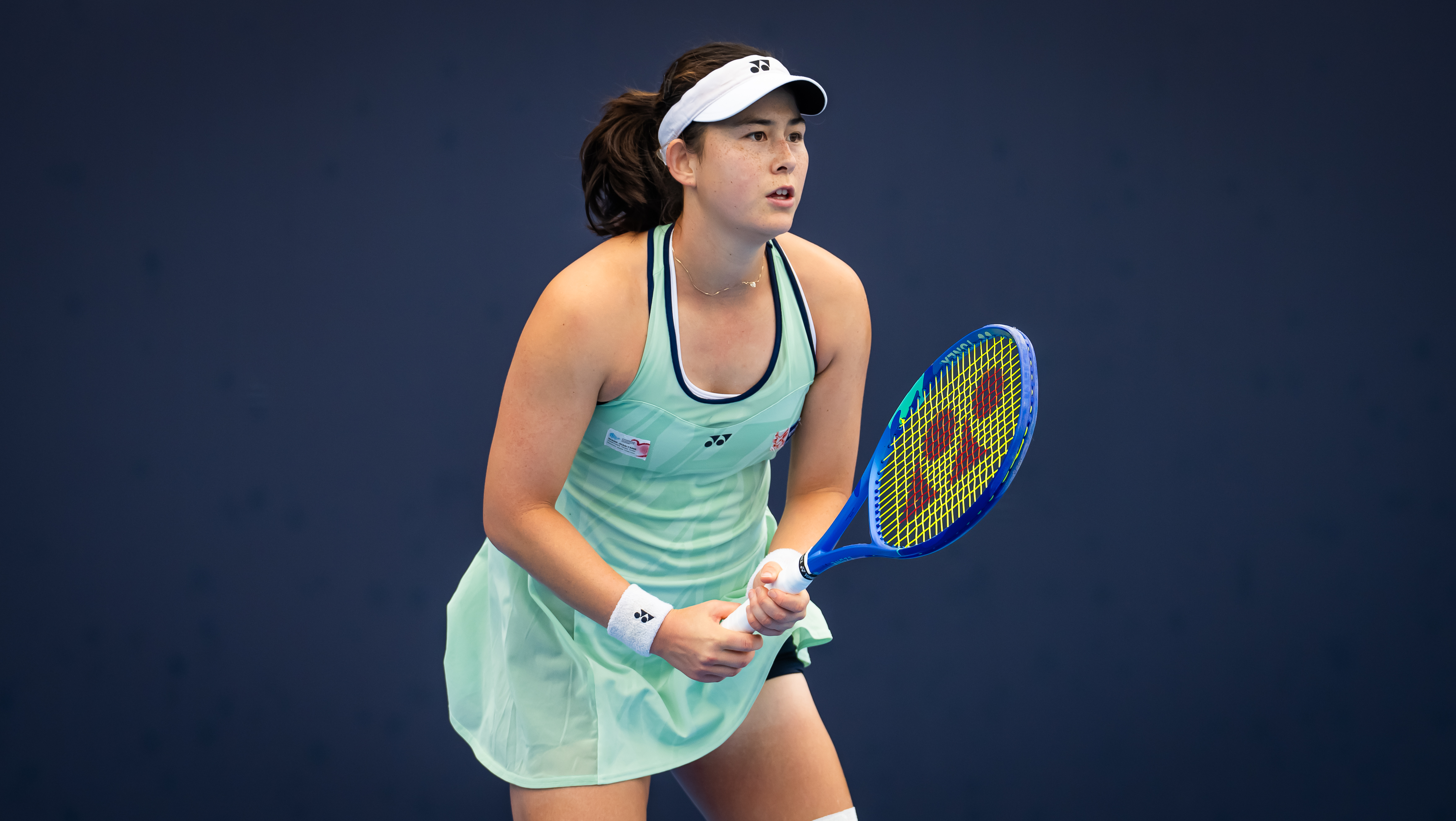
Joanna Garland wrapped 2025 at No. 121, a staggering leap from No. 551 that traced through Grand Slam debuts, a first WTA semifinal, and a 29-match winning streak. The 24-year-old from Chinese Taipei mapped her resurgence across frozen Turkish pitches and rain-soaked Italian carpets, her heavy topspin forehand slicing through defenses on varied surfaces. As off-season training echoes in the Netherlands, her playlist of brooding Radiohead tracks underscores the mental edges she honed amid injuries and cultural pulls.
Via video call, she shares the soundtrack that carried her: a collection titled Depressing Radiohead Songs, all gloom and chill. it’s a far cry from the upbeat beats most WTA players spin, and she’s yet to spot another tour fan. “If there are any, tell them to get in touch and we can be nerds and discuss their music,” she says.
“The playlist I’ve been listening to is called Depressing Radiohead Songs,” the 24-year-old Chinese Taipei player reveals via video call from her base in the Netherlands. “it’s gloomy, dark and cold.”
Roots bridging distant worlds
Born in Stevenage to a British father and Chinese Taipei mother, Garland’s early sparks came from family ties to the sport. Her father shared a club with doubles standout Chuang Chia-Jung, and the family hosted the champion during European swings between Roland Garros and Wimbledon. At 10, they moved to Kaohsiung for cultural immersion, a six-month plan that stretched to five years, with Garland finishing high school there after her parents returned to the UK.
The shift plunged her into a system that funneled athletic talents into dedicated classes with unyielding coaches, transforming casual hits into daily rigor. Tennis courts stood free and accessible, fueling competition she credits for igniting her pro dreams—something the pricier British setup might have dimmed. Yet she saw peers’ potential stifled by doubt, a cultural whisper of barriers too high to scale.
“it’s always, ‘You’re not doing well enough, it’s so tough to make it as a pro, you’re not gonna do it, it costs too much money,'” she observes. “But actually, there’s a lot of talent there. I think the kids work really hard and they’re very polite, they’re very grounded. They just need to be given a lot more belief.”
Radiohead entered as a lifeline, albums like The Bends and OK Computer linking her to parents’ youth—raw guitars and ambient swells blasting from an MP3 player on confiscated-phone team trips. Those sounds wove into tournament buses and match warm-ups, a nostalgic thread tying British comfort to Taiwanese intensity. “Listening to those albums gives me this quiet connection to both of my parents,” she explains. “It makes me imagine them being young, happy and stress-free before they had me, which makes me smile.”
“Back when I was travelling for national tournaments with my school team, phones would always get confiscated by our coaches,” she recalls. “My MP3 player was my main source of entertainment. So there’s this nostalgic element to Radiohead too, as that was lots of what I was blasting through my headphones. Therefore I associate some of the great memories I have and matches I played with their music.”
Injuries fueling deliberate detours
Early 2024 hit hard: a split ECU tendon and torn TFCC in her wrist confined her to backhand slices for four months, then an ankle roll followed her rushed push to return. That haste brewed from a wrenching nationality debate—tempted by British prospects yet anchored to Chinese Taipei’s support and her Olympic hopes for Paris. She chose to stay, but the pressure to qualify amplified every setback, turning rehab into a lesson in self-prioritization.
“It was a big headache,” she admits. “Part of me was like, hey, maybe there’s this big opportunity here. And then the other part of me was like, I love [Chinese Taipei].”
“I wish I just spent more time on myself,” Garland reflected. “Like, really taking good care of myself, and not trying to do things or trying to rush back into things for other people.”
By September, healed and hungry, she plotted an ITF odyssey aimed at Grand Slam qualifying, picking venues to maximize her kick serve’s arc and forehand’s bite. Kayseri’s altitude in Türkiye sent balls soaring, her topspin dipping late for inside-out winners amid hail and freeze. Solarino’s carpet in Italy accelerated her flat drives, crosscourt lasers skidding low as rain crammed two matches into one day, while Nairobi’s milder fields let her power overwhelm, the crowd’s young cheers a quiet reward.
“Kayseri, hardcore altitude,” she details her calculus. “Hopefully the ball is going to bounce so I can really utilize my kick serve and my topspin forehand. Carpet in Italy, the ball’s gonna shoot through the court. A lot of girls won’t like it but I can hit a big ball, so probably quite smart to play there. Sharm, I love the courts there, they’re fast. Nairobi, there wasn’t much on. We’re like, OK, altitude, probably not the strongest event—go there.”
Sharm el Sheikh’s swift hardcourts sparked her streak, titles piling as she cracked the Top 200 by May. That surge qualified her for Roland Garros, where a second-round clash with Katie Volynets unfolded: heavy forehands pulling the American wide, setting up short angles and a first Top 100 scalp on clay’s grip. Chennai’s semis tested her anew, a 5-0 final-set edge over Kimberly Birrell slipping in the heat, but the near-miss etched progress deep.
Power rediscovered in the grind
Garland’s junior fire—relentless attacks, forehand whips refusing defense—faded between 19 and 21 under defensive drills that muddled her style. Dutch coach Tim de Rooij flipped the script, accelerating her racquet head for deeper, dipping topspin and freeing her backhand for down-the-line flats. This 1–2 rhythm—serve kick forcing weak replies, forehand crosscourt opener—dominated faster decks, her inside-in strikes pinning foes in Chennai’s swelter.
“When I was a junior that was my game,” she says. “I wouldn’t take no for an answer when it came to attacking. As soon as the ball comes down slow, I’m up the court and hitting it hard. I kind of lost that a little bit when I was 19 to 21. I got told I was a bad defender. I did a lot of work on my defense and I think lost my identity a bit. I didn’t feel I had a style. I was going through the process of a match without having a game plan to focus on.”
Post-Chennai talks with de Rooij and her psychologist reframed the collapse: solid tennis nearly bagged a final, Birrell’s grit earning respect. “As much as it hurts, I played such good tennis in that match,” Garland notes, her laugh cutting the sting. “I was only one point away from a WTA final, which is not very far away. I don’t think I did anything wrong, and credit to Kim, who played some pretty awesome tennis and hung in there. It was the perfect match to end the season with, even if I didn’t win.”
Scars from injuries keep goals fluid, but 2025’s highs—main-draw buzz, upset thrills—stir a fiercer pull. Throughout December, wtatennis.com runs interviews with players set for 2026 impacts after 2025 surges, including How a rare nervous condition helped Kaja Juvan reset her approach to tennis and A fresh outlook, a few tweaks and a major move led to Ann Li’s resurgence. Garland savors the circuit’s pulse now, her multicultural forge yielding a game poised for Top 100 breaches. “I love this life,” she affirms. “I’ve enjoyed it so much. I’ve learned I’m capable of more than I think. A few days off, and I wanted to go back on tour again.”