Pushkareva claims longest Wimbledon junior final

Seeded fourteenth and facing a rival who had beaten her twice already, the Russian mixed slice approaches with inside-out forehands to rewrite the outcome on grass.
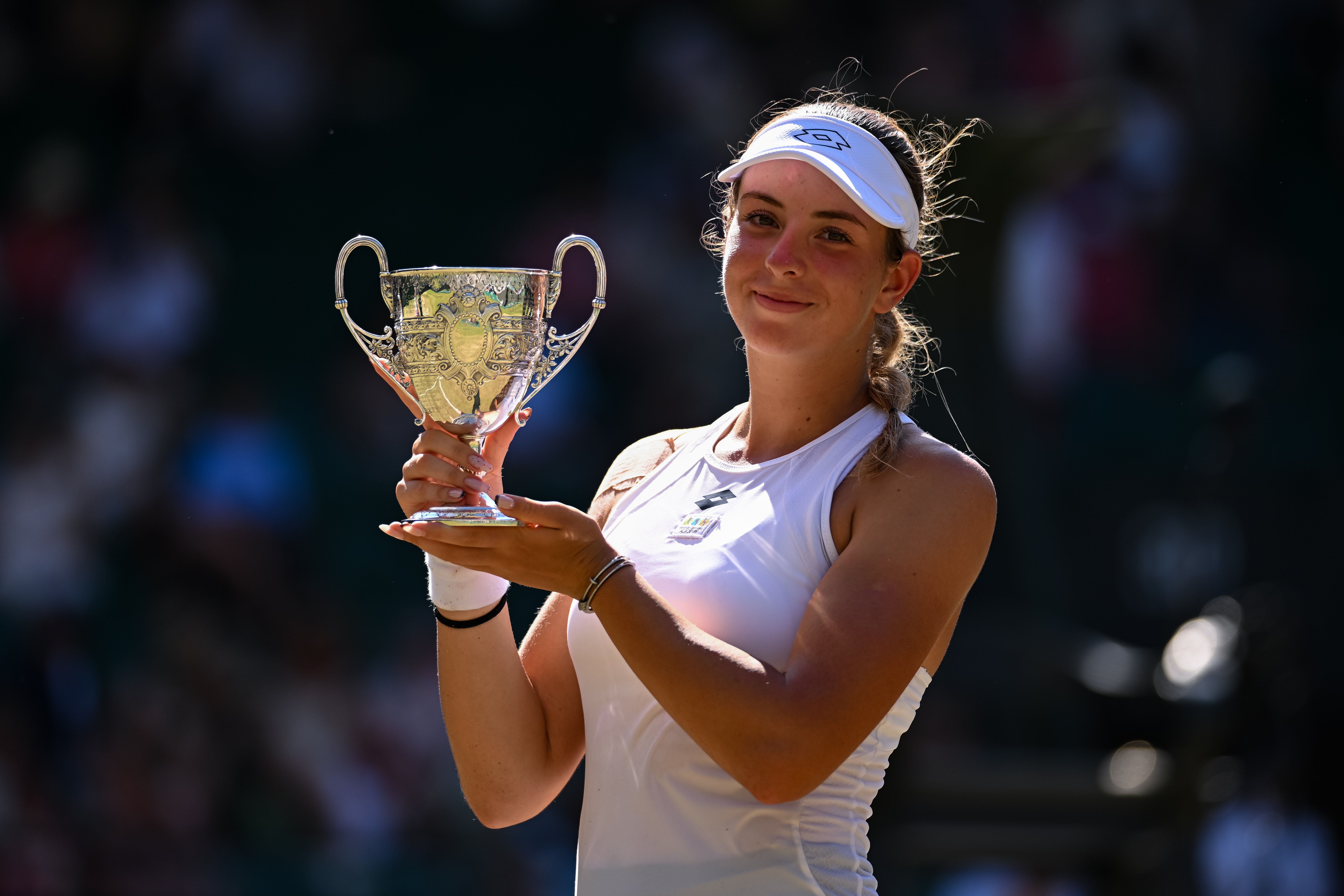
Anna Pushkareva rallied from a set down to defeat Sun Xinran 5-7, 6-3, 6-4 in the longest junior girls singles final in Wimbledon history.
Old defeats shape new tactics
Pushkareva walked onto Court 18 carrying the memory of two straight losses to Sun Xinran. The latest defeat had come on clay in Milan just months earlier, yet the grass surface and the final itself demanded an entirely different response under the lengthening July shadows.
Seeded 14, Pushkareva dropped the opening set 5-7 after Sun dictated with heavy crosscourt drives that pinned her wide. The Russian responded by shortening the points, mixing slice approaches to draw Sun forward and then threading inside-out forehands that caught the Chinese player leaning the wrong way.
By the second set the pattern had shifted. Pushkareva began to step inside the baseline on second serves, converting the 1–2 combination into quick points rather than extended rallies. The adjustment paid off immediately as she broke twice to take the set 6-3.
The deciding set stayed tight until 4-4. Pushkareva then produced two down-the-line winners on consecutive points, the first a backhand that skimmed the line, the second an inside-in forehand that left Sun reaching. She closed the match 6-4 after two hours and 23 minutes.
Anna Pushkareva is the Girls’ Singles champion 🏆
She defeats Xinran Sun 5-7, 6-3, 6-4 after 2hrs and 23 minutes in the longest Girls’ final in Wimbledon history. pic.twitter.com/QOoohoEDoj— Wimbledon (@Wimbledon) July 11, 2026
Pressure builds across the season
The 15-year-old Sun also finished runner-up in the Roland Garros junior girls singles event last month. That run added weight to every ball she struck at Wimbledon, yet Pushkareva refused to let the younger player’s momentum dictate the outcome.
Before this fortnight Pushkareva had never advanced beyond the round of 16 in a junior Grand Slam singles draw. The fortnight therefore carried extra emotional freight. Each round win eased a little of the accumulated doubt from earlier exits, until the final itself became the ultimate test of whether she could rewrite the narrative against her chief tormentor.
Sun’s earlier victories had come on clay and hard courts. The grass rewarded different footwork and lower ball trajectories. Pushkareva’s willingness to stay low and redirect pace rather than generate her own allowed her to neutralise Sun’s preferred heavy topspin patterns and turn defence into sudden offence.
History made in doubles too
While the singles final stretched into the evening, Jana Kovackova completed her own long arc. Partnered with Katerina Zajickova, the Czech pair defeated Victoria Luiza Barros and Nauhany Vitoria Leme da Silva 7-6, 6-7, 10-6 in one hour and 53 minutes to secure the girls doubles crown.
Kovackova had already claimed the 2025 U.S. Open and 2026 Australian Open doubles titles with her sister Alena. The Roland Garros success with Zajickova completed the non-calendar-year sweep, a feat eight other players had approached but none had finished. July 11, 2026 marked the close of a Wimbledon junior fortnight defined by players who refused to let previous results dictate their present.
Barros and Leme da Silva, aiming to become the first Brazilian junior Grand Slam champions in either discipline, fought point for point yet could not convert their chances in the deciding tiebreak. The Czechs’ experience in high-stakes situations proved decisive as they varied their serve locations and kept the Brazilians guessing on return.
Pushkareva and Kovackova both showed that sustained tactical clarity under mounting expectation can rewrite personal and historical records alike.