Pegula flips script after first-set loss to reach Wimbledon quarters

Jessica Pegula absorbed an early blow from a stylistic mirror in Iva Jovic before sharpening her serve and spin to complete a surface sweep and book another all-American quarterfinal.
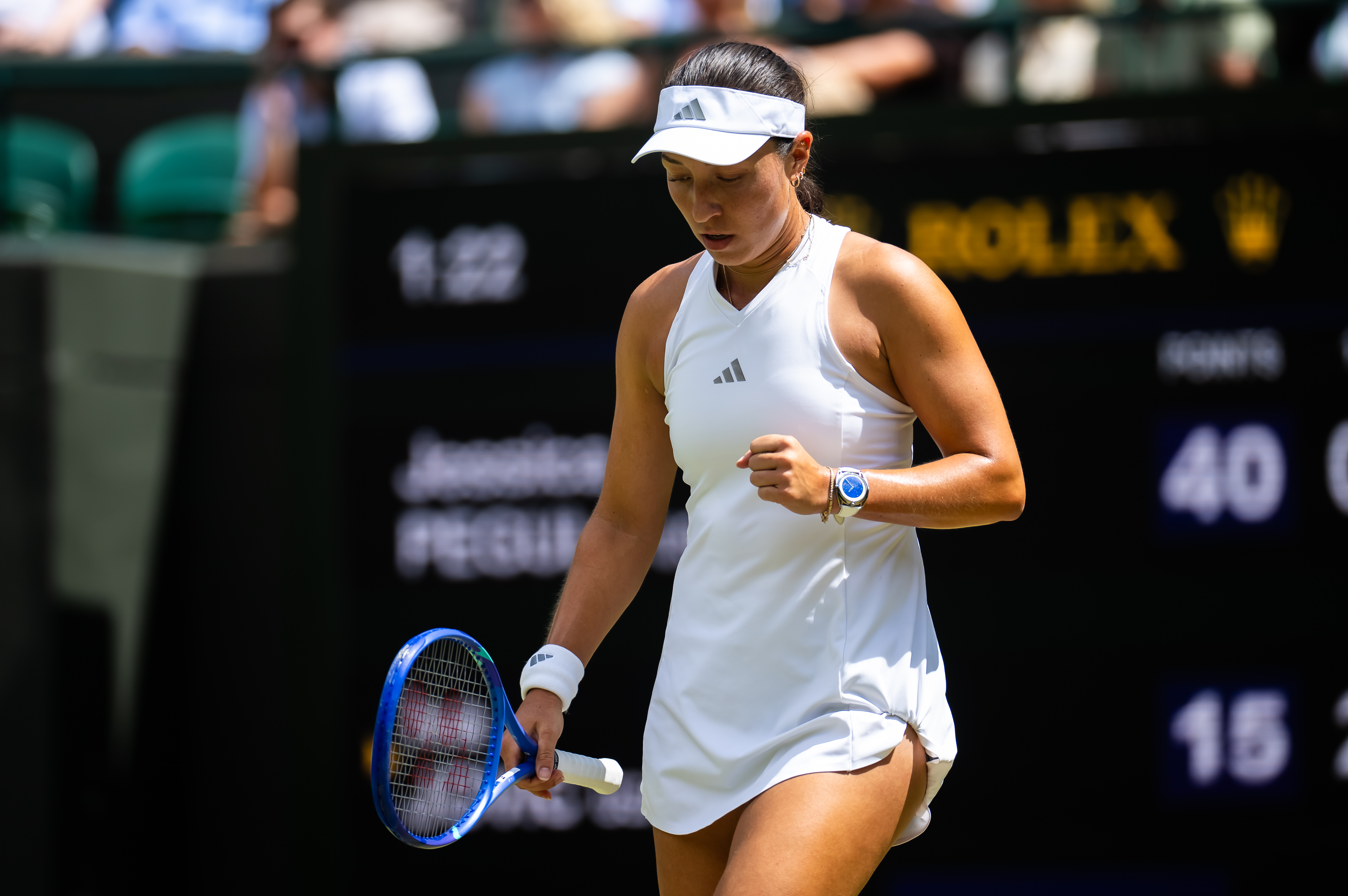
Jessica Pegula dropped the opening set to Iva Jovic yet recovered to win 4-6 6-3 6-1 and reach her second Wimbledon quarterfinal since 2023. The No. 4 seed completed a 2026 surface trilogy against the same opponent after earlier victories on hard courts in Dubai and green clay in Charleston. She now prepares for an all-American quarterfinal against No. 7 seed Coco Gauff following Gauff’s three-set win over No. 11 seed Belinda Bencic.
Pegula described Jovic as a “mini-me” and the resemblance showed early as both players traded breaks and accumulated errors across the grass. Only five winners appeared from each side in the opening set while unforced mistakes reached sixteen for Pegula and twelve for Jovic. Pegula converted just six of seventeen first-serve points and surrendered four breaks before dropping the set.
Hopefully, I can play our game better.
First set reveals shared vulnerabilities
Grass rewarded early ball striking yet punished tentative second serves. Both competitors absorbed pace well and created a prolonged exchange of crosscourt backhands that favored the younger player’s timing. Jovic broke four times in the first set alone, capitalizing on Pegula’s low first-serve percentage and reactive positioning. The No. 16 seed had broken Pegula only three times across their prior two encounters.
Pegula’s coach noted the tendency to react rather than dictate, turning rallies into extended baseline duels where Jovic’s flatter trajectory found more success. The 1–2 pattern that worked on hard and clay courts required immediate adjustment once the surface sped up play. Pegula later increased first-serve percentage above eighty percent in the second set and limited Jovic to a single break. She added slice on the serve to disrupt Jovic’s return rhythm and began stepping inside the baseline on second-serve returns.
Those changes produced eight total breaks across the final two sets. The visible shift from frustration to clenched-fist celebrations showed how quickly confidence returns when the serve starts landing. Jovic later described the anxiety that builds when the first serve deserts a player and leaves the second serve under constant attack. That pressure had already surfaced in the first set when Pegula converted three of her own break chances yet could not hold the lead.
Serve adjustments restore forward momentum
Trailing 0-40 on Jovic’s serve at 3-0 in the third set, Pegula rattled off five straight points by mixing heavy topspin forehands with inside-out drives that pulled the No. 16 seed wide. The tactical pivot from reactive defense to proactive direction changes mirrored the advice received between sets. Jovic acknowledged the serve adjustment cost her rhythm on returns and prevented her from holding serve consistently after the opening set.
Pegula’s ability to raise first-serve point win rate while maintaining break conversion proved decisive on a surface where hold percentages typically climb. The trilogy across three surfaces highlighted how quickly small technical tweaks can neutralize stylistic similarities. By the third set the pattern repeated with even greater authority as Pegula erased three break points at 0-40 in one service game and claimed five straight points to seize the early lead.
She then won three consecutive games after Jovic held for 3-1, closing the match 6-1 while the Centre Court crowd responded to each clean winner with rising volume. The psychological arc stretched beyond a single afternoon. Reaching a second Grand Slam quarterfinal in 2026 placed fresh demands on recovery between matches and on handling the expectation that follows a top-four seed.
Quarterfinal test looms against Gauff
Pegula’s ability to flip the script after the first-set loss suggested the season’s earlier triumphs had built a deeper reservoir of belief. Rankings implications matter here. A quarterfinal appearance keeps Pegula inside the top four with room to gain points depending on the outcome against Gauff. Jovic, meanwhile, gained valuable experience on a surface she had never practiced against Pegula, yet her first-serve win rate stayed low enough to prevent sustained pressure.
The younger American admitted the low first-serve percentage had cascaded into every other part of her game. Pegula’s serve variety and court positioning adjustments allowed her to close out the match after the early stumble, while Jovic identified the need to improve return adjustments when opponents alter spin and pace. The draw opens further questions about how the remaining American seeds will navigate the grass-court speed through the final weekend.