Vacherot Navigates Stardom’s Surge Down Under

Valentin Vacherot savors the glow of his 2025 Shanghai Masters fairy tale while steeling for the Australian Open’s grind, where sudden fame meets the tour’s unyielding pace.
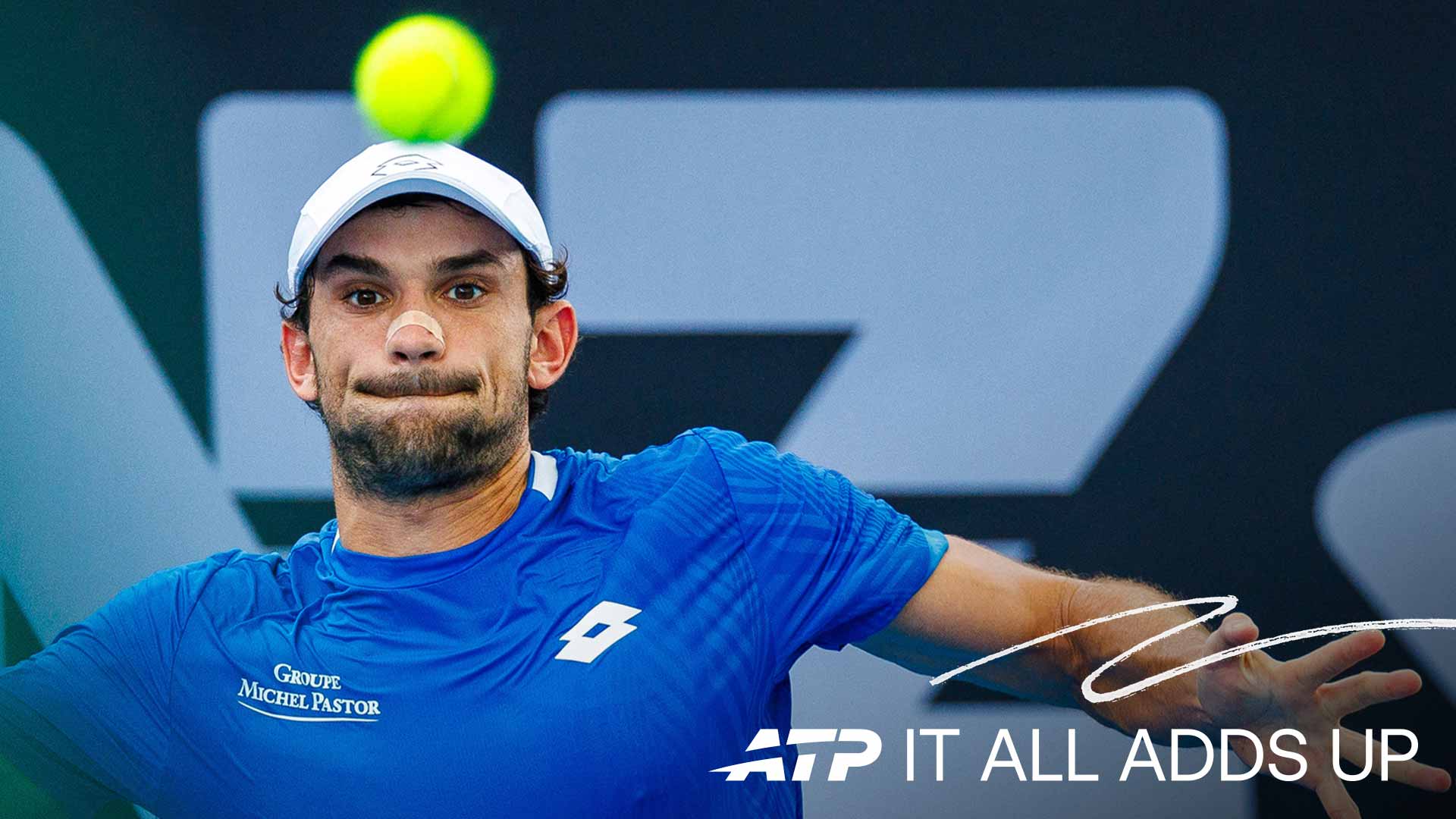
In Melbourne Park’s buzzing prelude, where the Australian Open‘s hard courts hum under January sun, Valentin Vacherot carries the weight of a season that rewrote his path. The 27-year-old Monegasque’s breakthrough at the 2025 Shanghai Masters, a run from qualifying to the title that stunned the tour, lingers like a well-struck inside-out forehand. Upsetting Novak Djokovic along the way etched him as the lowest-ranked Masters 1000 champion ever, but three months later, he embraces the reflection amid the fast-forward churn of pro tennis.
That triumph’s afterglow tested his focus immediately, with wild cards thrusting him into Basel and Paris before the year closed. Crowds pressed with questions about China, yet his steady play—rallying deep with heavy topspin to blunt returns—grounded him, shifting attention to the present match. Even now, ahead of his main-draw debut at the Australian Open, he welcomes the conversation, the mental anchor steadying his step onto these plexicushion courts.
“Of course I want to focus on what is coming ahead, but I’m not going to be mad about talking about Shanghai,” the lowest-ranked Masters 1000 champion in history told ATPTour.com ahead of his main-draw debut at the Australian Open. “It’s just amazing what happened and of course I’m happy to talk about it.”
“Immediately after it was not easy because the season wasn’t over and I got wild cards in Basel and in Paris. When you’re in a tournament, and everyone keeps talking about the previous tournament, that’s when it’s not easy. What is good is that I played good as well in those tournaments, so it helped put a little bit of a stop on Shanghai and let me straightaway focus on the current one.”
Offseason prep builds lasting momentum
The Shanghai surge reshaped Vacherot‘s offseason, a stark shift from his pre-2025 routine of Challenger grinds stretching into December. Reaching the quarterfinals at the Paris Masters propelled him to a career-high No. 30 in the PIF ATP Rankings, letting him wrap the season on November 2 with two weeks of true rest before resuming training on the 15th. That seven-week block—six at home, then nine days in Australia—fueled daily sessions with renewed drive, the memories of inside-in winners against Djokovic sharpening his 1–2 patterns from the baseline.
Before this, his 64-45 Challenger record across four titles demanded constant travel and adaptation to erratic schedules, but the ATP Tour’s structure now offers clarity. He began 2026 with a first-round exit in Brisbane’s sticky heat, rebounding to the Adelaide quarters by mixing crosscourt backhands with underspin to disrupt aggressive serves. The psychological lift from extended prep eases the transition, turning motivation into consistent footwork on these faster hard courts.
“The big difference is that by having played so well and on the big Tour for the past months, I finished my season on the second of November,” said the 27-year-old, who won Breakthrough of the Year in the 2025 ATP Awards. “That meant two weeks of vacation, and I went back to training on the 15th of November. So I had seven weeks of training, and I’ve never had that before.”
“That was amazing to get ready for the big stage. Also with all that happened, let’s say that it was a bit easier to go every day, every morning, for practice. I did six weeks at home and then I left early to come to Australia to do the last eight or nine days of training. But of course, it was motivating to wake up after all I’d done.”
Schedule freedom demands peak freshness
Vacherot’s new reality flips the Challenger scramble into strategic choice, where the tour’s mandatory 500s and 1000s map a predictable path. No longer chasing every event, he now weighs options between ATP 250s, prioritizing recovery to stay near 100 percent against elite fields. This mental recalibration suits the hard-court swing’s tempo, where a fresh mind spots openings for down-the-line returns amid prolonged rallies.
His game, honed on varied surfaces, thrives on this stability—using slice to vary pace after a heavy forehand, keeping opponents guessing in Adelaide’s wind-swept exchanges. The pressure of sustaining Shanghai’s 1000 points looms, but rest weeks buffer burnout, essential when every match hinges on split-second adjustments to spin and bounce.
“Sometimes with Challengers, it is ‘How many weeks do I play?’ Because if you want to play Challengers every week you can, but it’s not great,” explained Vacherot, who began 2026 with a first-round exit in Brisbane and a quarter-final run in Adelaide. “Now it’s more like, ‘Okay, there are those tournaments to play’. Sometimes you pick, in between those weeks, between two ATP 250s, and that’s it. Because you aren’t going to skip any 500s or 1000s, you know exactly what you’re going to play. It’s wonderful.”
“Now it’s going to be more about, ‘Which weeks do I take off?’ When I start playing well, I can take weeks off to get fresh again. I think it’s important on the big Tour to be fresh physically and mentally when you step on court because everyone is so good. You need to be almost 100 per cent every time.”
Melbourne opener eyes deeper runs
Under Rod Laver Arena’s evening glare Monday, Vacherot faces qualifier Martin Damm for his first Grand Slam main-draw win, a step beyond his 2024 Roland Garros qualifier entry on clay’s grinding slides. These Australian courts, truer and quicker, favor his topspin aggression, letting him pin foes deep before slicing approaches to the net. With coach and half-brother Benjamin Ballaret, they’ve reset targets mid-2025 surge, forgoing strict rankings for tournament depth—pushing hot weeks toward semifinals or finals to build points steadily.
Finishing No. 31 caught them off guard two months from season’s end, but the focus sharpens on seizing early momentum, avoiding early exits like Brisbane’s. A second-week push here would mark arrival, blending Shanghai’s upset poise with tour-honed tactics. As Melbourne’s crowds pulse with night-session energy, Vacherot’s composure—forged in China’s roar and the tour’s rhythm—sets him to extend the fairy tale, point by calculated point.
“We had to [set new goals], because two months before the end of the season, I wasn’t expecting to finish No. 31 in the world and to be playing a schedule full of ATPs,” said Vacherot. “It’s easy to say we aren’t putting a goal on my ranking, but it’s more about basically what I did at the end of last season. Weeks when I feel like I have my chance, where I start playing good at the beginning of the tournament, and use those first matches to not just stop at the first or second round. Try to go straightaway to semi-finals or finals.”
“That’s how it works if you want to rack up points, you have to go deep at tournaments. I know I’m not going to make quarter-finals or semi-finals every week, because everyone plays so well… But use the weeks where you feel good, where you play good and really try to make as much of it as possible. Of course, I also had to put in a goal for Grand Slams. If I can catch a second week, even in Melbourne, that would be great and allow me to put in some other goals.”