Etcheverry Claims Rio Glory After Years of Heartache

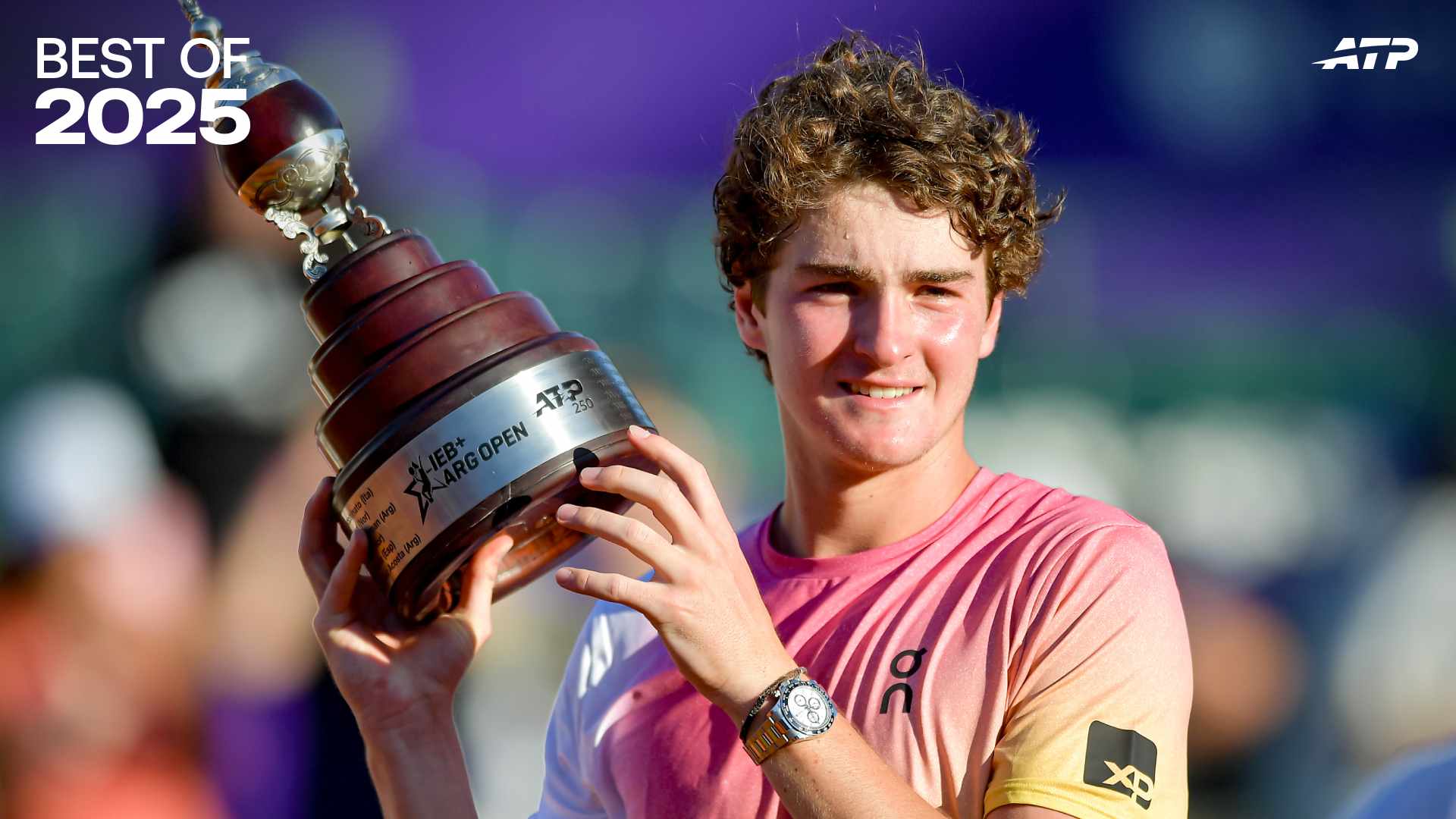
Tomas Martin Etcheverry turned Rio’s red clay into his redemption ground, grinding out a double on Sunday to lift his first ATP Tour trophy and silence the echoes of three lost finals.

In the sticky heat of Rio de Janeiro, Tomas Martin Etcheverry finally cracked the code to victory. The 26-year-old Argentine, burdened by defeats in Santiago, Houston, and Lyon, powered through a brutal Sunday at the Rio Open presented by Claro to claim his maiden ATP Tour title. He outlasted Vit Kopriva in the semifinals with relentless baseline pressure, then edged Alejandro Tabilo in the final, his heavy topspin forehands carving paths through the humidity.
The crowd’s energy built like a gathering storm, their cheers pulsing with each extended rally. Etcheverry’s game, tailored for clay’s drag, shone as he mixed crosscourt lasers with defensive retrieves, turning potential breaks into holds. This wasn’t just a win; it vaulted him 18 spots to No. 33 in the PIF ATP Rankings, a tangible lift after seasons of close calls.
What does it mean to win your first ATP Tour title? It’s a dream come true. I’ve been working so hard with my team. I lost three finals before, so it was in my head. I had a new chance this week. It was tough conditions — physically. Today I played for four hours with the semi-finals [and final]. Yesterday there was a rain delay, today there was a heat rule… It was really, really tough, but I did it. I’m really proud of myself.
Shadows lift from past finals
Those earlier heartbreaks had etched deep lines in Etcheverry‘s resolve. In Lyon, he stood on a championship point against Giovanni Mpetshi Perricard, his backhand slicing down-the-line, only for the tie-break to unravel in a blur of errors. Clay suited him there too, but the mental weight of prior slips in Santiago and Houston amplified every misstep, turning reliable one–two patterns into hesitant exchanges.
Rio demanded a tactical overhaul amid the chaos. Rain the previous day compressed his schedule, and heat rules forced pauses that tested patience. He shortened his backswing for quicker recovery, leaning on inside-out forehands to pull opponents wide, a adjustment that neutralized Kopriva‘s flat strikes and forced 28 unforced errors in the semis.
Against Tabilo, the final stretched into a war of attrition. The Chilean varied with drop shots and net rushes, but Etcheverry countered with deep slice backhands, keeping the ball low on the red dirt to disrupt rhythm. His 65% first-serve points won became the quiet engine, propelling him through three sets where endurance trumped flair.
Who are some of the key people you would like to dedicate this trophy to? My family and my girlfriend, who believe in me. My team, who supports me a lot. It was a tough year last year for me. I lost a lot of matches… I think they deserve this title. And myself.
Roots fuel the fighter’s fire
Etcheverry’s journey began at five, the court’s lines pulling him into a world of travel and rivalry. He fell hard for tennis’s demands, the global chase mirroring his own drive. That passion sustained him through last year’s slumps, when losses piled up and rankings stalled.
Idols lit the path: Juan Martin del Potro’s thunderous run to the 2009 US Open title stirred national fervor, leaving a young Etcheverry in tears that night. Novak Djokovic captivates with his precision, still dominating against Jannik Sinner and Carlos Alcaraz at the highest level. Etcheverry draws from their blend of power and adaptability, refining his own baseline grind.
A personal emblem ties back to clay dreams. At nine, his father gave him a dog named after his favorite tournament, Roland Garros, a loyal companion who lived to 16 and passed just a year ago. These threads—family, mentors, quiet joys—anchor him beyond the lines.
After losing three finals, how much was winning a title on your mind? I had a lot of pressure because I wanted to be an ATP Tour champion, of course. It was in my head. One of the goals of this year was to be ATP Tour champion, and I did it.
Off the court, Etcheverry builds intricate Lego worlds, a Star Wars museum at home offering escape through precise assembly. it’s a ritual of control, much like constructing points with patient topspin loops. As 2026 unfolds, this Rio breakthrough sets the stage for deeper clay runs, where his evolved tactics could challenge the tour’s elite.
When you started the sport as a kid, what made you fall in love with tennis? I started playing tennis when I was five years old. I love this sport so much. I like to travel and compete… I think this is the best sport in the world.
You said that Djokovic and Del Potro are your idols. What do you admire about each of them? Juan Martin for Argentina, he made a lot of great moments for our tennis. He inspired me when he won the 2009 US Open. That night I cried a lot and I still think about that match. Of course, Novak because I like how he plays, how [even] now he is playing at the highest level with Jannik [Sinner] and Carlos [Alcaraz]. I think he is the best player in history.
What is the story behind naming your dog ‘Roland Garros’? When I was nine years old, my father gave me a little dog. I named him Roland Garros because it’s my favourite tournament. He passed away one year ago, but he lived for 16.
What is something that people don’t know about you? I like to build Lego. I’m a big fan. I have a little museum in my house now with Star Wars and other buildings. I think it’s really fun.