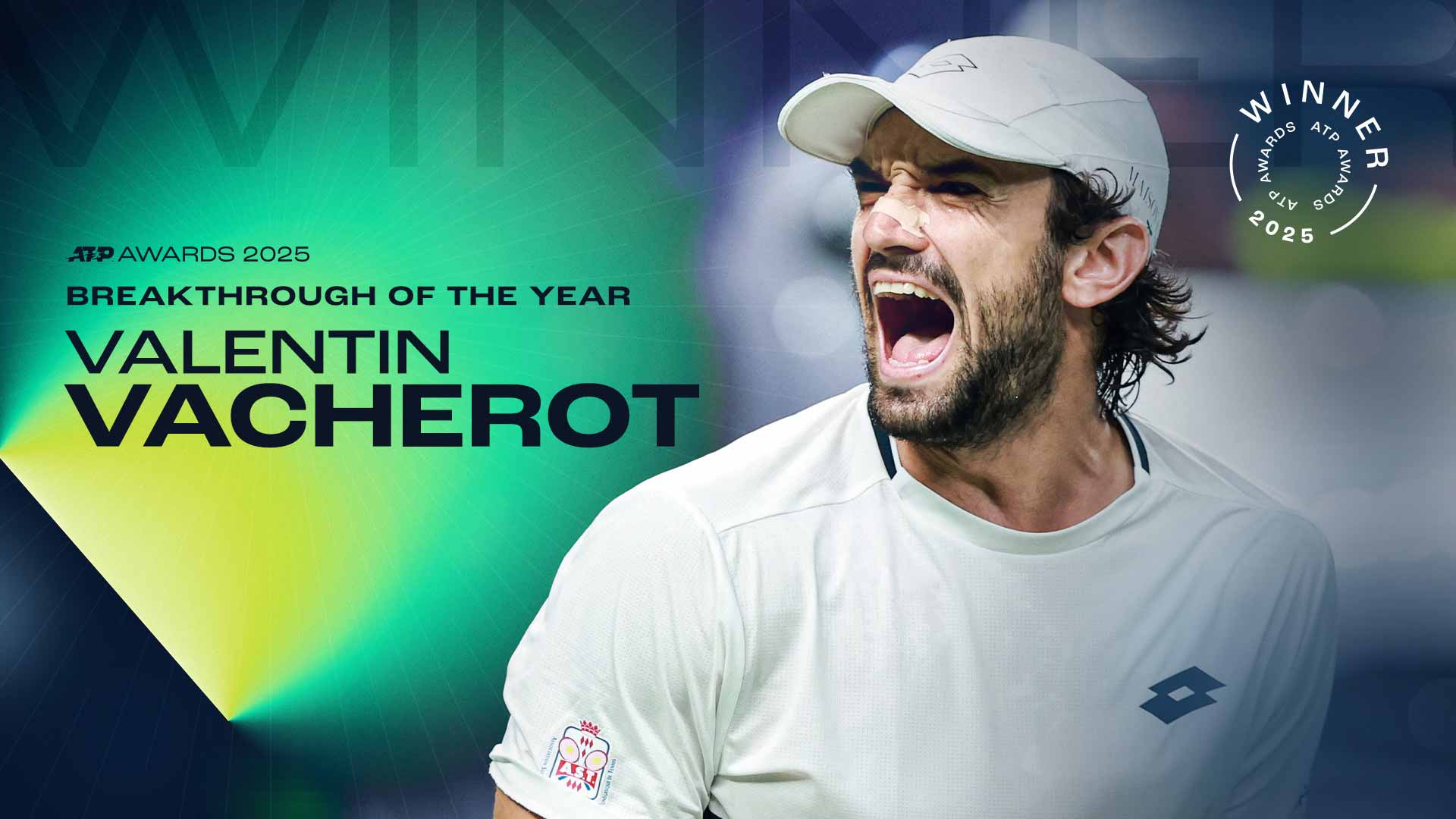
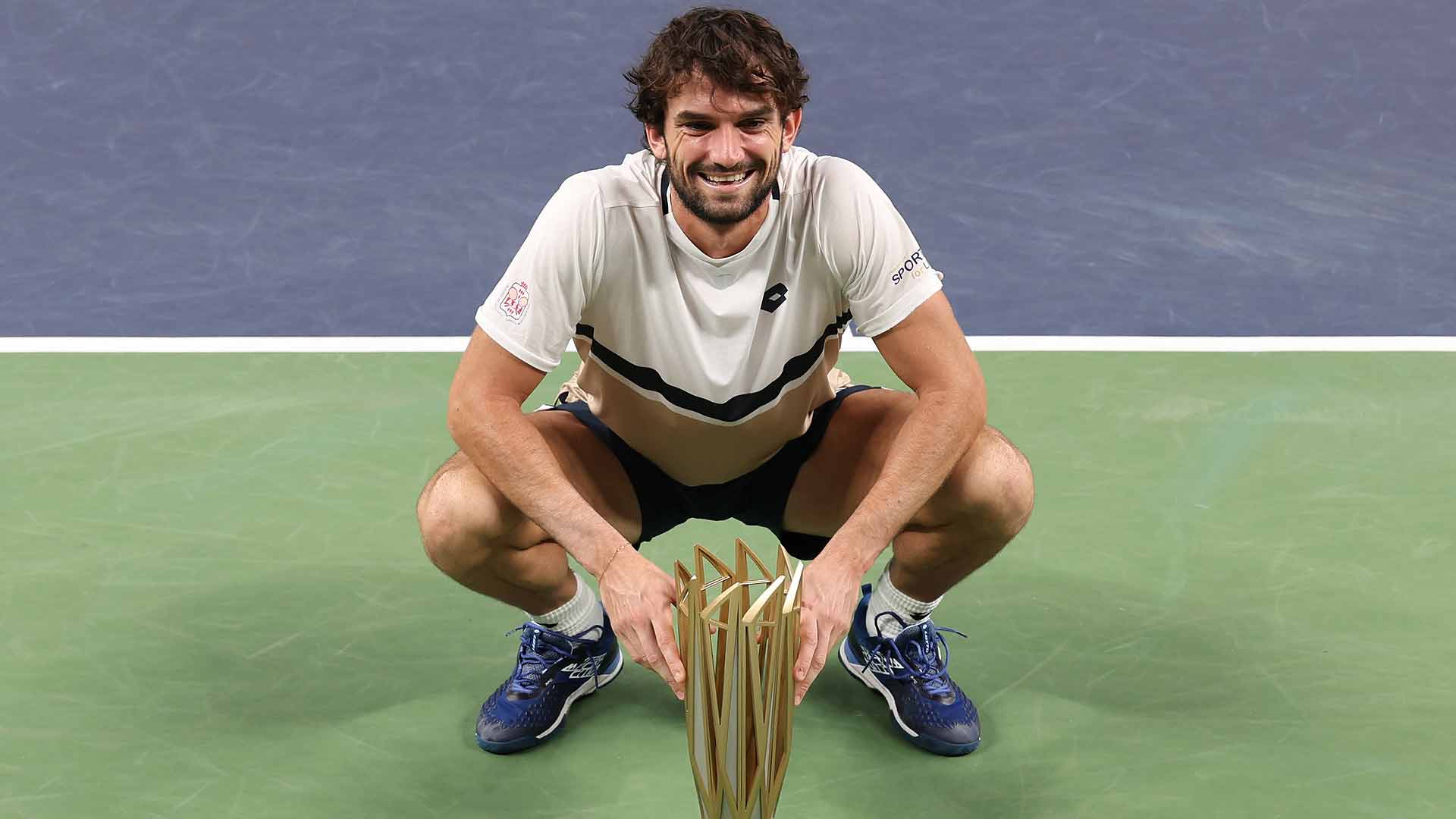
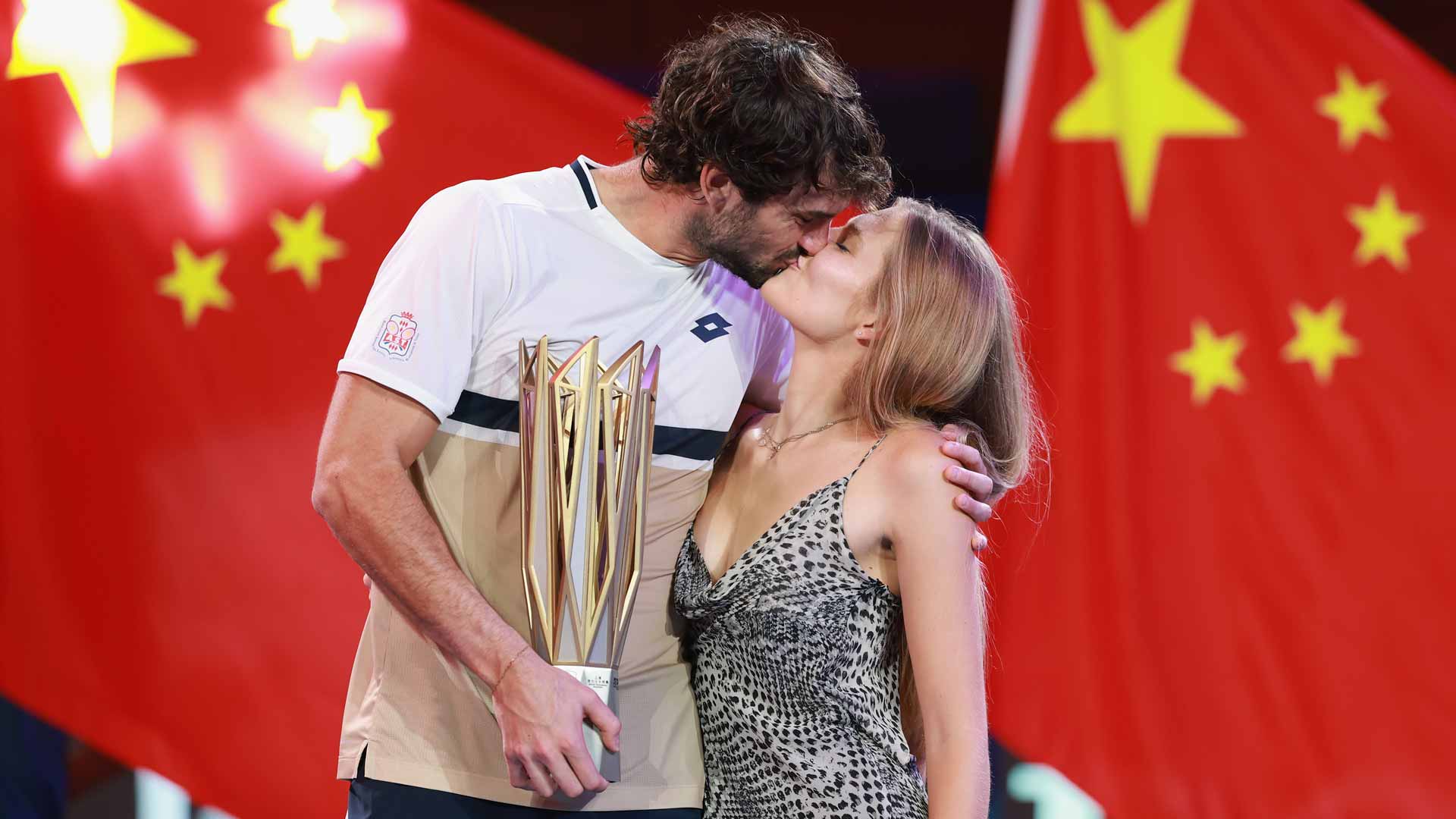
Vacherot claims Shanghai crown in family final

Under the lights of Qizhong Forest, Valentin Vacherot turned a season of close calls into Masters 1000 magic, toppling giants before outlasting cousin Arthur Rinderknech for his first ATP title.
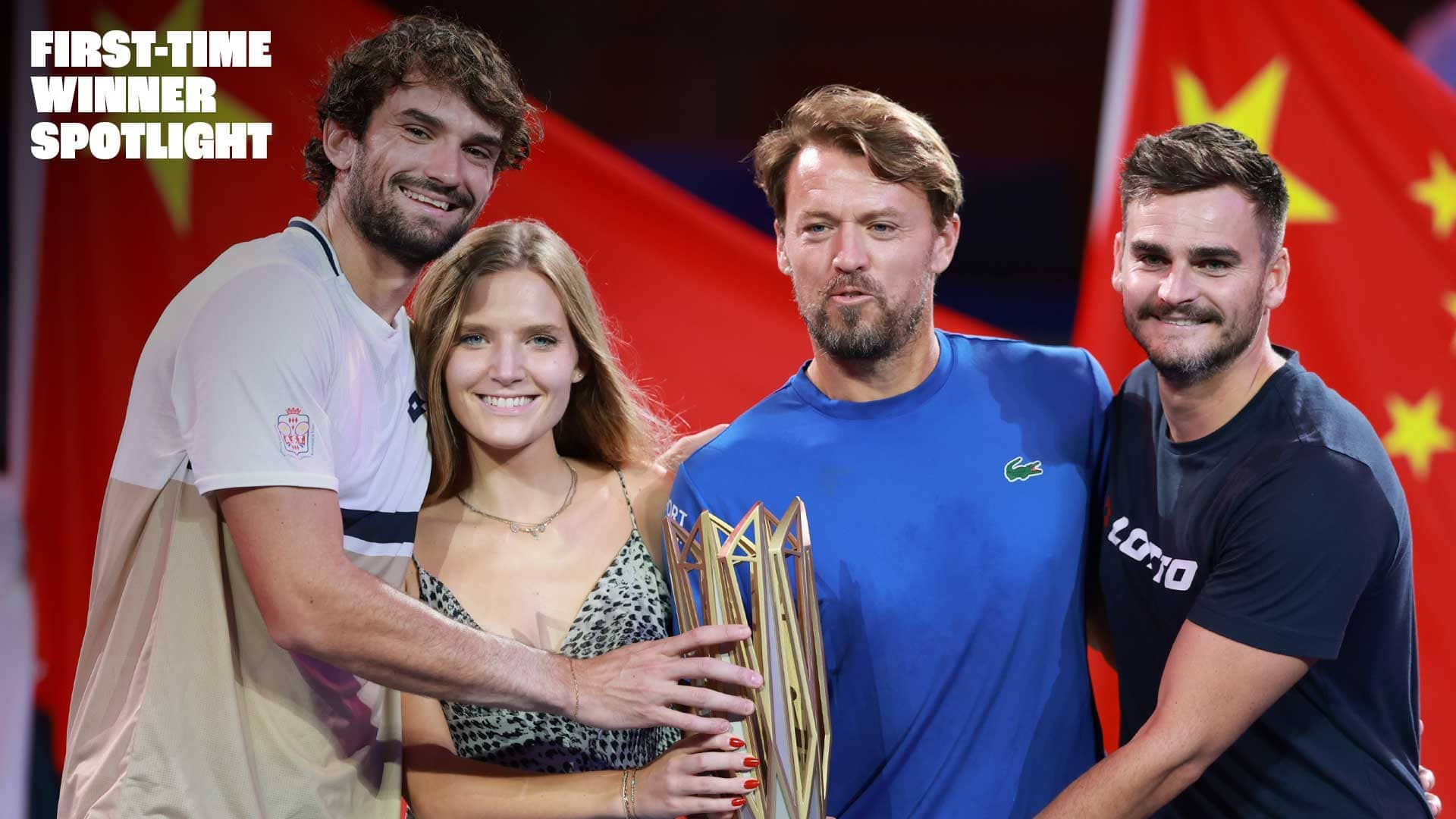
On October 12, 2025, Valentin Vacherot stepped into tennis immortality at the Shanghai Masters, securing his maiden ATP Tour singles title as the eighth first-time winner of the season. The 26-year-old from Monaco became only the fifth player to claim an ATP Masters 1000 event on debut, a breakthrough that silenced the doubts from months of grinding through qualifiers and early-round battles. His run featured stunning upsets over Holger Rune and Novak Djokovic, culminating in a straight-sets victory against cousin Arthur Rinderknech under the arena’s pulsing lights, where the crowd’s roar built with each decisive point.
Vacherot’s path reflected a season defined by mounting pressure, as he shuttled between European clay Challengers and Asian hard-court events, his aggressive baseline style finally clicking on Shanghai’s medium-paced plexicushion surface. The humid air carried the weight of near-misses—semifinals without silverware—that had tested his resolve, yet his calm off-court presence channeled that tension into focused energy during matches. He credits the journey’s emotional layers for fueling the upsets, where tactical shifts like low-skidding backhand slices disrupted opponents’ rhythms amid the swelling spectator hum.
What does it mean to you to win your first ATP Tour title? I thought my first title could be an ATP 250. But to do it at a Masters 1000 here in Shanghai, my first time in China, first time in Shanghai. I think this country will have the biggest place in my heart. It means the world to me.
Season’s pressure forges quiet resolve
Throughout 2025, Vacherot‘s calendar demanded mental steel, with long hauls across continents eroding confidence through repeated close calls on varied surfaces. From Monte Carlo’s clay swings to summer hard-court preparations, he refined a one–two punch of flat forehands and underspin backhands, keeping rivals off-balance while the isolation of jet-lagged practices wore on him. Peers claiming titles amplified the strain, but his family’s early involvement buffered it—parents placing him courtside days after his birth, introducing the sport’s pulse before he could walk.
Key figures anchored this arc, as he acknowledges in reflection. His brother and coach Benjamin guided him since leaving college in 2021, sharpening crosscourt angles to unsettle returners on fast courts. Ballert, Benjamin’s father, built his foundational strokes from ages 10 to 18, while the Monegasque tennis federation supplied the structure for his ascent; even Rinderknech drew him to Texas A&M, where shared college battles accelerated their games and forged a bond now tested in Shanghai’s glare.
A lot of people. Firstly my parents. I play tennis thanks to them. When I was just out of the hospital, when I was just a few days old, they would put me on the side of the court and play. My brother and coach Benjamin, who has been taking care of me since I got out of college in 2021. Ballert, Benjamin’s dad, not my dad. He taught me how to play tennis from 10 to 18. The guys from the Monegasque tennis federation. I want to thank Arthur too. He was at Texas A&M and I didn’t think about going to another school, I just trusted him to join him there and get better. As you saw, we have got much, much better. Standing here today with him was surreal.
This support network turned seasonal grind into inner strength, allowing him to absorb the psychological toll without fracturing. As the Shanghai draw unfolded, that resolve surfaced in adaptive play, varying depths to counter power hitters and extend points just enough to expose flaws. The first Monegasque ATP champion now carries this foundation into the tour’s final stretch, where home soil events could build on the momentum.
Upsets unlock tactical breakthroughs
Vacherot’s quarterfinal clash with Rune ignited the run, his energetic retrievals turning the Dane’s explosive inside-out forehands against him through precise inside-in redirects that pinned him deep. Shanghai’s consistent medium bounce favored these exchanges, where Vacherot’s crosscourt backhands pulled Rune wide, forcing errors in prolonged one–two sequences amid the arena’s rising energy. The underdog’s focus sharpened with the crowd’s tentative cheers, transforming top-10 pressure into a propel toward the semis.
The semifinal against Djokovic elevated the stakes, demanding unflinching poise as the Serb’s down-the-line precision clashed with Vacherot’s varied patterns. He countered with crosscourt lobs to reset rallies, exploiting rhythm lapses on the hard courts where second-serve kicks to the body neutralized aggressive returns. Courtside observers noted how these adjustments—honed from prior qualifiers—extended points to induce unforced errors, channeling months of tension into a performance that echoed the spectators’ growing belief.
This is a milestone moment in your career. How will you celebrate this victory? I have no idea. I can’t wait to go back home. This is going to be an amazing moment for everyone. To see my friends and my families and my parents, I will see them as soon as a I can. The season is not over, I still have some work to do. Once everything is finished, I will celebrate with my friends.
These victories stemmed from no fluke but calculated risks, drawing on his quieter demeanor to stay composed in big moments. The surface’s grip enabled effective sliding on forehands, maintaining balance in rallies that stretched beyond 10 shots, a tactical evolution primed for indoor seasons ahead. With rankings poised to surge past the 50s, Vacherot eyes deeper runs, his game now versatile enough to challenge seeds consistently.
Family final blends heart and hustle
The championship match against Rinderknech layered sentiment over strategy, their first encounter since a 2018 Futures quarterfinal evolving into a Masters 1000 decider under glaring lights. Back then, both fresh from college, it was casual fun; now, Vacherot anticipated his cousin’s big serves and flat drives, countering with underspin to slow the ball and open inside-out angles on the plexicushion. Familial laughs pierced the tension, as the all-Monaco final amplified pride while the winner’s 1000 points reshaped live standings trajectories.
Off-court calm fueled on-court vigor, with Vacherot pouring energy into retrievals against aggressive assaults, the crowd’s thunder sustaining his poise through crosscourt exchanges. This duality—reserved yet intense—powered the straight-sets win, marking a release of pent-up joy after the season’s trials. He ponders the surreal shift, crediting early influences for the maturity that turned personal ties into competitive edge.
Playing your cousin in the final, the first time you played each other since a Futures in 2018... How strange is it to compare that 2018 match to the experience you shared together today? He was starting his career in 2018, one of his first ITF tournaments after finishing college. I was still in college. I was just wanting to train and went to a few ITFs and ended up playing him in the quarter-finals at one. That was fun. Little did we know that the next time we would play would be here. I did wonder a little if I came back up in the ranking, when would be the first time we would play each other and our family would have a big laugh and a huge moment. To be in a final at a Masters 1000 final is amazing.
Beyond the court, Vacherot unwinds with Netflix marathons, video games, football watches, F1 highlights, and beach walks alongside his girlfriend, grounding the competitor who thrives in matches. This balance ensures Shanghai’s surge sustains growth, not hype, as remaining tournaments test his steel. With the trophy etched in memory, he heads home for shared celebrations, ready to defend points and chase top-50 status on hard courts that now feel like home.
How would you describe yourself as a player, and how would you describe yourself off the court? Off the court I am really calm, really down to earth. I am not someone you will hear much in the room. Not someone who speaks a lot. It is the little side of me that has helped me a lot on court this week in the big moments. On court I am pretty energetic, putting all my energy on the court, in training and matches. What do you consider to be your biggest passion outside of tennis and can you tell us a little bit about that interest? I really enjoy sitting on the couch and watching Netflix. Play video games and I am a huge sports fan. Watch football. Watch tennis if there are some of my favourite players are playing or my friends. Football or F1, big moments I am watching. I will go on the beach a bit, walk around with my girlfriend.