Ruud Eyes Fatherhood Amid Australian Open Push

Casper Ruud steps into Melbourne’s heat with a double baseline to defend: his seeded run at the Australian Open and the arrival of his first child, reshaping his relentless game into something profoundly personal.
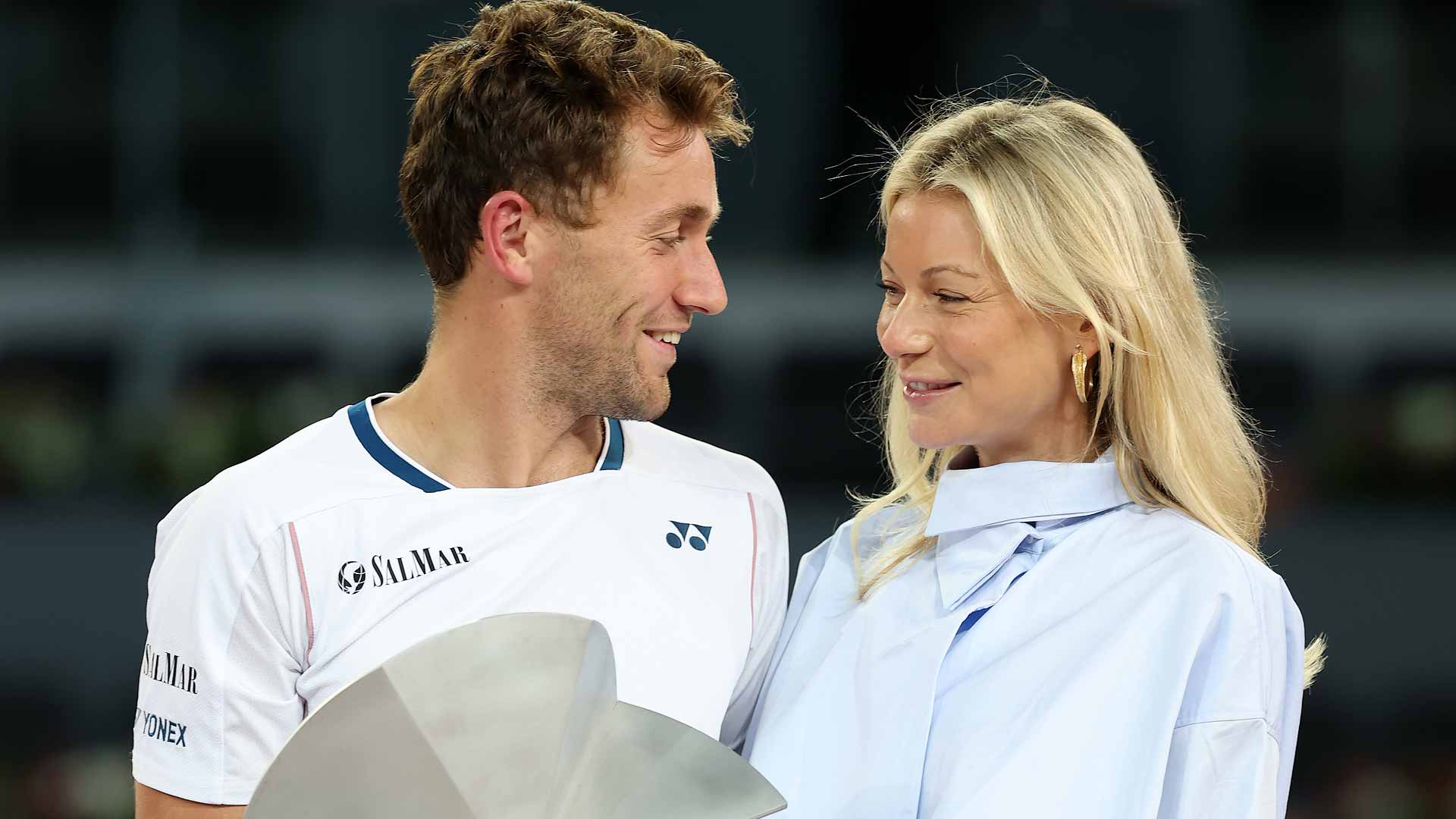
Casper Ruud strides onto the Melbourne courts with stakes that stretch beyond the white lines. The Norwegian, seeded 12th at the Australian Open, carries the quiet weight of impending fatherhood into his 2026 campaign. His wife, Maria, announced their pregnancy last September, and now, with their daughter due any week, every forehand loop feels laced with deeper purpose. This personal pivot arrives as Ruud shakes off the United Cup’s team battles and Auckland’s gritty hard-court prep, his heavy topspin ready to grind through the draw.
Family has always anchored his swing, a bond forged under his father and coach, Christian Ruud’s watchful eye. The former world No. 2 draws from those roots, envisioning a tour life that weaves in newborn rhythms without skipping a beat. Practice sessions in Melbourne’s outer courts hum with this undercurrent, his inside-out forehands cracking sharper as he balances recovery drills with thoughts of home.
“It’s really exciting. it’s something we’ve been looking forward to now for half a year, so time is running and it’s going to be a new chapter for us,” Ruud told ATPTour.com. “[It will be] a new way of life on Tour and I very much look forward to it, knowing how close I’ve been with my own family and my father and also my mother.
Family roots fuel court resolve
Ruud‘s dynamic with Christian blends tactics and trust, a model he aims to adapt for his daughter. He speaks of passing on discipline without dictating paths, encouraging sport’s pull—tennis or handball—as a way to build belonging. This mindset sharpens his mental edge on the Plexicushion, where the ball skids faster than his clay-court comfort zone, demanding quicker feet and flatter shots to counter aggressive returns.
In potential early clashes, like against a left-handed baseliner, Ruud might lean on crosscourt backhands to open the court, his 1–2 pattern disrupting serve holds. Fatherhood’s horizon adds urgency, turning downtime into deliberate choices: skipping optional sessions to preserve energy for family travel. The 27-year-old’s voice steadies when he describes this shift, revealing how it reframes the tour’s grind into shared adventure.
“I look forward to hopefully becoming a good parent myself,” he says. “Even though this life requires a lot of time, a lot of energy and a lot of travel and these things, I look forward to trying to be there as much as I can and when I have downtime—time off from the court—I will spend it where I want to go with my future daughter.”
Tour life bends to new rhythms
After leading Team Norway at the United Cup, Ruud’s form hints at tactical tweaks for Melbourne’s bounce. His slice approaches could vary the baseline duels, preserving legs for five-set marathons under the lights. With rankings math pressing—a deep run could reclaim top-five ground—he channels personal stakes into precise down-the-line passes, each winner a nod to legacy.
The Australian Open‘s draw tests his arsenal: inside-in forehands to exploit short balls, underspin backhands to slow the tempo. Fatherhood introduces balance, with plans to bring Maria and the baby to select stops, turning hotel suites into mobile homes. This evolution promises resilience, his game gaining ballast from the knowledge that home waits beyond the final whistle.
“I think teaching her about my lifestyle and what I was taught when I was young,” Ruud continues. “She’s free to do whatever she wants, doesn’t need to be tennis. But of course it will be natural to at least try and see if she can be active in sport.”
Motivation deepens beyond the lines
Ruud’s preparation now includes envisioning post-match moments not just for recovery, but for connection—perhaps a quiet park outing amid tournament chaos. On hard courts, where his topspin sits lower, he experiments with one–two setups to shorten points, conserving focus for the draw’s climbs. The crowd’s roar in Rod Laver Arena might echo differently, each point a rehearsal for providing amid the ATP’s sprint.
As the tournament heats up, expect his crosscourt rallies to carry extra bite, fueled by this inner drive. Returning home after Melbourne, the shift hits: a tiny presence altering every departure. He plans family integration where it fits, forging bonds that could propel him through clay’s wars and grass’s slips later in the year.
“It might be whenever I get home, she’ll be there. And I left knowing this,” Ruud reflected. “I know for a fact that everything goes well, the next time I’ll leave my house, I will have another person at home. She’ll be very little and small, but she’ll be there, and I hope to bring them or her and my wife, Maria, to the tournaments together and be a happy family travelling around and to the places where it seems reasonable to travel.”
This new layer redefines his chase, turning solo pursuits into collective ones. “I’m not just doing this for myself anymore, and I have someone extra to play for.” In a season primed for breakthroughs, Ruud’s story hints at rallies won off-court, his forehand swinging toward a fuller horizon.