Federer Captures Super Bowl Thrill Through Tennis Eyes

Amid the roar of Las Vegas, Roger Federer revisited a legendary gridiron moment that felt all too familiar to his own high-stakes pursuits on court.
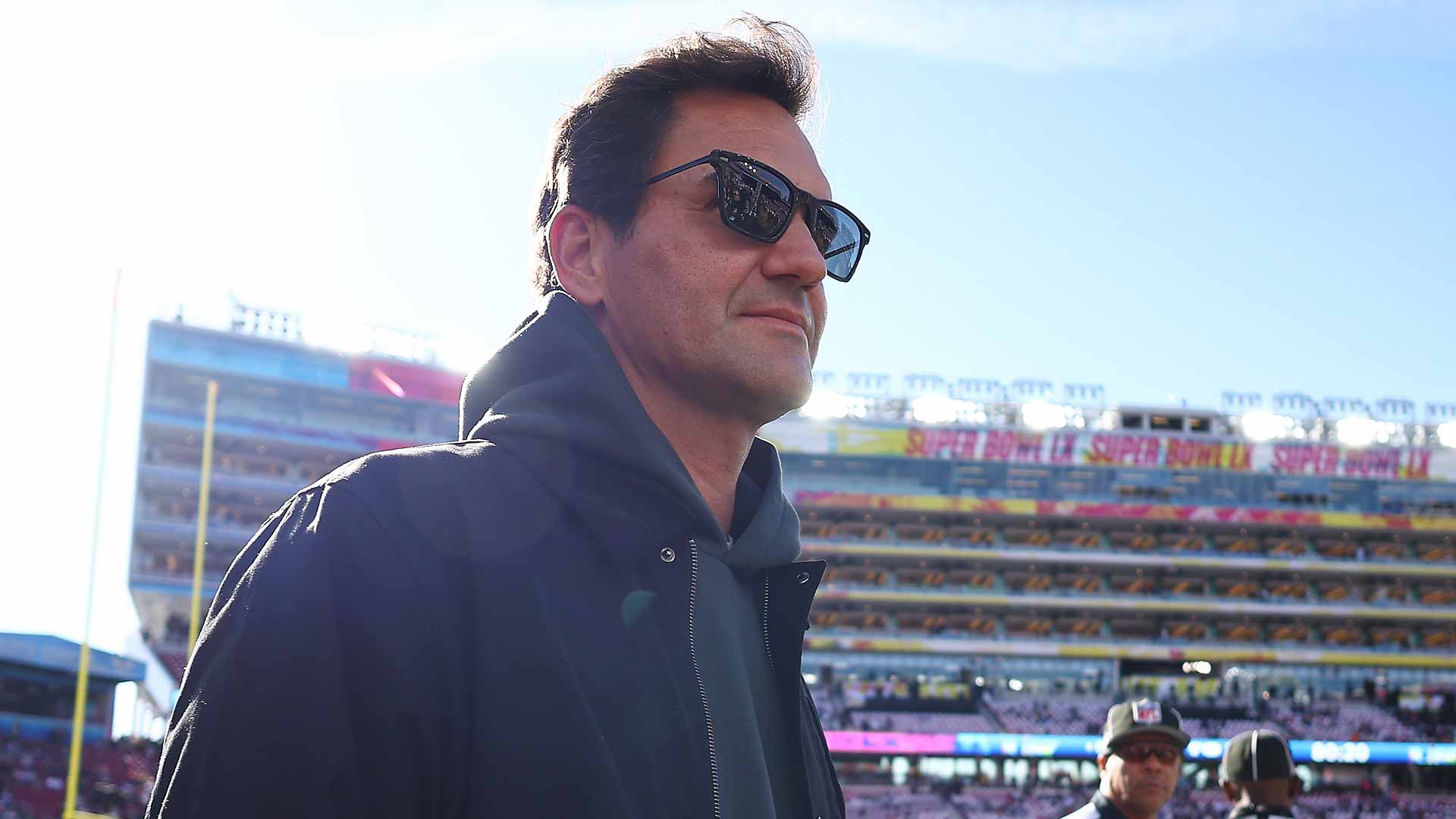
In the charged pulse of a Las Vegas night, where stadium lights cut through February’s crisp air, Roger Federer took his seat among the world’s elite. The 20-time Grand Slam champion watched the Seattle Seahawks claim victory over the New England Patriots, a clash that stirred memories of his own battles under unrelenting pressure. As Bon Jovi and Chris Pratt shared the stands, Federer bridged the gap between gridiron intensity and tennis’s tactical demands, his presence underscoring a seamless shift from baseline warrior to spectator sage.
“I was at the Super Bowl in ’08 in Arizona when Tom Brady was going for the perfect season and then we had the catch, I remember, on the helmet, from the Giants to win the game that Eli Manning passed,” Federer said in a social media interview with the NFL. “So that was my favourite memory obviously of being in the stadium.”
“From YouTube, everything I saw, [it] was Michael Jackson, the moment when he comes and he shows up, that was awesome. Then I liked Eminem and 50 Cent and Dr. Dre,” Federer said. “That’s music I also grew up with.”
Helmet catch mirrors tiebreak tension
This marked Federer’s second Super Bowl, echoing his 2008 visit in Arizona as the ATP’s top-ranked player. There, he witnessed Tom Brady’s undefeated bid crumble in a dramatic upset, the helmet catch by David Tyree becoming a pivot that flipped the script. That improbable snag resonated with Federer like a fifth-set tiebreak, where a down-the-line backhand slice can unravel an opponent’s rhythm after hours of heavy topspin exchanges.
In tennis, such moments demand mental steel, much like Federer’s own escapes in marathon matches on clay, where he layered one–two patterns to exploit fatigue. The Giants’ late surge paralleled an inside-out forehand winner slicing through defenses, turning potential defeat into triumph. For the Swiss star, who thrived on adapting mid-rally, the play highlighted how a single adjustment under crowd roar can redefine a season’s arc.
Halftime shows pulse like baseline rallies
Before kickoff, conversation turned to spectacle, with Federer praising Michael Jackson’s entrance for its commanding energy, akin to a serve-volley rush that pins a foe deep. He connected with Eminem, 50 Cent, and Dr. Dre’s beats from his youth, rhythms that echoed the crosscourt loops he fired during hard-court grinds. These choices revealed his ear for tactical buildups, where music’s crescendo mirrored a rally’s escalating tempo.
Bad Bunny’s halftime flair added a vibrant twist, but Federer’s reflections stayed rooted in familiarity. Justin Bieber, Kendall Jenner, Lewis Hamilton, and Kim Kardashian dotted the celebrity crowd, yet he focused on how such performances recharge the spirit, much like off-season recovery before Wimbledon’s quick grass transitions. The evening’s energy, from defensive stands to opportunistic scores, evoked tennis upsets where underdogs capitalize on second-serve lapses.
Cross-sport insights shape enduring legacy
As the Seahawks sealed their win through gritty drives, Federer saw threads to his 310 weeks at No. 1, where surface shifts—from Australian Open heat to US Open baseline wars—tested resolve. Post-retirement, these outings let him savor the psychological release of watching, free from the isolation of match points. His ease among icons affirmed a career of crossing boundaries, blending elegance with edge.
Looking ahead, Federer’s voice continues to inspire, drawing parallels that enrich tennis’s narrative. Whether dissecting a 1–2 setup or a gridiron gamble, he reminds emerging talents that pressure forges champions across arenas. These reflections keep his influence vibrant, fueling the next wave of players chasing their own perfect seasons.


