Sampras’s grueling chase for an enduring rankings record

As 1998’s ATP Tour barreled into its European climax, Pete Sampras dug deep against a surging challenger, enduring cold arenas and physical strain to etch a sixth straight year-end No. 1 into tennis history.
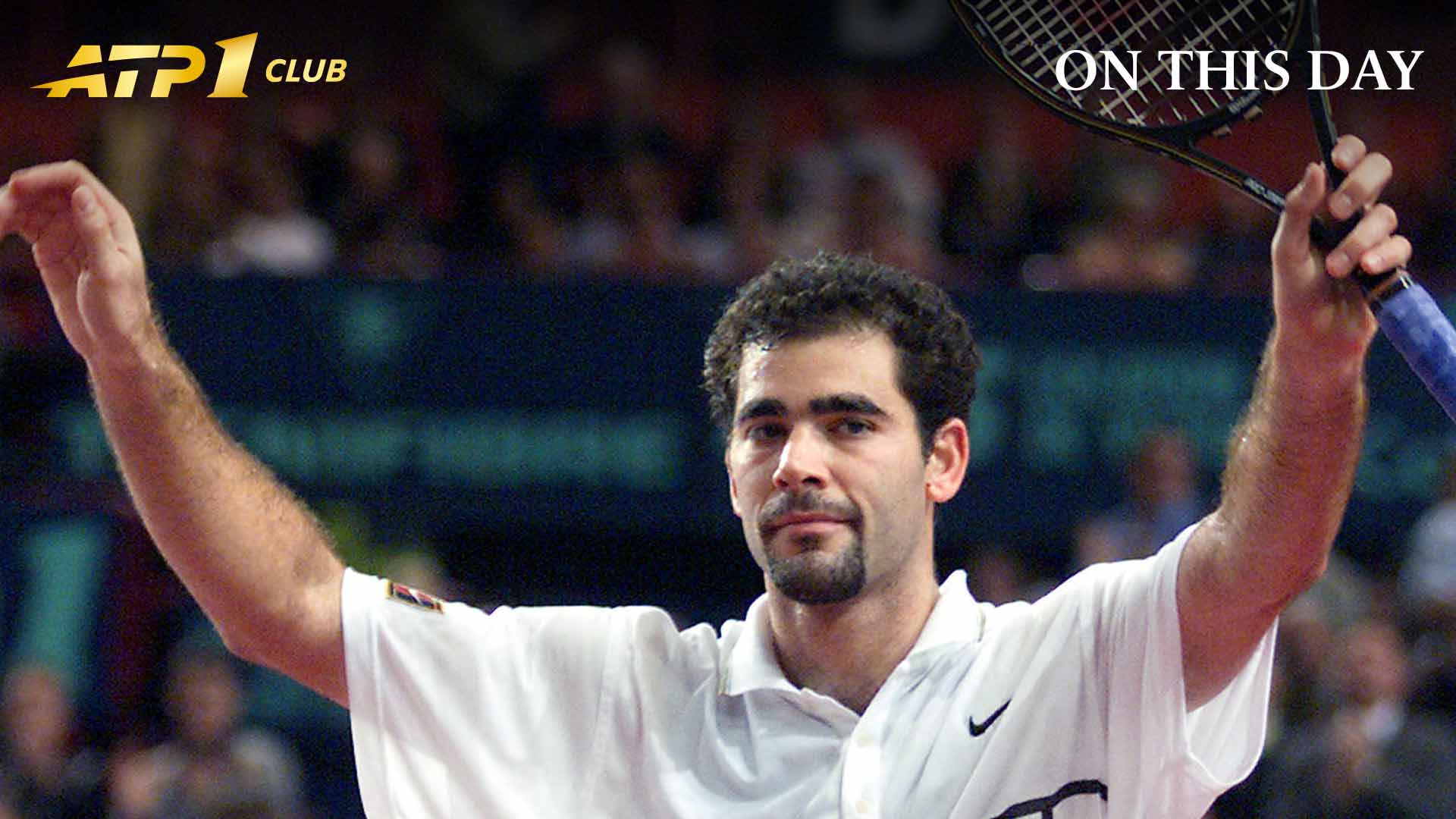
When Pete Sampras won his last professional match, beating Andre Agassi in the 2002 US Open final, he earned a record-extending 14th Grand Slam title and tied Jimmy Connors’ record of five US Open men’s singles crowns. The American also finished his career having spent 286 weeks at No. 1 in the PIF ATP Rankings. Those feats once appeared unbreakable, yet the Big 3 later matched or surpassed them in majors and time atop the standings.
One Sampras milestone endures untouched: six consecutive year-end No. 1 finishes from 1993 to 1998. Roger Federer strung together four in a row from 2004 to 2007, while Novak Djokovic claimed back-to-back pairs on three occasions; Rafael Nadal never secured consecutive year-end honors. He lost the top ranking six times during that reign but always fought back, turning each setback into renewed resolve.
“It’s an ultimate achievement. It will probably never be broken,” Sampras said of the milestone, which was confirmed on 26 November 1998. “I’m trying to stay humble through all this, but the record speaks for itself. It’s a little overwhelming.”
Intense rivalry tests his resolve
No season pushed him harder than 1998, when Marcelo Rios displaced him twice for six weeks total. After a semifinal loss to eventual champion Patrick Rafter at the US Open, Sampras held a slim lead over the Chilean in the PIF ATP Rankings. The final two months became a frantic race, with both players committing to packed schedules across Europe’s indoor hard courts.
Sampras entered seven ATP Tour events from October to November, while Rios targeted six. The American started with a first-round loss in Basel, where early fatigue slowed his approaches to the net. He rebounded the next week in Vienna, securing a late wild card from Boris Becker and claiming his fourth title of the season with sharp inside-in forehands that pinned opponents deep.
Rios responded by winning in Singapore, keeping the pressure on as they moved to Lyon. Injuries intervened there: Sampras withdrew before the quarterfinals with back tightness, and Rios retired in the semis against Tommy Haas. These hits forced careful management of his serve-volley game, emphasizing recovery to maintain the kick on his second deliveries.
Deep runs build a fragile buffer
Recharged, Sampras advanced to the ATP Masters 1000s in Stuttgart and Paris, surfaces that suited his flat groundstrokes and quick volleys. Rios reached the quarterfinals at both, using crosscourt lefty forehands to stretch the court. The American countered by reaching the semis in Stuttgart with one–two combinations—big serves followed by down-the-line backhands—and the final in Paris, where slice underspin disrupted his rival’s baseline rhythm in practice.
These results padded his ranking lead, but the constant travel wore on him. In Stockholm, the strain showed in a three-set opening loss to World No. 29 Jason Stoltenberg after a first-set tiebreak. Frustration boiled over as he smashed his racquet, a rare lapse for the composed star amid the arena’s echoing silence.
As Sampras later wrote in his autobiography, “A Champion’s Mind,” Europe’s fall circuit drained the spirit with its early dusk and artificial glow after the Grand Slams’ open-air buzz. That early exit, though, offered two weeks’ rest before the ATP World Tour Championships, now the Nitto ATP Finals in Hanover, where the year-end No. 1 hung in the balance.
Finale seals unbreakable legacy
Entering with a 33-point edge, Sampras needed to match or outdo Rios to clinch the honor. He sharpened his tactics for the indoor hard courts, focusing on serve placement to the body and inside-out forehands that wrong-footed foes. The group stage ignited his form: a 3-0 record, surrendering just 15 games in six sets against Yevgeny Kafelnikov, Carlos Moya, and Karol Kucera.
Against Kafelnikov’s steady defense, he mixed net rushes with crosscourt lobs to force errors. Moya’s baseline grit folded under repeated down-the-line approaches, and Kucera struggled against body serves that cramped his returns. Rios stumbled early, losing his opener to Tim Henman before withdrawing with a back injury, confirming Sampras’s top spot as he ate pasta in his hotel.
A semifinal defeat to eventual champion Alex Corretja ended his run, evoking their 1996 US Open quarterfinal where illness struck him mid-match yet he triumphed. “It wasn’t fun, I’ll be honest with you,” Sampras reflected. “I had one chance to break this record, this all-time record of six years in a row. I was like, ‘Alright, if I’m going to have to be over here [in Europe] for another three or four weeks, I’ll do it.’ And I did it.”
“It felt great, but it definitely took a lot out of me emotionally, even the next few years. it’s very hard to stay No. 1, and to do it six years in a row... For me in my career, I look back at that — and I’ve won a lot of majors and I’ve done some great things — but staying No. 1 all those years I think was my biggest achievement, just to be dominant. And to not just stay No. 1 for six months or year, but to really cement that.” His streak stands as the PIF ATP Rankings benchmark; only he and Djokovic, with eight year-end No. 1s, have surpassed five such finishes. That 1998 grind reminds players today of the mental steel required to dominate across seasons, a blueprint for chasing sustained excellence on the tour’s unforgiving path.