Brooksby’s Grip on Glory After Wrist Hell

From casts that locked his hands to saving match points for his first ATP title, Jenson Brooksby’s 2025 climb from unranked depths tested body and mind on courts worldwide.
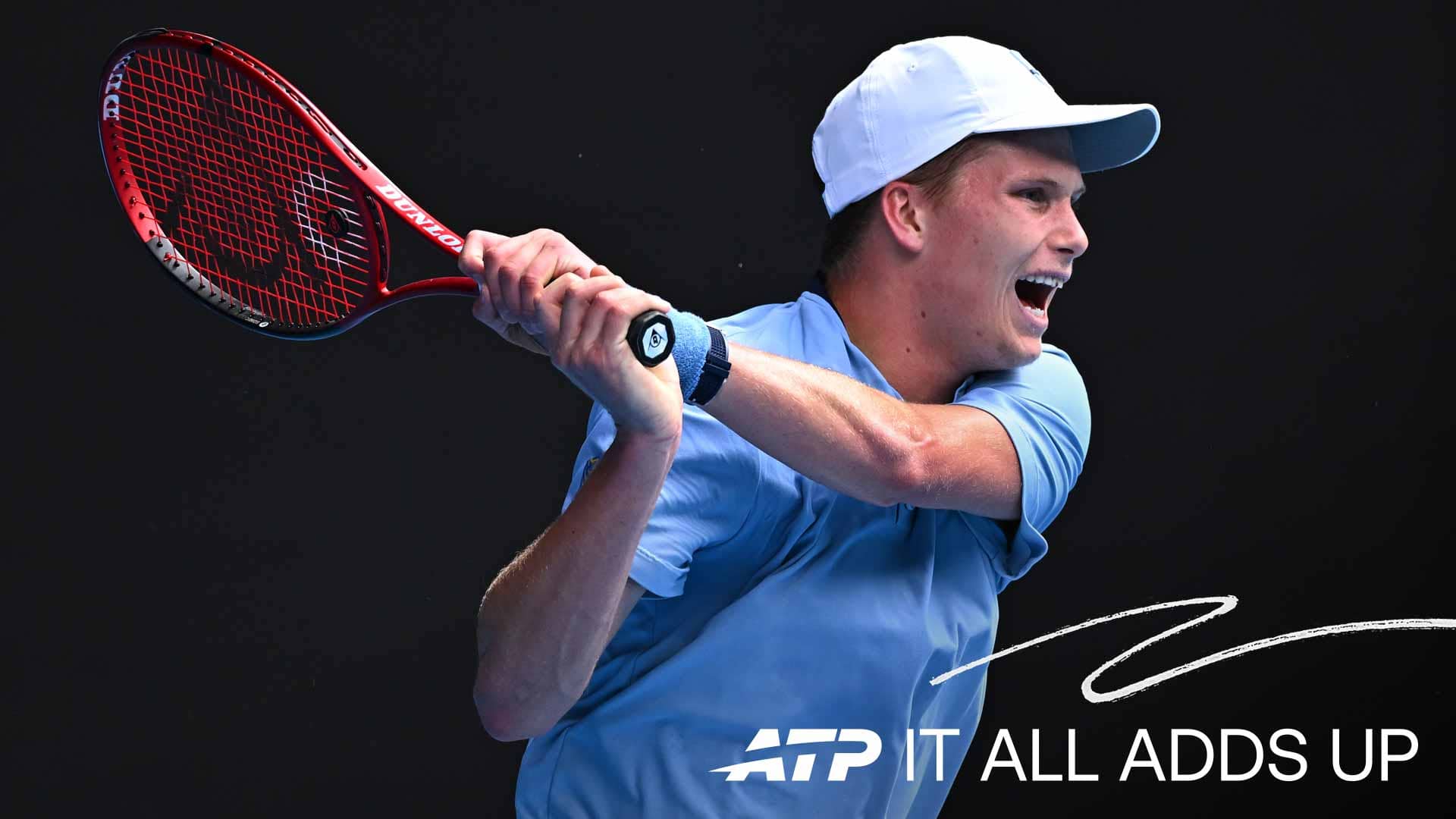
Jenson Brooksby couldn’t clutch his phone in 2023, wrists sealed in casts after surgeries two months apart on dislocated tendons. The American’s path back twisted through pain and doubt, starting the year unranked at No. 507. By April 2025, two years post-operation, he lifted the Houston trophy, his maiden ATP Tour title, after saving match points in three straight wins on clay that demanded rebuilt precision.
That Houston run, as a qualifying wild card for the ATP 250, flipped obscurity into history—he became the third-lowest-ranked champion since 1990. Crowds under humid skies watched his crosscourt backhands absorb heavy topspin rallies, then counter with inside-out forehands that pinned foes deep. At 25, he surged to No. 51 in the PIF ATP Rankings by October, nearing his 2022 career-high of No. 33, each step a quiet roar against the isolation of rehab.
“I haven’t seen anyone who has needed surgeries on both wrists and been able to do that, so I’m very proud of myself,” Brooksby told ATPTour.com in October. “I think it’s a testament of the work I’ve put in and the self-belief I’ve had at the lowest times or at the highest times like right now. I still think I can beat what I’ve done in the past.”
Wrist agony forges patient resolve
His right wrist tendon sat 70 to 80 percent dislocated, the left fully out of joint, forcing operations by Dr. Steven Shin in California—left in March 2023, right in May. Brooksby had taped through 2022’s matches, chasing rest to skip the second cut, but the throb overpowered rehab efforts. Casts gripped each wrist for eight weeks, totaling 16 of near-total stillness, where even simple grips eluded him.
Recovery dragged 20 months before he finished a practice match, k-wires in his wrists turning every ball strike into fire. The jolt of tennis’s shock factor built tolerance slowly, his body relearning impact amid mental strain that bred impatience. “I think having the wrist just getting used to the shock factor of tennis, just with having k-wires [Kirschner wires] in my wrist, [the pain] was really, really high,” he said. “It took so many months. At times it felt like it was never going to happen, but then you just stay patient with it like you would with anything else and eventually like the rest of the body, it gets used to a certain tolerance or physicality.”
“I was in different types of casts for eight weeks on each. For those eight weeks on each wrist, so 16 total weeks, I wasn’t able to do really anything at all. Not even holding the phone or anything. I had to have some serious patience mentally. You couldn’t even use yourself physically, much less a simple thing. I was going a bit crazy.”
Houston clay ignites title surge
Entering Houston unranked, Brooksby faced clay’s demand for wrist-stable defense, his brick-wall consistency frustrating specialists in long exchanges. He saved match points with down-the-line passes that sliced through net rushes, the final’s tension breaking on an inside-in forehand that skidded low. That victory sparked a season of contention: Eastbourne final on grass, where serve-volley one-twos clipped lines amid seaside winds, and Tokyo semifinal on hard courts, his underspin approaches disrupting Tokyo’s fast pace.
Well inside the Top 100 and closing on Top 50, he turned absence into edge, sharpening serves with kick for variety across surfaces. Baseline rallies, his old strength, now fed offensive shifts—1–2 patterns off returns drawing servers in before lobs floated over. The Sacramento native’s court smarts outmaneuvered rivals, from Houston’s humid baselines to Eastbourne’s quick grass, each win layering confidence over lingering ache.
Lessons sharpen offensive edge
Belief in improvement drove his return, targeting serve power and net finishes to crack elite levels. “I think the biggest reason why I wanted to not just come back, but believed I could be better is because I knew I still had a couple weaker areas where I knew I could get better,” he reflected. “I think I was very good from the baseline, but I knew if I could get my serve better than it used to be, play more consistent offensive tennis and add more variety, that I think I could crack the highest levels of tennis.”
“I think the biggest thing is I’m looking for more efficient ways to get in the offensive areas of the court and finish off points rather than just staying from the baseline.”
The grind taught patience beyond courts, a lesson deepened when he publicly revealed he is on the autism spectrum in December 2024. “I think it just taught a lot of patience in life,” Brooksby said. “To be able to reach your goals takes an extreme amount of patience and consistency and accepting that you’ll be good in some areas and weaker in others and you just have to work with what you’ve got.” As 2025 fades, his reimagined game—versatile, urgent—positions him to challenge tops seeds, wrists steady and mind unbreakable.