Medvedev chases renewal on Shanghai’s hard courts

Daniil Medvedev arrives in Shanghai carrying the embers of a trophyless streak, his coaching shake-up a bid to fan those flames into a title run on a surface that once crowned him champion.
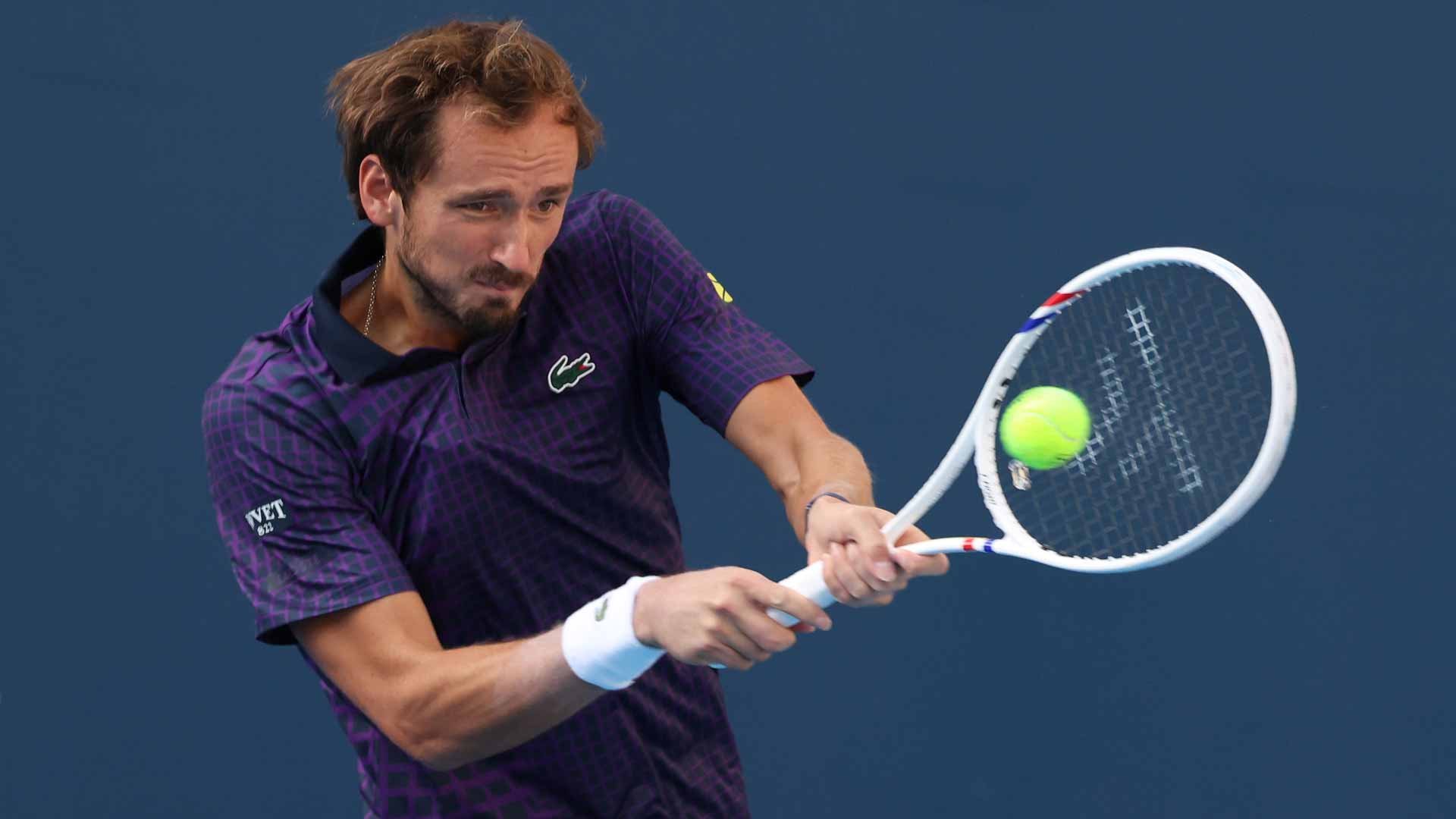
Daniil Medvedev steps onto the courts of the Shanghai Masters with a familiar intensity sharpened by change. At 29, the 20-time tour-level titlist has traversed 50 tournaments without a trophy since his five-title surge through the first five months of 2023, a drought that dimmed the confidence propelling him to world No. 1. Now, as the 16th seed, he seeks to reignite that drive amid the event’s electric hum, where the hard courts’ swift bounce favors his elastic defenses and probing returns.
Coaching split marks bold autonomy
The recent parting with longtime coach Gilles Cervara followed a majors season yielding just one victory across four events, prompting Medvedev to pause his racquet for two weeks and rethink his support. This move, announced after the 2022 US Open champion’s struggles on faster surfaces, reflects a push for independence in his evolving career. He turned to Thomas Johansson and Rohan Goetzke, whose arrival coincides with his semifinal run in Beijing at the ATP 500, cut short by cramps against Learner Tien.
“It was not an easy decision,” he told ATP Media at the Shanghai Masters, site of his 2019 triumph. “But at the same time, I’m 29 years old, almost 30 soon, and [I wanted] to try something new in my adult career. Because even when we started with Gilles, I was too young, so it was with my parents a bit. The academy where I was going was designing [my team]... To do it by myself was something nice because it was something new in my life.”
“It was not an easy decision,” he told ATP Media at the Shanghai Masters, site of his 2019 triumph. “But at the same time, I’m 29 years old, almost 30 soon, and [I wanted] to try something new in my adult career. Because even when we started with Gilles, I was too young, so it was with my parents a bit. The academy where I was going was designing [my team]... To do it by myself was something nice because it was something new in my life.”
Age shifts guidance to collaboration
As Medvedev nears 30, his needs from a coaching team have matured, moving from directive paths at 20 to partners who amplify his instincts on courts like Shanghai’s, where low-skidding balls demand precise depth. The new duo brings a mix of fun and directness, essential for sustaining his counterpunching through Asia’s grueling swing. This rapport could unlock sharper net approaches and varied serves, disrupting baselines with one–two combinations of deep kicks followed by inside-in forehands.
He stresses the importance of attentive listeners who build chemistry on and off the court. Johansson and Goetzke fit that mold, unafraid to challenge him during practice rallies that mimic the tournament’s brisk tempo. Their dynamic counters the isolation of recent slumps, fostering the mental edge that once turned extended crosscourt exchanges into wearing triumphs.
“You look for different things when you’re 20 and when you’re 30,” he added in an exclusive with ATPTour.com. “Because when you’re 20, you’re still a young tennis player so you probably need someone to show you the way. When you are 30, you need someone not to show you the way, but to help you find the way again.”
“You look for different things when you’re 20 and when you’re 30,” he added in an exclusive with ATPTour.com. “Because when you’re 20, you’re still a young tennis player so you probably need someone to show you the way. When you are 30, you need someone not to show you the way, but to help you find the way again.”
“It needs to be someone that can listen to you. I think it’s very important in a coaching job,” he said. “Someone we need to get along with for sure. Right now what I found in Thomas and Rohan, it’s great. We have fun on the court, we have fun off the court at the same time. If they need to tell you something, they’re not scared to tell me.”
“It needs to be someone that can listen to you. I think it’s very important in a coaching job,” he said. “Someone we need to get along with for sure. Right now what I found in Thomas and Rohan, it’s great. We have fun on the court, we have fun off the court at the same time. If they need to tell you something, they’re not scared to tell me.”
Outburst fuels desperate reinvention
The season’s pressure peaked at the US Open, where his first-round defeat sparked a flurry of racquets tossed to fans, a chaotic release amid cramping that left him slumped in his chair. This raw moment, blending frustration with unintended crowd-pleasing flair, exposed the desperation building from inconsistent backhand slices against topspin barrages. It became the catalyst for his coaching reset, a sign that his blend of wit and intensity demanded fresh outlets.
Reflecting on the incident, he acknowledges the disappointment in his performance and conduct, viewing it as a pivot toward renewal. Unable to vent on court due to physical limits, the gesture captured a boiling point after months of near-misses on hard courts. Now, channeling that energy, he eyes Shanghai as the next chapter, where underspin defenses can extend rallies before unleashing down-the-line winners.
“It was just a little bit of desperation,” he recalled. “And at the same time I was like, ‘The fans are probably going to love it’. There was actually one racquet left in the bag and I didn’t know it. I was for sure disappointed with the result, disappointed with the way I felt on the court, with the way I acted on the court. I wanted to let out the frustration, probably not on the court, but I was cramping so I couldn’t stand up. It was for sure an act of desperation and a sign I needed a new start.”
“It was just a little bit of desperation,” he recalled. “And at the same time I was like, ‘The fans are probably going to love it’. There was actually one racquet left in the bag and I didn’t know it. I was for sure disappointed with the result, disappointed with the way I felt on the court, with the way I acted on the court. I wanted to let out the frustration, probably not on the court, but I was cramping so I couldn’t stand up. It was for sure an act of desperation and a sign I needed a new start.”
Beijing’s progress, despite the retirement, sets the stage for his opener against Czech qualifier Dalibor Svrcina on Grandstand 2, now under a retractable roof that promises unbroken intensity. Facing Svrcina’s flat baseline game, he plans deep returns to jam forehands, opening angles for inside-out strikes. His affection for the event runs deep, hailing it as the tour’s finest outside the Slams for its pristine facilities and vibrant energy.
“Beijing was actually a big step and I need to take another step here in Shanghai. I absolutely love China as a country and I love coming here. It’s always been — since the first time I came here — the best tournament we have on Tour if we take out the Grand Slams,” the 16th seed said. “Of course it’s just my opinion, but it’s my favorite tournament on Tour. I love coming back here so you can ask me whatever. I’m going to tell you a lot of good things and I love the facilities, I love the courts, I love everything around this place.”
“Beijing was actually a big step and I need to take another step here in Shanghai. I absolutely love China as a country and I love coming here. It’s always been — since the first time I came here — the best tournament we have on Tour if we take out the Grand Slams,” the 16th seed said. “Of course it’s just my opinion, but it’s my favorite tournament on Tour. I love coming back here so you can ask me whatever. I’m going to tell you a lot of good things and I love the facilities, I love the courts, I love everything around this place.”
In Shanghai’s charged atmosphere, where every point pulses with possibility under the lights, Medvedev positions his renewed tactics for a deep run that could vault him toward the top 10 by year’s end. The hard courts’ speed aligns with his retrievals, offering a platform to blend psychological resilience with proactive patterns against the draw’s challenges. This campaign, laced with the unpredictability that defines him, hints at the breakthroughs awaiting in his adult career’s next act.