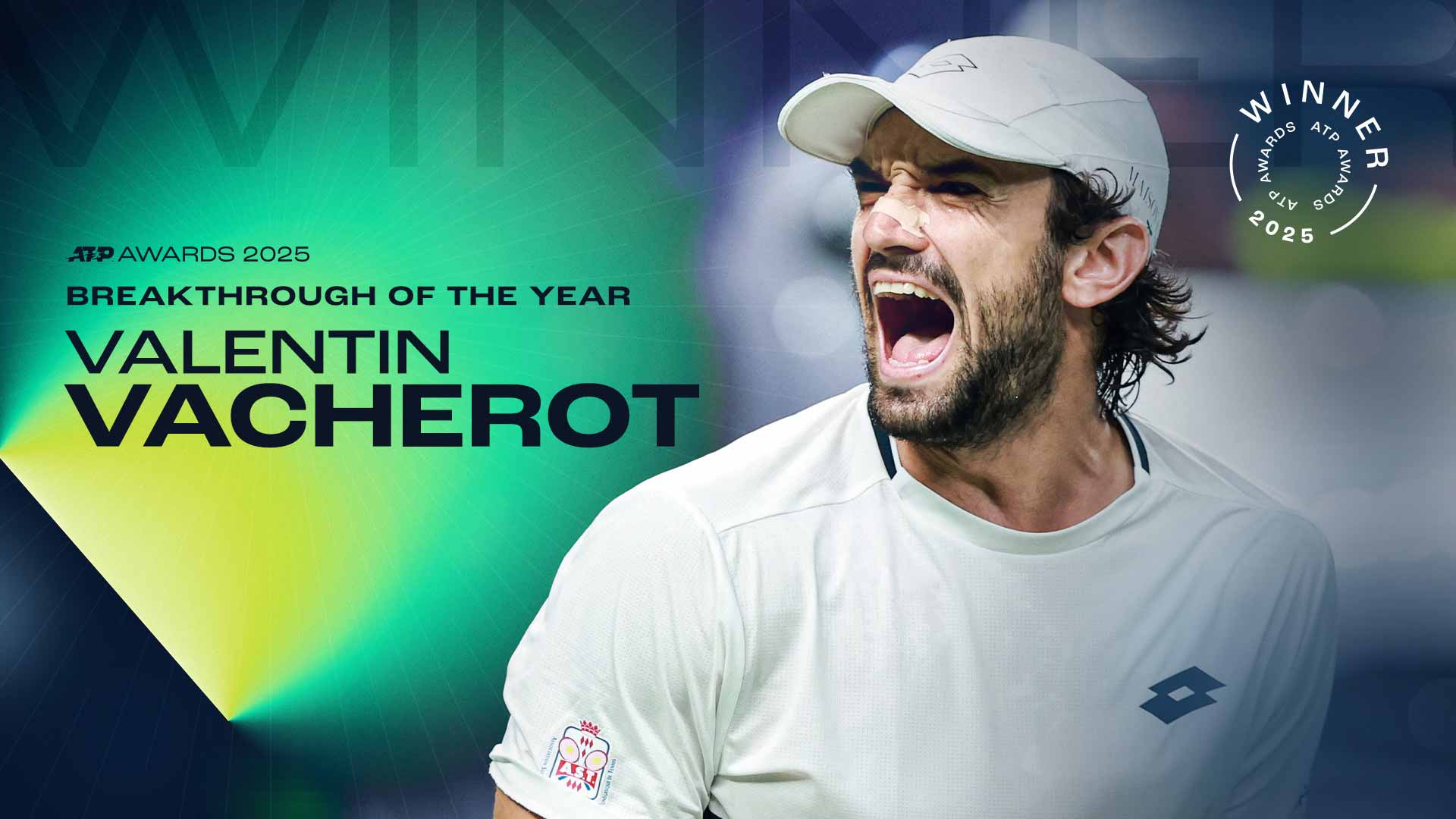
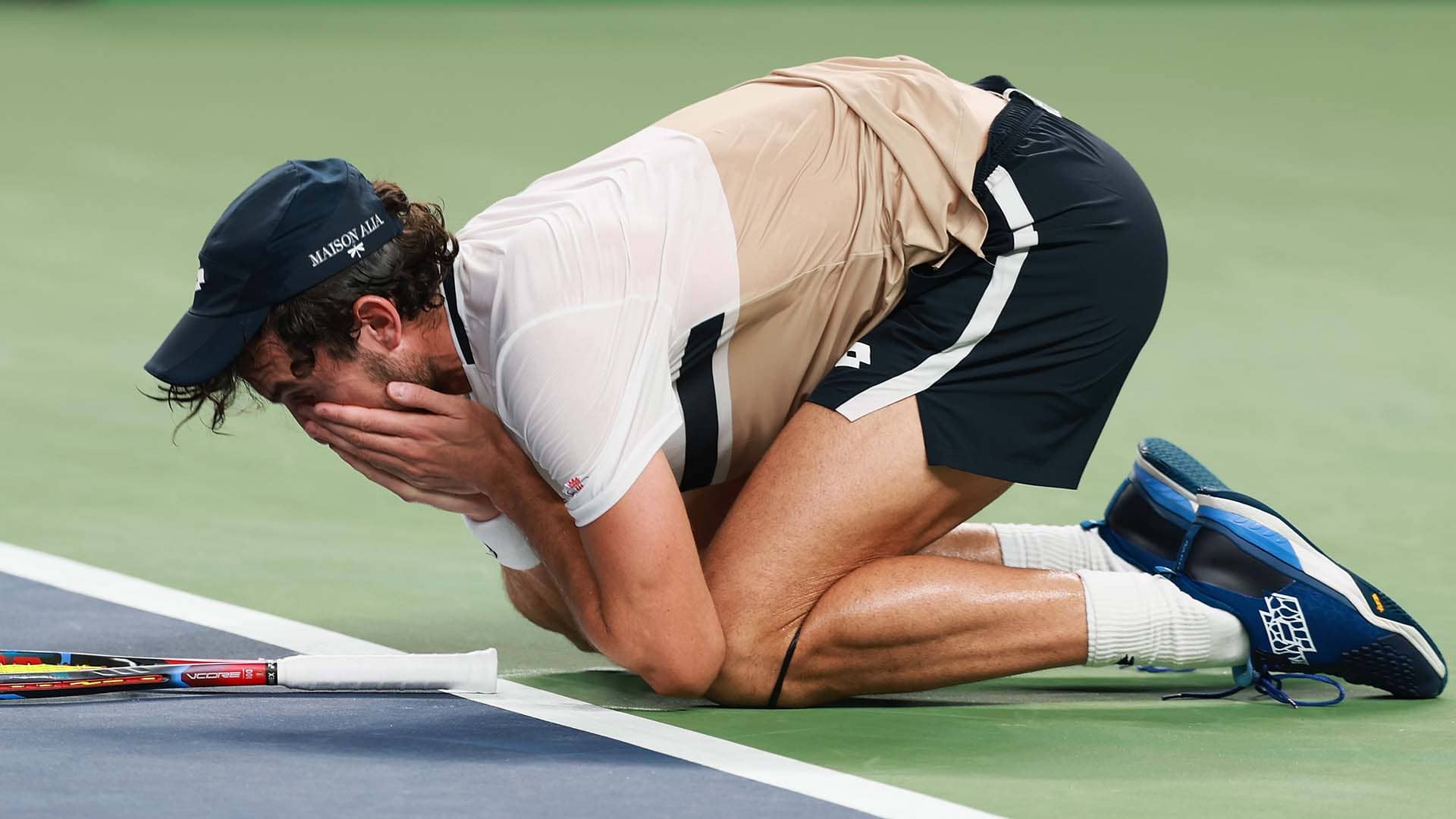
Vacherot’s Shanghai surge crowns Monaco’s quiet revolution

A 20-hour trek from Monaco to Shanghai’s hard courts sets the scene for Valentin Vacherot’s improbable run, where upsets against giants like Novak Djokovic and a family final forge the principality’s first ATP singles champion amid rising national fervor.
In the sweltering October humidity of Shanghai, Melanie-Antoinette de Massy touched down midday Friday after a grueling 20-hour flight from Monaco, accompanied by Monte-Carlo Masters tournament director David Massey. As president of the Monegasque Tennis Federation, the Monte-Carlo Masters, and the Monte-Carlo Country Club, she carried the weight of a tiny nation’s tennis dreams. Their arrival coincided with the Shanghai Masters, where 26-year-old Valentin Vacherot stood on the cusp of history, his season-long climb from No. 204 in the PIF ATP Rankings tested by the event’s swift hard courts and mounting expectations.
Upsets forge mental steel
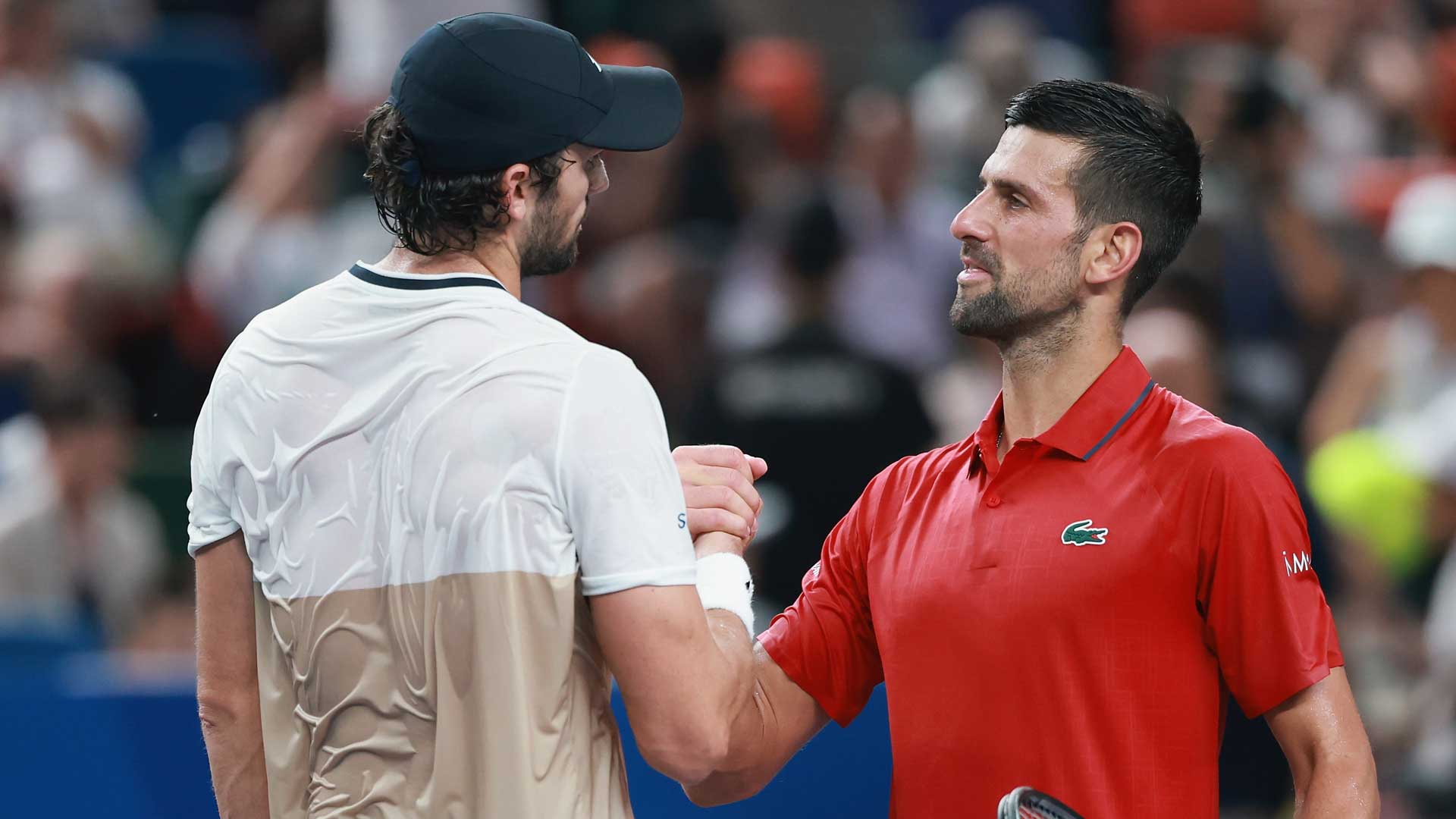
Saturday’s semifinal pitted Vacherot against four-time champion and World No. 5 Novak Djokovic, a matchup that demanded tactical precision on the DecoTurf surface. De Massy and Massey settled into the guest box, the crowd’s murmurs amplifying the tension as Vacherot countered Djokovic’s flat groundstrokes with deep returns and crosscourt forehands that stretched the Serb’s positioning. His one–two combinations—serve followed by topspin aggression—disrupted rhythms in extended rallies, turning potential vulnerabilities into a breakthrough victory that echoed through the stands like a collective exhale.
This win marked a psychological turning point for the Monegasque, whose season had oscillated between challenger-level grit and elusive main-draw consistency. The hard court’s pace favored bold adjustments, allowing Vacherot to vary his serve placement and exploit any lapses in Djokovic‘s return game, a strategy honed in prior rounds. De Massy watched the points unfold with mounting pride, her presence underscoring the federation’s investment in nurturing talent from a pool of limited players.
“I am so, so proud of him and there’s really no words that come to mind to describe really the feelings throughout the match,” said de Massy. “He played incredibly well and the match was fantastic. We saw really some amazing points, fantastic tennis and I’m so glad to be here. I’m so glad to live this moment with him and so happy to see this historical final.”
Family final ignites history
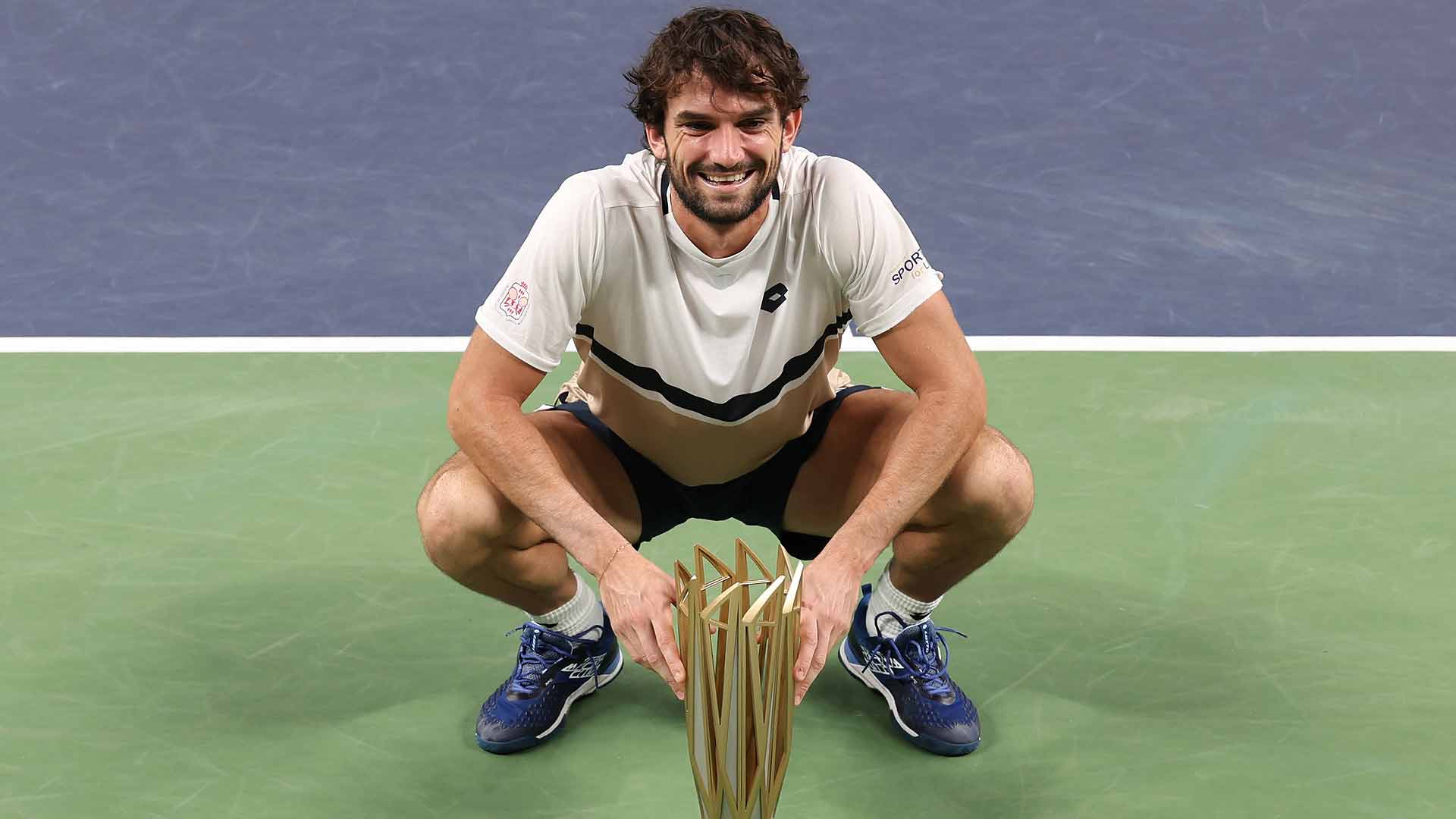
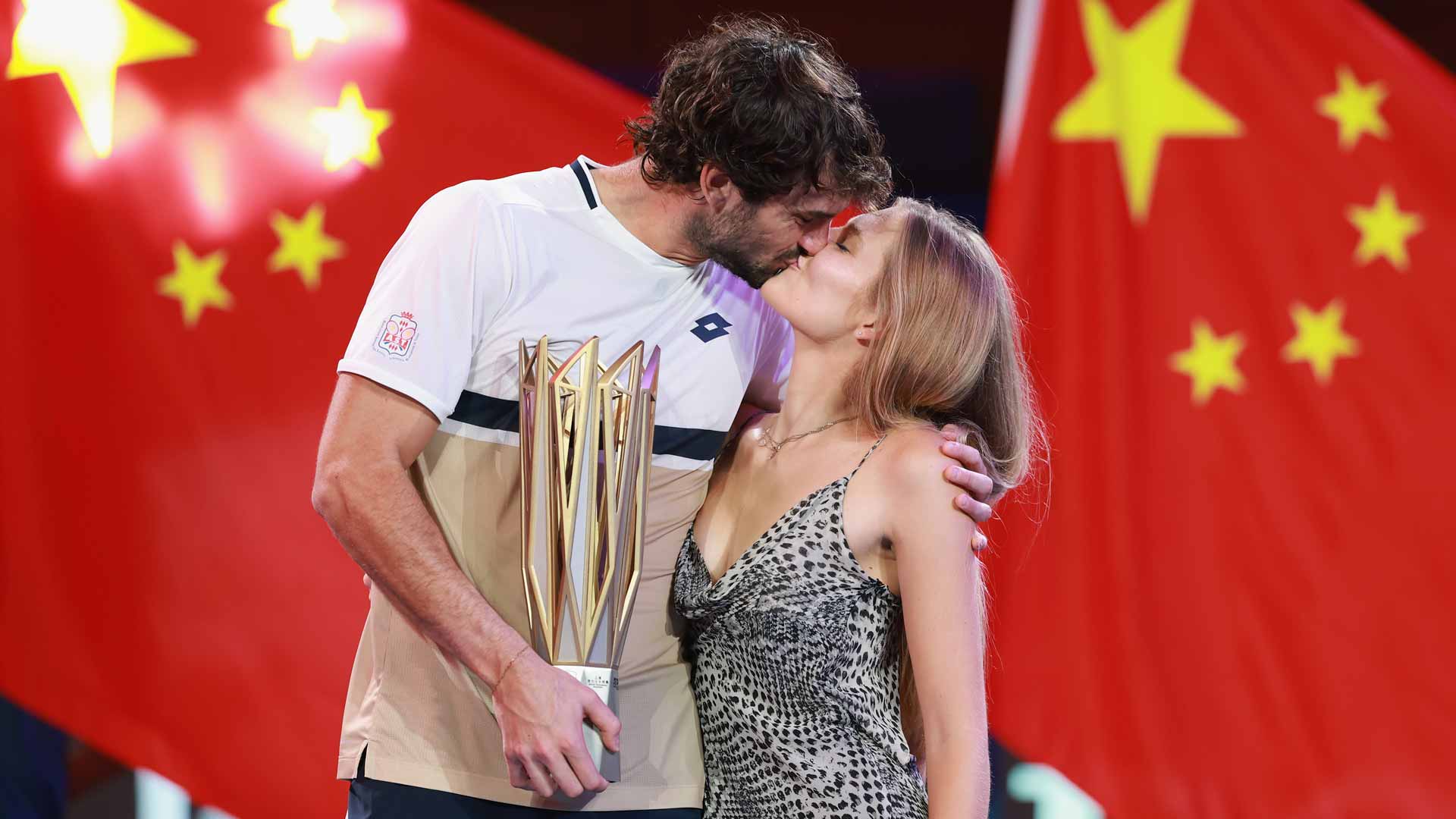
Twenty-four hours later, de Massy returned to the box for the championship clash against Vacherot’s cousin, Arthur Rinderknech, where personal stakes intertwined with professional pressure. Trailing 4-6 in the first set, Vacherot regrouped by sharpening his down-the-line backhands to target Rinderknech’s second-serve weaknesses, the hard court’s bounce aiding his recoveries and forcing defensive errors. The crowd’s rising energy fueled his fightback to 6-3, 6-3, securing Monaco’s first Open Era ATP Tour singles title in a match that blended kin rivalry with tactical evolution.
This triumph rocketed Vacherot to No. 40 in the rankings, a leap validated by his season’s arc of inside-out forehands and resilient baseline play. Back home, a watch party at the Monte-Carlo Country Club drew members and top juniors to a massive screen at 10:30 a.m., organized by Monaco Town Hall in the spirit of Formula 1 celebrations. The victory’s emotional resonance extended to Prince Albert II, an avid fan who sent seven WhatsApp messages during the final and later spoke with de Massy for 10 to 15 minutes, then with Vacherot for another 10, his congratulations amplifying the national swell.
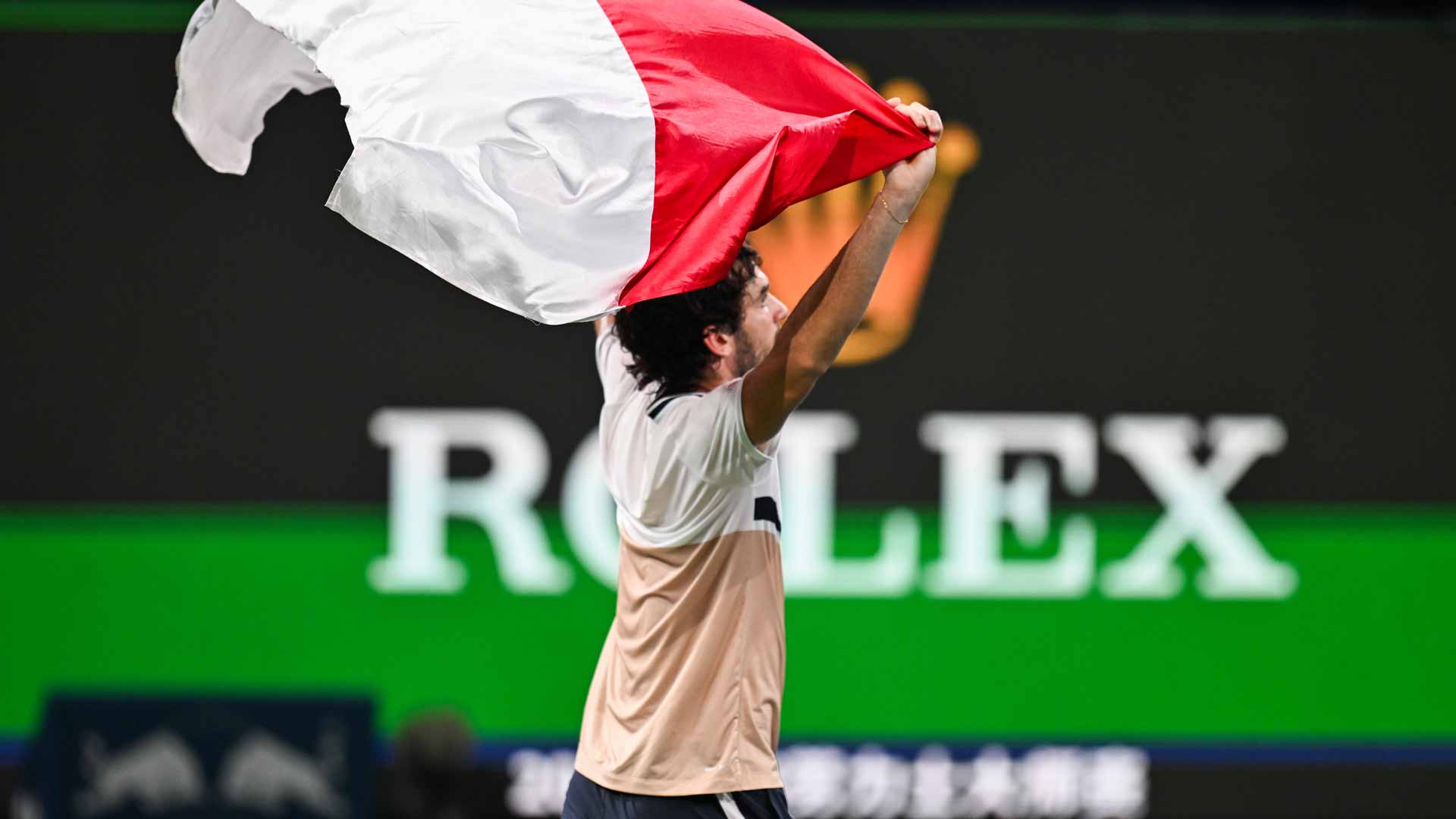
De Massy’s phone flooded with nearly 100 messages from well-wishers, while the prince praised the federation’s efforts in local interviews. Vacherot, draping the Monaco flag over his shoulders before the ceremony, reflected on the moment’s gravity for his small federation. He highlighted the shared achievements, including two Masters 1000 doubles titles with Hugo Nys and Nys’s Australian Open final two years ago.
“Just to hold the flag, and to be able to do that for my country is, it’s unreal, of course,” said Vacherot. “I’m just thinking about our little federation, our little small country, one of the smallest countries in the world. Probably the smallest federation. We have such, we have not many players, and now we have one Masters 1000 in singles, two Masters 1000 titles in doubles with Hugo Nys — also one Grand Slam final for Hugo in the Australian Open two years ago — and what we get to achieve for Monaco is unbelievable. I hope that we’re making everyone proud of us, and I hope just to keep going.”
Doubles depth and coaching drive
Nys, ranked No. 19 in doubles with a career-high No. 12 in June 2023, had claimed his biggest prize at ATP Masters 1000 Rome that year. Complementing this legacy, Romain Arneodo, at No. 45 after peaking at No. 38 in August, secured two doubles titles this season, including the Monte-Carlo doubles crown in April with Manuel Guinard—a first for a Monegasque player. These successes on varied surfaces underscored Monaco’s team-oriented ethos, thriving in Davis Cup formats where federation, tournament, and club unite as one family.
De Massy celebrated this breadth, noting the unprecedented Top 100 singles entry while valuing the doubles contributions Vacherot acknowledged post-semifinal. Guiding his ascent was half-brother and coach Benjamin Balleret, whose own career high of No. 204 in 2006 shaped ambitious targets beyond mere survival. Balleret instilled top-50 visions through rigorous training, emphasizing hard-court transitions and mental resets to sustain momentum.
“When we were putting goals for Val it was not only Top 100, because it seems a little, like, ‘Oh, for some guys, we just want to be Top 100’,” Balleret explained. “No, it’s like, ‘Let’s go. We want to be Top 50, Top 30’. You have more, even more ambition. So our role as the coach and all the team is to be behind him and to push him and to tell him that he believes that he can be a top-50 player. Because I think so many players stop believing.”
Vacherot’s Shanghai odyssey, from Djokovic’s dismantling to the familial final, has alchemized seasonal pressures into unbreakable resolve, positioning Monaco’s tennis contingent for bolder pursuits across indoor swings and clay campaigns ahead.