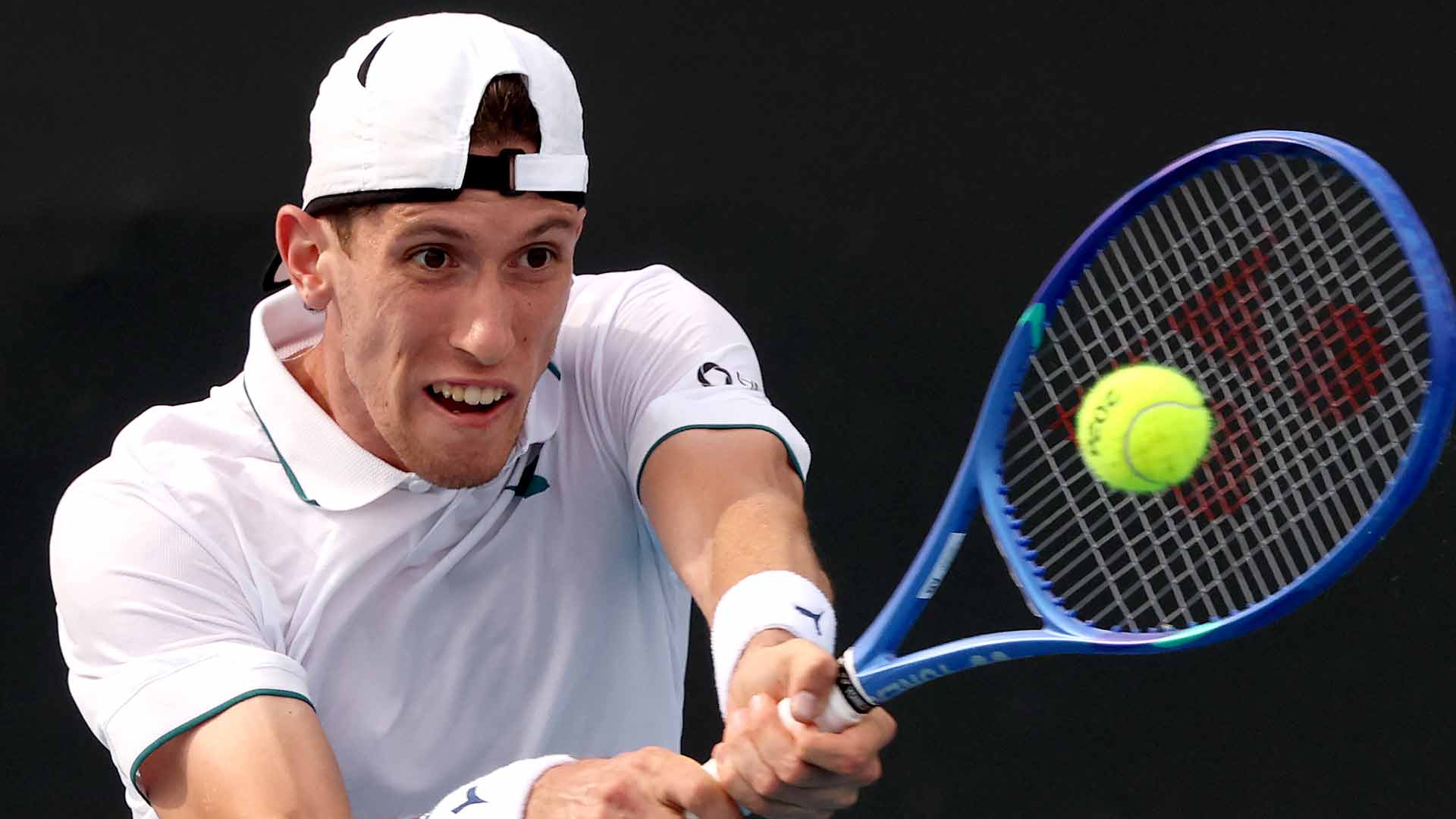
Zheng’s Steady Climb Steals the Show in Melbourne

Michael Zheng’s upset over Sebastian Korda at the Australian Open marks a rare fusion of college grit and pro poise, drawing praise from Mario Ancic for the Columbia senior’s unhurried rise amid Ivy League demands.
In Melbourne’s rising heat, Michael Zheng moves with the quiet assurance of someone who’s balanced textbooks and baselines for years. The 21-year-old Columbia University senior qualified for his first major main draw at the Australian Open, then outlasted Sebastian Korda in a five-set grind that exposed the American’s vulnerabilities. Zheng’s heavy topspin forehands dipped low on the hard courts, pulling Korda off the baseline and into errors during extended rallies. This breakthrough pulses with the rhythm of a student-athlete’s season, where every practice session doubles as preparation for exams and aces alike.
“I think it’s exceptional what he’s doing, and he’s a very humble person, very humble kid,” Mario Ancic said. “What all these guys are doing: Going to classes—very intense—competing amongst the best and the brightest in the country and internationally, and then still committing to being part of the programme that’s Top 10 in the country is nothing short of inspirational.”
Ancic spots familiar fire in Zheng
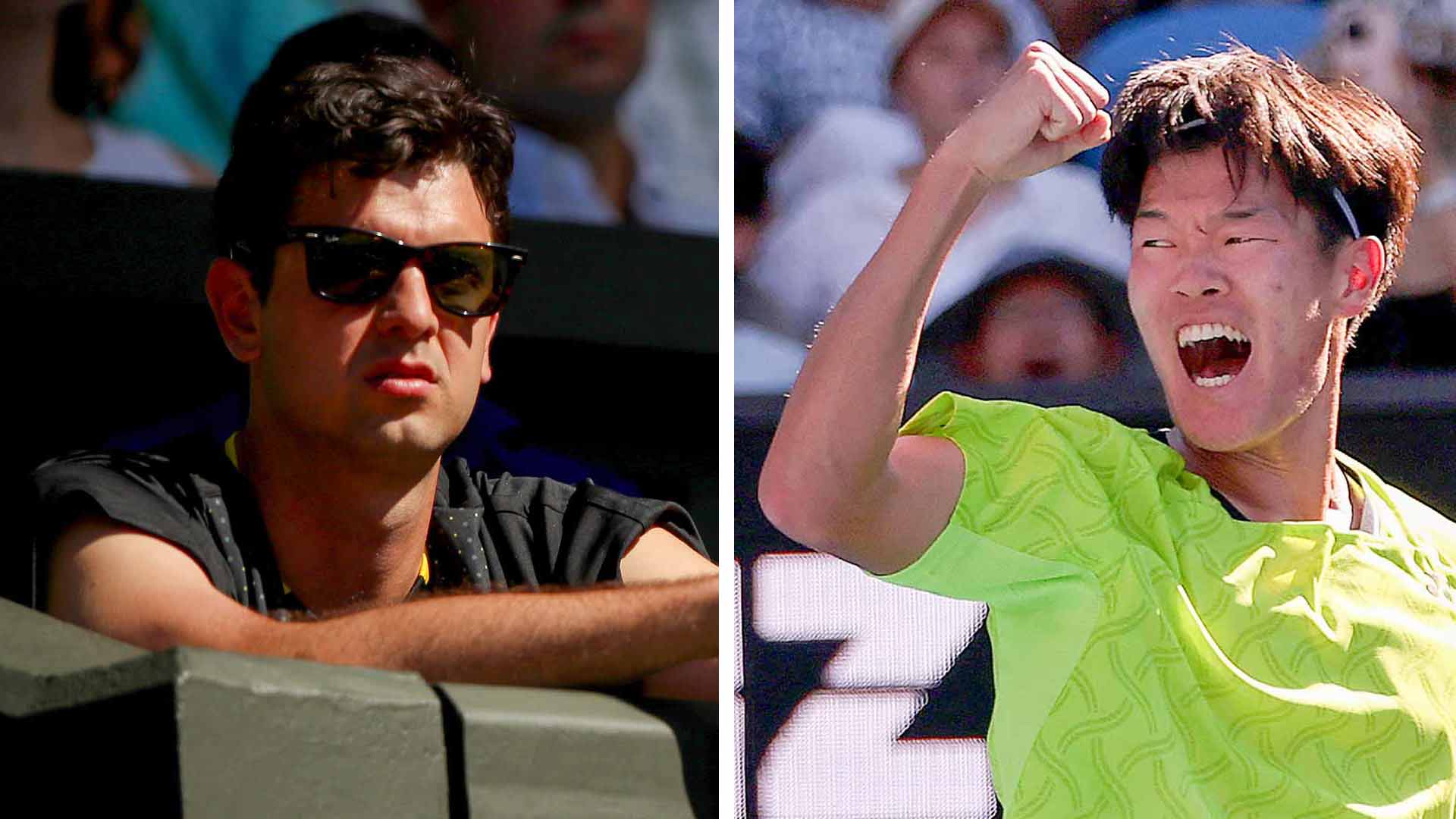
The former No. 7, who stunned Roger Federer at Wimbledon in 2002 and reached the semifinals two years later, brings a unique lens to Zheng’s run. Now 41 and a principal at One Equity Partners in New York, Ancic graduated from Columbia Law School in 2015 and stays tied to the Lions through close contact with head coach Howard Endelman. He first heard of the Michael Zheng prospect before the freshman arrived, fresh off reaching the Wimbledon boys’ singles final in 2022 with ITF successes already notched.
Ancic met Zheng’s family early on and sensed a grounded approach that set him apart from peers chasing quick ATP breakthroughs. The Croatian watched the two-time NCAA singles champion evolve without haste, prioritizing physical development under the coaching staff’s eye. Adding muscle sharpened his arsenal, turning solid junior strokes into weapons capable of pressuring pros—deeper crosscourt backhands that skid on hard courts, forcing rushed replies.
“He never rushed anything. I see a lot of junior players are like, ‘I’ve got to be on ATP, I’ve got to do this, I’ve got to do that’. He took time to develop his game,” Ancic observed. “I think he developed physically, which is always very important.” This patience shows in Zheng’s Korda match, where a steady 1–2 pattern of serve and forehand inside-out kept the pressure on, winning points before they stretched too far.
Balancing campus rigor with court demands
Columbia’s world demands more than strokes; it’s a daily commute from the 116th Street campus to the 218th Street tennis center in a city that never slows. Zheng’s days blur lectures, late-night study sessions, and drills that build endurance for five-set battles. Ancic, who navigated similar splits during law school, marvels at how the program forges resilience—team members pushing through early mornings and rigorous academics while holding a Top 10 NCAA spot.
“Commuting back and forth between the tennis centre and the campus, and just going through the rigorous academic program is just something that is remarkable and what Michael was able to achieve to play at that level going through this programme and just representing the Lions in the best possible ways, it just makes us all very proud,” Ancic said. Zheng’s mental strength shines in those long New York days, translating to composure under Melbourne’s floodlights, where he saved match points against Korda with deep returns and down-the-line passes.
His questions to mentors always circled back to pro competition: how to build shots that hurt opponents. The result? A game with heavier topspin that arcs over the net and bites on the Plexicushion, setting up slice backhands to disrupt rhythm. Against Korda’s flat-hitting style, Zheng mixed angles—crosscourt to inside-in—winning 40 percent of return points and holding serve through the decider’s tension.
Croatian praise fuels next-round fire
Ancic understands peak pressure, having beaten Rafael Nadal, Novak Djokovic, and Andy Murray in his prime. He sees that fighter’s spirit in Zheng—a kid who gives 100 percent every time, believing through deuce struggles and tiebreak nerves. “He’s always had a great demeanour about him, believing in himself and always giving his best, fighting. You always knew with Michael that he’s going to give it all on the court,” Ancic added. “This kid is a true example of a student-athlete.”
Another Croatian voice echoes the sentiment: former World No. 3 Marin Cilic watched 30 minutes of the opener and noted the diverse toolkit—topspin lobs blending with flat groundstrokes and quick net rushes. Cilic called it a work in progress with huge potential, praising the composure in a Grand Slam debut against a top player. “Really, really interesting. A player [who] has got a very diverse game. There are a lot of things that he does well,” he said. “You still see that it’s a work in progress, that let’s say if he works himself the next two, three, four years, that he can definitely develop into a great player. What I loved about [him] was [he was] playing for the first time in a Grand Slam, playing a guy, Sebastian, who is a fantastic player, and having such incredible composure and also a physical ability and mental ability to stay and to win in five.”
Now facing Corentin Moutet in the second round, Zheng eyes another tactical shift on these fast hard courts. Moutet’s lefty underspin and drop shots could test the American’s low stance, but Zheng’s improved power—forehands clocking deeper with added pace—might redirect that variety into short points. The crowd’s murmurs build as he steps up, his Ivy-honed stability turning opportunities into winners, with the season’s momentum carrying him deeper into uncharted Grand Slam territory.