Cilic’s Vintage Surge Lights Up Melbourne

At 37, Marin Cilic blazed through his Australian Open opener with bagels and a tiebreak, channeling the power that once claimed majors while pondering the sport’s sudden shift toward raw athleticism.

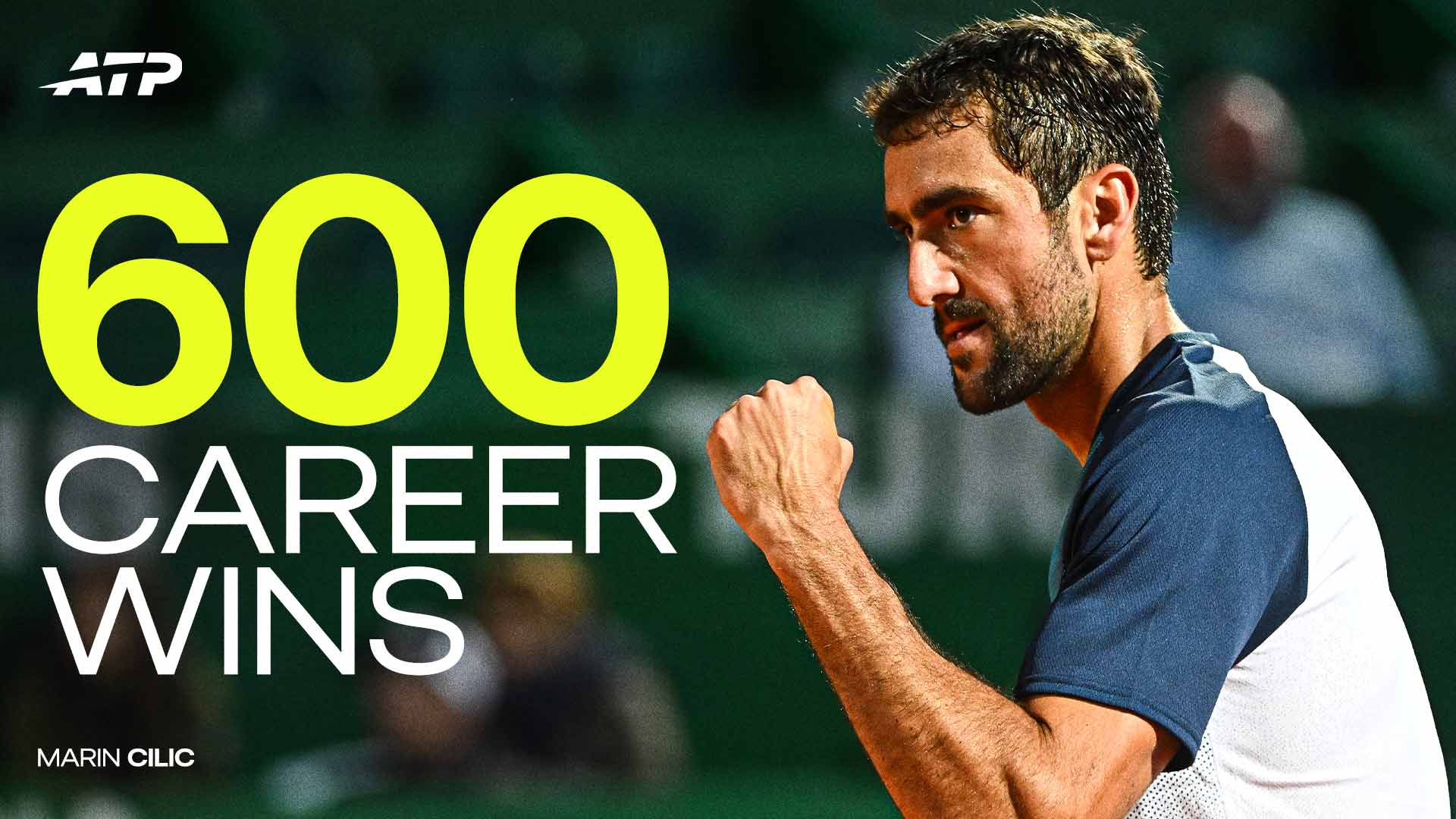
Under Melbourne’s relentless January sun, Marin Cilic strode onto the court like a ghost from tennis’s golden era, his 6-0, 6-0, 7-6(3) rout of Daniel Altmaier echoing the thunder of his 2018 final run here. The 37-year-old Croatian, entrenched at No. 70 in the PIF ATP Rankings, unleashed serves that skidded low and forehands that carved inside-out paths to the lines, leaving the German scrambling in the heat. This wasn’t survival; it was revival, a reminder that experience can still bend the baseline to its will amid the tour’s youth-driven frenzy.
In the post-match glow, Denis Shapovalov clapped him on the back, quipping that the 2019 or 2016 version had resurfaced. Cilic fired back with a grin: 2014, the year he claimed the US Open. The air hummed with that easy camaraderie, the kind that bridges generations on these hard courts.
“For me, that level comes from the sensation in training. I see where I’m at, I see physically how well I was training in the whole 2025, especially in the offseason.”
Sensing fire from offseason drills
Cilic‘s dominance stemmed from those quiet hours in 2025’s offseason, where drills rebuilt his edge against a body no longer 26 or 27. He gauged his form against the tour’s rising stars, their routines a mirror for his own—physical benchmarks that sparked quiet excitement in his camp. On Melbourne’s rebound-ace surface, that preparation translated to heavy topspin forehands kicking high, forcing Altmaier into defensive slices that wilted short.
The third-set tiebreak turned on a crisp inside-in forehand at 3-all, wrong-footing his opponent and sealing the shift in momentum. At 15 or 16, Cilic had forged this discipline: full teams, body care, peaking schedules that now yield extra seasons. Satisfaction surged not from the win alone, but from proving the grind still pays dividends, his mind sharp as the court’s edges under the afternoon glare.
Family balance eases the tour’s grind
With his two sons—six and four—finally checking off all four Grand Slams in Melbourne, Cilic’s push carries a deeper rhythm. Their presence diffuses the road’s isolation; without it, the separation would crack the foundation, especially with the boys at those ages. He drives forward for them as much as himself, their wide-eyed wonder amid the Australian Open crowds turning exhaustion into fuel.
To sharpen his game, he’s added Mate Delic to the team, a friend whose work with Borna Coric and Borna Gojo brings tactical depth. This bolsters his one–two patterns, serve into penetrating crosscourts that exploited Altmaier’s backhand vulnerabilities. The harmony—family support woven with professional tweaks—positions him to probe the draw’s depths, the psychological weight lighter on these sun-drenched courts.
“I added another team member to my team, Mate Delic, who was working with Borna Coric for a few years and also with Borna Gojo, so he’s very knowledgeable.”
Evolving against power’s sudden shift
Competing where Roger Federer once reigned feels rewarding, Cilic says, the fruits of 15 years’ discipline blooming in these later chapters. Yet the game’s transformation fascinates and challenges him, arriving abruptly post-Covid without fanfare. Racquet weights have plunged to 305 or 310 grams across the Top 100 or 200, impossible in the 2000s or 2010s when 330, 340, or 345 grams ruled—his own among the heaviest still, fueling serves that pin opponents deep.
This tilt toward power and athleticism, embodied by Jannik Sinner and Carlos Alcaraz, erodes some old intricacies: the cat-and-mouse rallies, diverse styles of the past 15 to 20 years. Everyone blasts bigger now, footwork a blur on hard courts like Melbourne’s, shifting focus to who outlasts the onslaught. Cilic adapts proactively, no waiting for reversal—deeper returns to blunt big serves, down-the-line backhands to pierce the baseline grind.
His mind drifts to dream matchups with history’s architects, like Rod Laver, barred from Slams for six pro years yet transformative, or Mats Wilander, alongside Borg, McEnroe, Connors, Sampras, Agassi. Those eras prized versatility over sheer force, a contrast that underscores his respect for the sport’s arc. As the Australian Open deepens, Cilic’s blend of adaptation and endurance sets the stage for upsets, his heavy game a counterpoint in the power era, eyes fixed on carving further into the draw.
“it’s interesting how the game changed and I think it came out of nowhere... You have to adapt to what’s going on, and adapt to what your needs are.”