Borges Turns Net into Winning Edge

As the Australian Open heats up, Nuno Borges’ 72.3 percent net success in 2025 reveals a tactical shift that powered 30 victories and sets the stage for more in Melbourne.
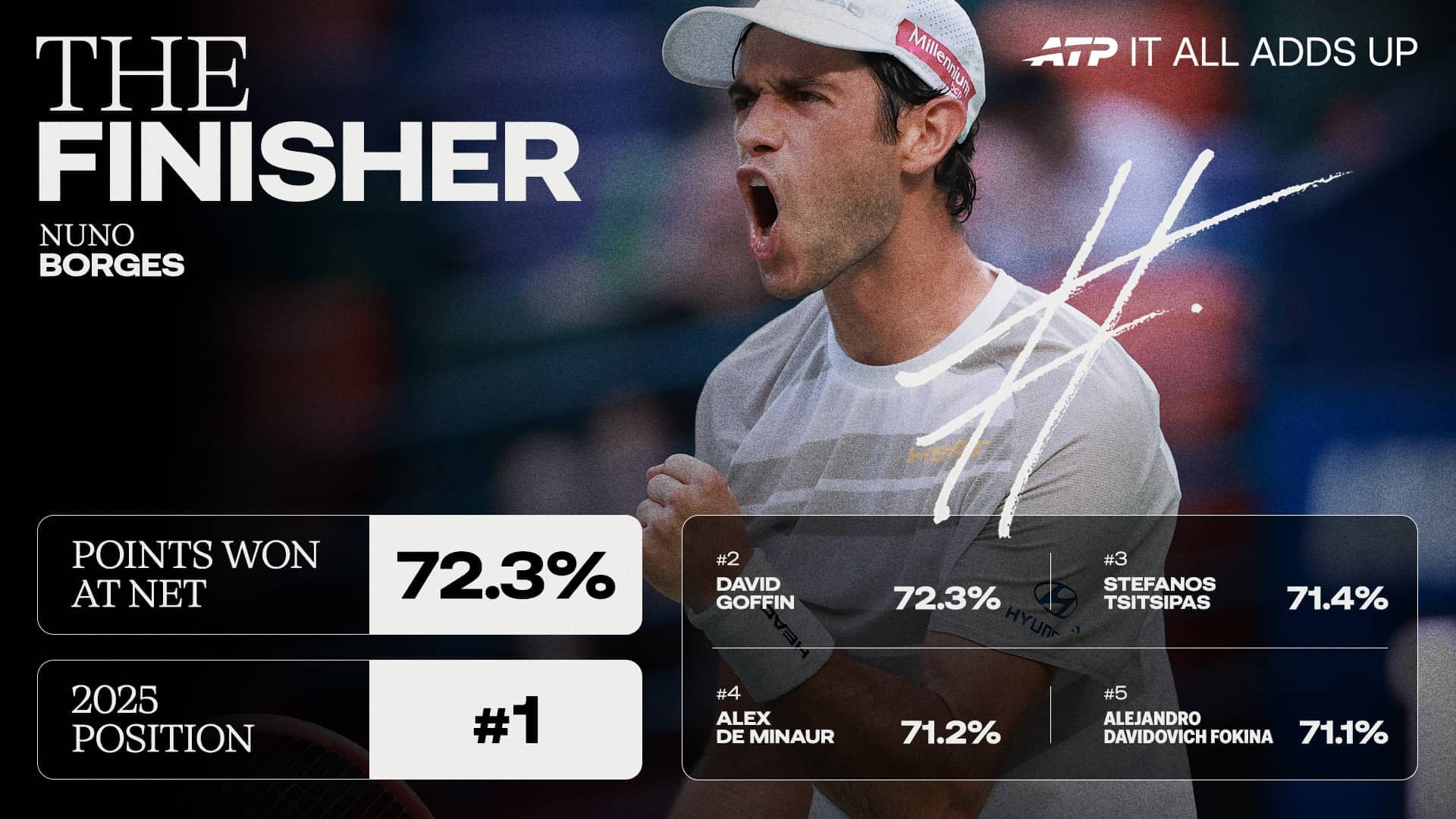
In Melbourne’s relentless sun, where the Australian Open tests every nerve, Nuno Borges arrives with a game reshaped by forward momentum. His 72.3 percent success rate at the net through 2025 led the ATP Tour, a quiet revolution that turned baseline stalemates into swift conclusions. Those volleys weren’t just finishes; they were statements of control, earned across a season that demanded precision amid rising stakes.
Borges built this edge through deliberate choices, stepping in after deep approaches that pinned opponents back. On hard courts, where bounce favors the aggressor, he mixed inside-in forehands with crosscourt slices to draw weak replies. The Portuguese player’s calm at the net—positioning firm, decisions sharp—shortened points and drained rivals’ resolve, fueling a career-high 30 tour-level wins.
“When a guy comes to the net, he still has more than a 50 per cent chance of winning the point, and I guess I just chose really wisely when to come in,” Borges explained. “It is something I’ve been working on: those approaches, when to come in and choosing the right shot.”
Reading surfaces sharpens his rushes
Borges adapted his net play to the court’s tempo, charging forward more on quicker hard courts where passing shots require flawless angles. In Auckland’s ATP 250, his semifinal run showcased deep approach shots that forced lobs, which he dispatched with overheads that silenced the crowd. This surface awareness countered steady returners like David Goffin, whose crosscourt replies met Borges’ proactive closes and crisp volleys.
Against Stefanos Tsitsipas in tighter battles, he varied one–two patterns, serving wide to pull the Greek forward before an inside-out forehand set up the net rush. These adjustments minimized passing opportunities, boosting efficiency beyond athletic bursts. Eighteen hard-court victories in 2025, per the ATP Win/Loss Index, traced back to this tactical layering, turning potential marathons into sprints.
Matchups refine forward decisions
Facing Alex de Minaur‘s blistering speed, Borges leaned on down-the-line volleys to exploit retrieval gaps, stretching the Australian’s defense in scrambling exchanges. Alejandro Davidovich Fokina‘s heavy topspin tested his positioning, prompting crosscourt approaches that neutralized lift and opened volley lanes. Each encounter honed his instincts, ensuring net trips synced with point flow rather than forced gambles.
The crowd’s rising hum amplified these moments, where a well-timed volley could swing momentum in humid afternoons. Borges’ efficiency stemmed from reading opponents’ rhythms, pulling back on slower surfaces but always eyeing ways to sap energy through shortened rallies.
“A few times I was maybe pushed to the net when I didn’t want to be, but maybe I played a great approach shot really deep and made the guy try to lob me,” Borges said. “On the quicker surfaces, I would tend to come in more as it’s harder to pass and you have less time to put an angle on the shot.”
Points Won At Net (2025)
Visit our ATP Stats section for more insights.
As the Australian Open unfolds into 2026, Borges’ net mastery promises deeper runs, blending calculated risks with the psychological edge that defined his breakthrough year.