New Faces Energize ATP’s 2026 Council

As 2026 dawns, the ATP Player Advisory Council gains fresh momentum with elections blending doubles specialists and singles grinders, poised to tackle the tour’s grueling pace from Melbourne’s hard courts onward.
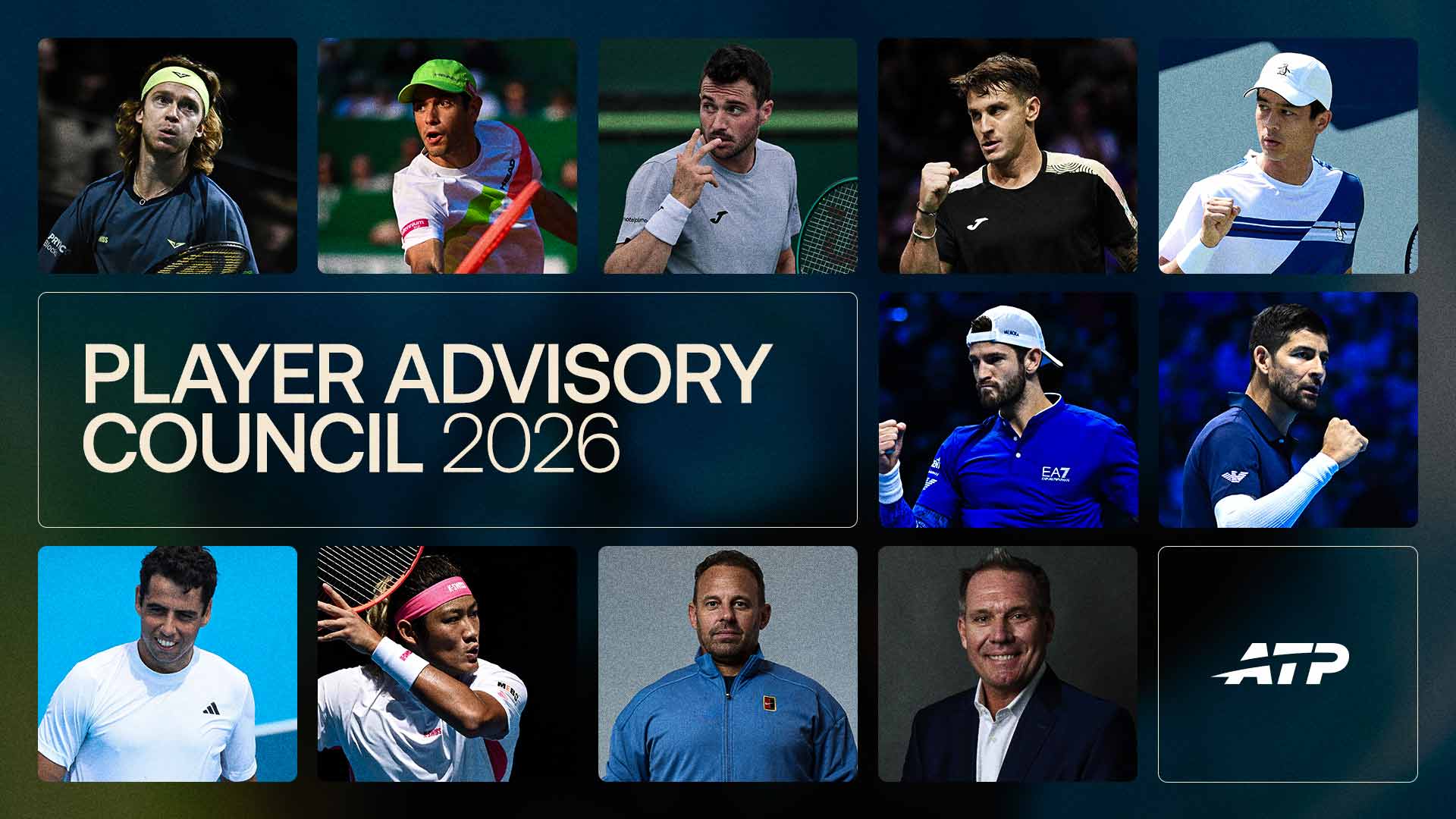
The ATP Player Advisory Council for 2026 assembles a dynamic mix of pros, elected by peers to steer the circuit through its relentless demands. From baseline marathons on clay to quick volleys on grass, these voices represent the tactical and mental edges that define elite play. Their three-year terms lock in influence just as the season resets, with early meetings setting tones for everything from schedule tweaks to recovery protocols.
Fresh elections bring diverse grit
Marcelo Arevalo enters as a newly elected member, his doubles net poise—rushing forward for sharp overheads—now fueling discussions on pair dynamics and surface transitions. Zizou Bergs follows suit, the Belgian’s heavy topspin forehands that pin opponents deep adding a singles perspective on endurance in packed draws. Nuno Borges and Zhang Zhizhen complete the newcomers, Borges with his one–two punch on faster surfaces and Zhizhen grinding through crosscourt exchanges in Asian swings, all serving three-year terms through 2028.
Mackenzie McDonald secures re-election for his second term, his slice backhands disrupting rhythms on hard courts much like the adaptability he pushes in council sessions. This influx signals a shift toward addressing the psychological weight of constant travel, where a single inside-out winner can swing rankings but exhaustion often dulls the edge. Players vote within categories like 1-50 singles or 1-25 doubles, ensuring the group’s pulse matches the tour’s varied tempos.
Veterans anchor ongoing battles
Camilo Ugo Carabelli, Pedro Martinez, Jaume Munar, Andrey Rublev, and Andrea Vavassori provide continuity, their clay-court tenacity—Rublev’s down-the-line blasts echoing through European rallies—mirroring the sustained push against fixture overload. Munar’s consistent baseline probing and Vavassori’s net instincts bolster debates on everything from seeding protections to injury windows between slams. Together, they bridge rising talents and established forces, confronting the mental fog that settles after five-setters under stadium lights.
Federico Ricci stays on as coach representative, his mid-match adjustments to 1–2 patterns offering grounded insights into player welfare. Nicolas Pereira‘s re-election as alumni representative draws from eras of grass-court sprints, weaving historical lessons into modern pressures like qualification squeezes. The council elects player board reps to channel recommendations to ATP management, a process that hums with the same intensity as a tiebreak.
Melbourne meeting sets early tone
The first gathering unfolds in Melbourne ahead of the Australian Open, where hard-court bounce amplifies every crosscourt pass and early heat tests resolve. Here, Arevalo‘s doubles lens might clash with Rublev’s singles power, forging policies that ease the arc from hopeful opens to weary finals. With categories spanning 51-100 singles to at-large Group 1 votes, this body targets the tour’s unyielding rhythm, turning individual strains into collective safeguards.
As 2026 unfolds, expect these minds to refine the mental toolkit pros need—sharpening focus amid the global chase. The air in Melbourne will carry that pre-tournament buzz, these advocates plotting shifts that could ripple through draws worldwide, sustaining the fire that drives every point.