Mpetshi Perricard’s Serve Commands the Court

Under the Melbourne sun, Giovanni Mpetshi Perricard’s thunderous deliveries in 2025 redefined pressure, topping ATP speeds and priming him for a bold Australian Open run.
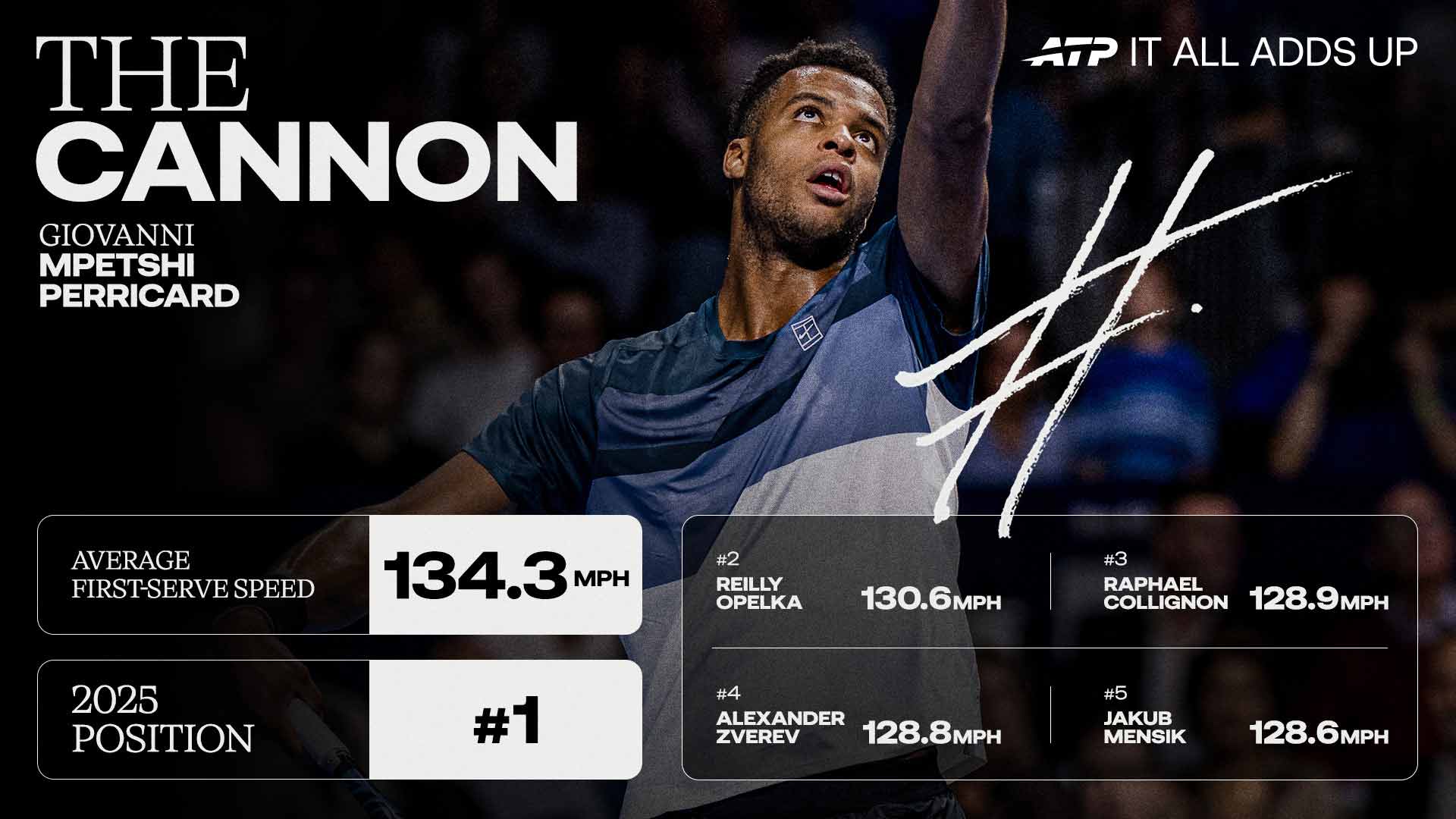
Standing across the net as Giovanni Mpetshi Perricard prepares to serve feels like bracing for a storm on the baseline. The 22-year-old Frenchman’s toss hangs high, his frame uncoiling to whip the ball at speeds that turn returns into frantic guesses. In 2025, this weapon led the ATP Tour, averaging 134.4 mph (216.3 kph) on first serves, a mark that outstripped Reilly Opelka‘s 130.6 mph and reshaped entire matches from the opening point.
The Australian Open spotlights these statistical leaders, tracing how a year’s relentless play builds toward fresh triumphs in 2026. Mpetshi Perricard’s edge lay not just in raw pace but in the dread it instilled, forcing opponents into hurried chips or outright misses across hard courts and clay alike. His serves skidded low on faster surfaces, pulling returners wide for easy follow-up forehands.
“His technique is so fluid,” said Craig O’Shannessy, the Frenchman’s strategy analyst. “You see him load back with his energy and drive so well with the legs. With his height, looseness in his arm and wrist and energy coiling up through the body, he’s able to hit the ball harder than anyone else in the game. He has a very lively wrist at the end of that kinetic chain.”
Fluid motion unleashes raw power
Mpetshi Perricard‘s kinetic chain turns height into precision strikes, his wrist snap adding mph that peers like Alexander Zverev couldn’t match in head-to-heads. On indoor hard courts, he’d fire inside-out serves to the returner’s backhand, disrupting rhythms and opening the court for down-the-line passes. This consistency held through 2025’s grind, from early-round qualifiers to deep major runs, wearing down foes with short points that conserved his energy for tiebreaks.
Rising servers such as Jakub Mensik and Raphael Collignon tested him with their own bombs, but Mpetshi Perricard’s placement—mixing crosscourt angles with straight-line heat—forced errors in key service games. Crowds hushed before his motion, the crack of ball on strings echoing like a warning, as opponents like Ben Shelton lunged for underspin chips that rarely connected cleanly. His approach amplified the tour’s tactical demands, turning service holds into momentum builders that propelled a climb to No. 29 in the PIF ATP Rankings.
Second serves blur the lines
What sets Mpetshi Perricard apart is his second serve’s bite, averaging 117 mph without a hint of caution, leaving Valentin Vacherot‘s 112.5 mph in the dust. He layered in slice for low bounces on grass or heavy topspin to push returners back on clay, denying easy attacks from players like Gabriel Diallo. This aggression kept points explosive, opponents’ legs churning as they chased deliveries that demanded perfect timing from the first ball.
In packed schedules, from Indian Wells to the US Open, this tactic built mental edges, with returners second-guessing stances under constant threat. O’Shannessy emphasizes mixing speeds to echo Kyrgios’s unpredictability, varying heights and spins to keep the hammer’s shadow looming large.
“He needs to be a player who mixes in a number of second serves that he hits as hard as his first serve,” O’Shannessy said. “He doesn’t need to hit two first serves all the time; it needs to be strategic. Kyrgios has proven how potent it can be when it’s unpredictable. Just because you have a big hammer doesn’t mean you always have to use it. The threat of the big hammer is also very important. Keeping an opponent guessing what speed is coming, what height is coming is key.”
Against lefties like Shelton, he’d target the ad side with flattened seconds, setting up one–two patterns that ended in inside-in winners. This variability turned potential breaks into holds, his boldness etching a season of short, sharp rallies that eroded rivals’ confidence point by point.
Boldness drives 2026 ambitions
Heading into 2026, Mpetshi Perricard’s serve promises to dictate terms at the Australian Open, where the hard courts reward his skidding flats and kick variations. The field’s big hitters will push back, but his 2025 blueprint—aggression tempered by cunning placement—positions him for deeper breakthroughs. Visit the ATP Stats section for more on these evolving metrics.
Imagine the Rod Laver Arena buzz as he steps to the line, opponents already shifting feet, the air charged with what comes next. His weapon ensures matches unfold on his rhythm, a forward thrust toward majors where speed meets clutch resolve, leaving the tour guessing how far this thunder rolls.