Rei Sakamoto’s Evolution on Melbourne’s Hard Courts

One year after scraping just two games in Australian Open qualifying, 19-year-old Rei Sakamoto storms into the 2026 main draw, his game layered with pro savvy and mental edge.
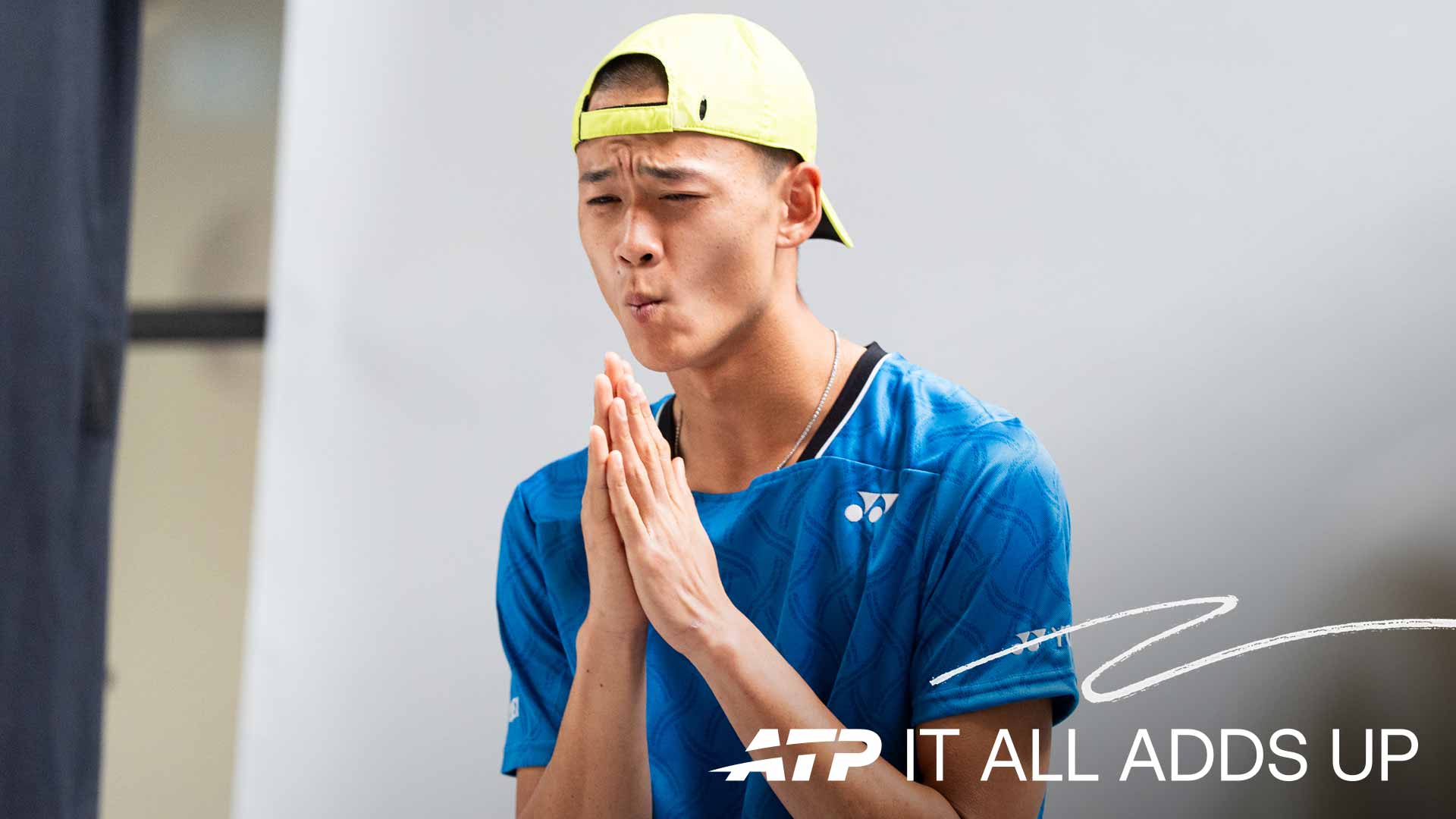
Under Melbourne’s baking sun on January 19, 2026, Rei Sakamoto strides onto the court at the Australian Open, a far cry from the 19-year-old who claimed the boys’ singles title here just two years back. Last year, in 2025, he pocketed only two games against Tristan Boyer in the first round of qualifying, the leap to pro circuits exposing raw edges in his heavy-hitting style. Now, he’s punched into the main draw without dropping a set or his serve, his crosscourt forehands landing with calculated depth that pins opponents deep.
Realigning vision after Cap Cana talks
Sakamoto credits his surge to sharpened professionalism, especially in mental stability and physical conditioning. His coach, Federico Ricci, points to a turning point last March during a Challenger in Cap Cana, Dominican Republic, where extended discussions clarified their partnership and Sakamoto’s pro aspirations. Those conversations bridged junior habits with tour realities, emphasizing that consistency spans far beyond the six key results of juniors, including doubles points.
“How professional I am overall,” Sakamoto told ATPTour.com, before citing examples. “Mental stability and physicality.”
The shift paid off swiftly: Sakamoto qualified for his first ATP Masters 1000 in Miami while ranked No. 330, then captured Challenger titles in Cary, North Carolina, and Yokohama, Japan, climbing to a career-high No. 159. Ricci notes how early 2025 forced maturity, teaching Sakamoto to grasp tennis’s nuances—constructing points with risk-reward balance rather than sheer ball speed. On Melbourne’s plexicushion, this means varying his one–two combinations, dipping into underspin slices to draw errors before unleashing inside-out winners.
Layering tactics beyond junior power
Once, Sakamoto viewed deeper strategy as defensive, a misunderstanding Ricci attributes partly to language and cultural gaps, but they aligned on tennis as a game of calculated aggression. He now mixes heavy topspin crosscourts with down-the-line backhands, disrupting rhythms on hard courts where predictable bounce rewards precision. This evolution turned his simplistic blasts into sustainable rallies, holding firm through qualifiers where opponents probed for weaknesses in fading light.
“That’s been a little bit of a turning point from that point on,” Ricci told ATPTour.com. “After that he did well and he still hasn’t found his consistency throughout the year. it’s something that maybe comes from the juniors where they only count six results and they also count doubles. So then, of course, when you go on Tour, it’s much more extensive and complex. But I would say the view, the vision, is a bit more aligned to what it should be going forward on the pro tour.”
Ricci observes Sakamoto’s growth as both player and person, with the first months of 2025 pivotal in understanding court presence and the sport’s demands. No longer just slapping balls in a one–two pattern, he approaches the net with slice volleys, turning defensive lobs into offensive chances. The tour’s psychological grind—jet lag, packed schedules—tested this, but each hold built resilience, his returns now probing with low trajectories to force overhitting.
Channeling personality off the baseline
Off court, Sakamoto unwinds through his REIVOLUTION channel, blending tennis insights with comedic cooking segments that reveal his dry wit. This outlet exposes a fun side constrained by match intensity, helping recharge amid the season’s toll. He quips about loving to cook but despising dishes, a problem solved by installing a dishwasher in his new apartment.
“I like it. I really like doing it,” Sakamoto said. “It’s a good platform to expose my personality a little bit more than I can do on court. I like it.”
Back in Melbourne, where junior memories linger, Sakamoto relishes the surface’s grip on his topspin game and the event’s warm hospitality. Facing Rafael Jodar in the opener, another #NextGenATP talent, he eyes exploiting baseline exchanges with varied depth, his serve setting up inside-in forehands under the crowd’s rising hum. “It is special,” Sakamoto said. “I have good memories from the juniors and I think the surface suits me and the hospitality and everything, I feel that is amazing here, so I like it.”
“I think he has matured quite a bit. As a person, first of all, he still has many, many steps to go on that side, but he has matured a little bit and he has matured also as a tennis player in his understanding of the game,” Ricci said. “I think, the first three, four months of 2025 were very important in his maturity and understanding of the game, how he understood how to be on the court and how tennis is played and what is it about.“
“There have been significant steps forward,” Ricci said. “There’s still many, many to go.” As the Australian Open heats up, Sakamoto’s refined arsenal promises contention, each point layering experience against the tour’s unyielding pace.