Fonseca’s Rhythm Hunt Falters in Melbourne

Joao Fonseca’s back holds strong, but the missing match sharpness hands an early Australian Open exit to Eliot Spizzirri, testing the young Brazilian’s resolve on the hard courts.
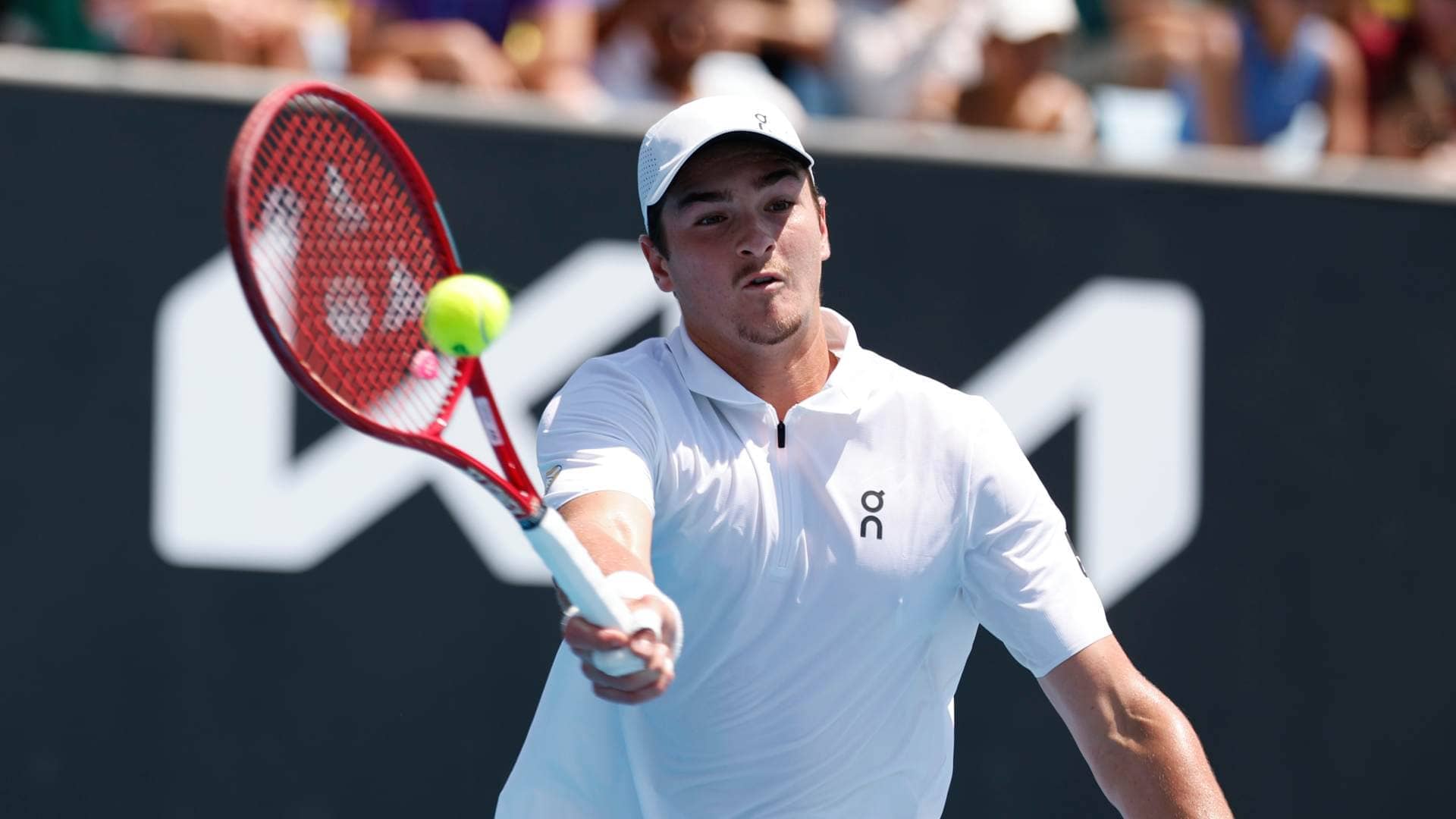
On the sun-drenched hard courts of Melbourne Park, Joao Fonseca stepped up for his Australian Open first-round match with a body finally mended but a game still searching for its groove. The 19-year-old Brazilian, who had pulled out of Brisbane and Adelaide due to back issues, faced qualifier Eliot Spizzirri in a battle that quickly exposed the cost of those lost weeks. Fonseca grabbed the opener 6-4 with sharp inside-out forehands, but the 15 days without intense hitting left him vulnerable, leading to a 4-6, 6-2, 1-6, 2-6 reversal as fatigue set in during longer rallies.
Spizzirri’s serve dominated, landing 14 aces and winning 81 percent of first-serve points, while his deep returns forced Fonseca into defensive crosscourt exchanges rather than his preferred aggressive down-the-line strikes. The American’s mental edge shone in the third set, holding from 0/40 with a clutch ace and a heavy topspin forehand winner on the one–two follow-up. Fonseca’s heavy topspin attempts shortened under pressure, turning potential breaks into missed opportunities as the match’s tempo shifted decisively.
“I will say I needed more time,” Fonseca said after his defeat. “Since the beginning of Brisbane, I wasn’t playing, and then I came back, but slowly. Then I stopped again. So I went almost 15 days without hitting at 100 per cent, very intense.
“I tried my best today. I think [it’s] bad that I wasn’t 100 per cent playing, but at the same time, it gives me maturity to keep going, to understand my body, to understand my limits. Today wasn’t the day. But I think I’m still confident, I’m still playing good. I’m having some good practices. I just need rhythm. I think this season is going to be great for me.”
Rhythm evades amid recovery haze
The stop-start path back from injury hung over Fonseca like the humid Melbourne air, his footwork a beat off in transitions from defense to attack on the consistent Plexicushion bounce. Last year’s Australian Open breakthrough, where he toppled Andrey Rublev in straight sets, had built expectations of another deep run, but this time the lack of competitive sets blurred his timing on second-serve returns and slice backhands. In the second set, he clawed a break with a low underspin pass, yet Spizzirri‘s pressure returns deep to the corners kept rallies short, denying the longer points where Fonseca’s topspin could build momentum.
As tiredness hit earlier than expected, Fonseca’s crosscourt backhands floated long, allowing Spizzirri to step in with inside-in forehands that pinned him back. The psychological weight of interrupted prep tested his limits in the five-set format, his mind sharp but body lagging in endurance. This early clash served as a raw gauge of his readiness, the crowd’s murmurs under Rod Laver Arena echoing the quiet frustration of a prodigy still syncing up.
No regrets sharpen future edges
Fonseca left the court without bitterness, his back at 100 per cent and mindset fixed on growth from the physical toll. Ranked No. 32 in the PIF ATP Rankings, he viewed the defeat as essential experience in managing fatigue during extended exchanges, his legs heavy but lessons clear. He has no second thoughts about pushing through to Melbourne, embracing the test as a step toward reclaiming his fluid game.
“I don’t regret it at all,” Fonseca said. “I think there are things in life that you need to get positive things from… My back is 100 per cent. I’m healthy again. I just needed time.
“It was good to see how to deal with a five-set match and with the physique not 100 per cent. I was getting tired earlier. I needed rhythm, but it’s good to have that experience, to see your limits, to see how it can go. I don’t regret a thing.”
Looking ahead, he heads to South America to rebuild through matches, defending his ATP 250 title in Buenos Aires before the ATP 500 on home clay in Rio de Janeiro. The shift to slower surfaces will demand more patient buildup with slice variations and down-the-line passes, offering the court time to restore his rhythm and turn tactical insights into consistent wins.
Spizzirri’s poise flips the script
Fonseca credited his opponent’s execution in dissecting the match’s turning points, noting how Spizzirri’s serve-return aggression mirrored top players’ pressure tactics. The American’s deep returns neutralized Fonseca’s second serve, forcing him into low-percentage inside-out attempts rather than steady crosscourt depth. That third-set hold from 0/40 exemplified the mental fortitude, with Spizzirri’s intensity sustaining through the final sets and holding serve at high clip.
“I think he served really well,” Fonseca said of Spizzirri. “He [made] a lot of returns. That’s one thing that the top players do a lot, they put a lot of pressure on the guy’s return.
“I think he served plus one as well. I think he stayed really well mentally. The first game in the third set that I had 0/40, but he closed the doors. After this, he kept with the intensity, and I couldn’t hold it.
“Maybe if I got the game, maybe things would go seriously. But it’s a maybe. Tennis has a lot of maybes.”
As the Melbourne crowd disperses, Fonseca’s path forward gleams with possibility—the South American clay a proving ground to ignite his game, transforming this setback into the spark for a breakout season on the ATP circuit.