Djokovic’s Defiant Pursuit of Slam 25

Defeat in Melbourne hasn’t dimmed Novak Djokovic’s conviction that a record-breaking 25th major awaits, as the 38-year-old reflects on a grueling Australian Open run against the sport’s rising forces.
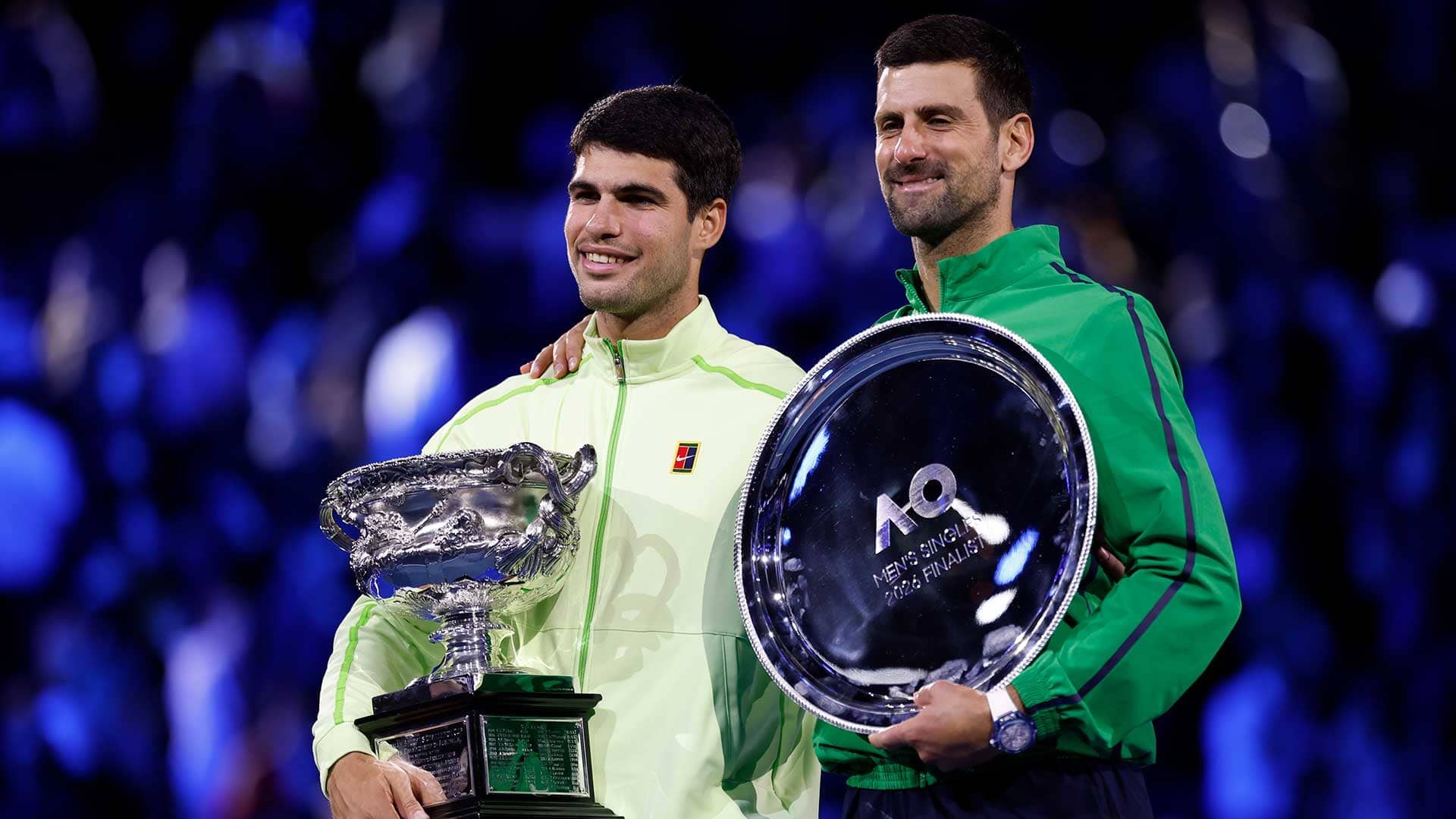
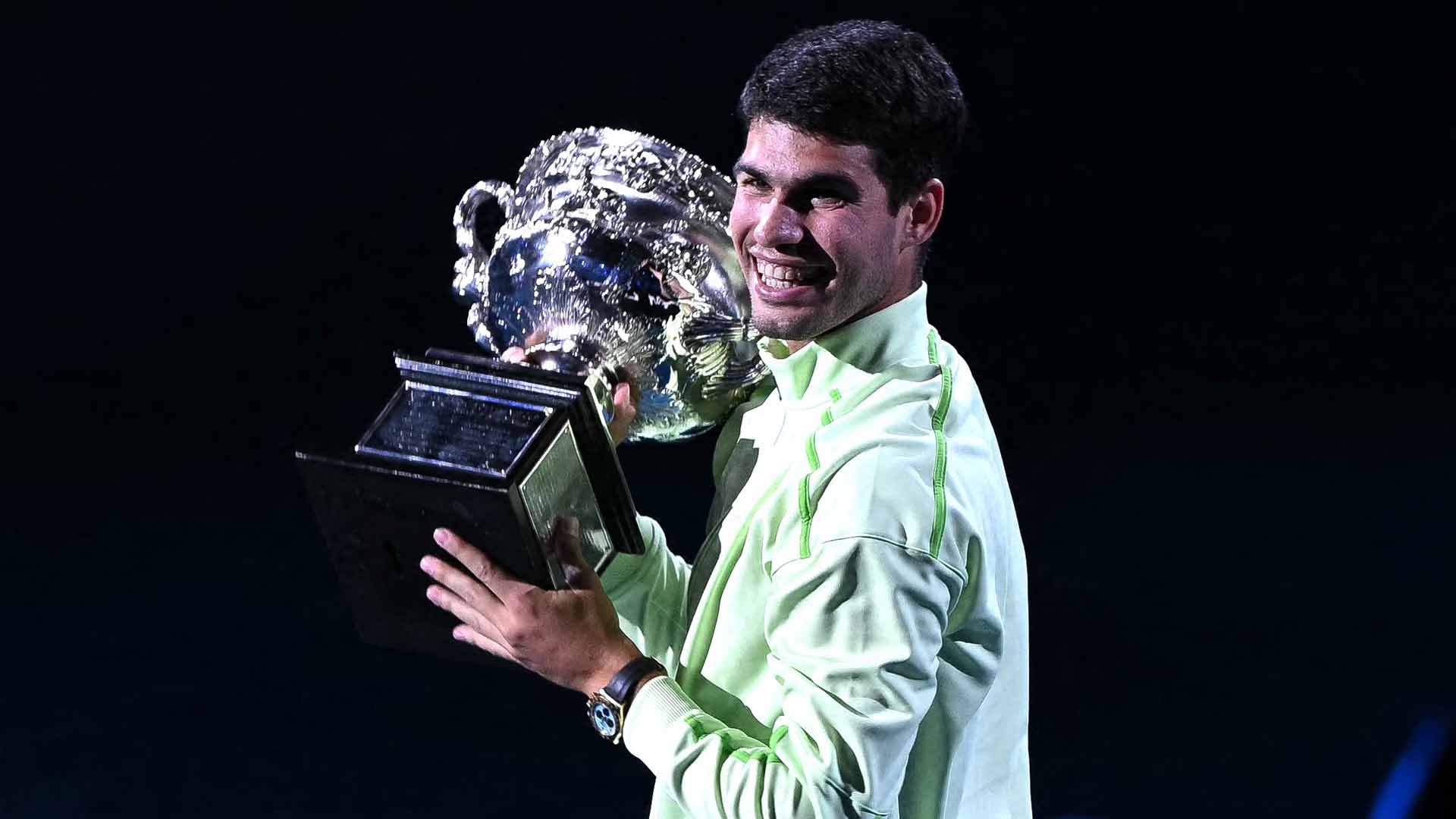
In the fading light of Rod Laver Arena, where the hard courts still hummed from three hours of unrelenting battle, Novak Djokovic absorbed his first Australian Open final loss. At 38, the Serbian had navigated a treacherous draw, outlasting Jannik Sinner in a five-set semi-final epic before facing Carlos Alcaraz’s blistering pace. Yet even as Alcaraz claimed his seventh major and the youngest Career Grand Slam, Djokovic’s eyes stayed locked on the distance—a 25th title that feels as tangible as ever.
“I always believe I can,” Djokovic said when asked about whether he feels he can win a 25th Slam. “Otherwise, I wouldn’t be competing, and I said this numerous times. it’s great that I was able to beat Jannik in five and really battle Carlos in four close sets. I remain disappointed with the way I felt in second and third after an incredible start, and I felt great about myself and then things changed.
“It is what it is. That’s sport, but of course, when you draw a line and you make an assessment of what happened over the last couple of weeks, it’s an incredible achievement for me to be able to play finals, be couple of sets away maybe to win a championship. Of course, after a loss, it’s a bitter feeling. But nevertheless, I have to be content with this result.”
Recalibrating mind for sustained fire
Djokovic’s path through 2025 had stalled at semi-finals across all four majors, a far cry from his last victory at the US Open in 2023. The record 24-time Slam champion has since tweaked his approach, easing the self-imposed weight to navigate elite pressures with sharper focus. This mental shift, he shared, cuts away excess stress, letting him embrace the underdog role that sparks extra drive in late rounds.
In Melbourne, that clarity propelled him forward on a surface where the ball’s true bounce amplifies every topspin loop and return angle. A fourth-round walkover from Jakub Mensik conserved energy, while Lorenzo Musetti‘s quarter-final retirement—despite leading by two sets—offered a breather to refine his low-slice backhands against the field’s power. These moments, blending fortune with preparation, fueled his semi-final triumph over Sinner, where Djokovic’s 1–2 patterns pinned the Italian deep, turning defense into probing attacks.
The crowd’s pulse quickened during those exchanges, their cheers weaving into the rhythm of extended rallies. Djokovic now sits at No. 3 in the PIF ATP Live Rankings, his 101 tour-level titles a foundation for what’s next. Lowering expectations hasn’t dulled his edge; it has honed it, positioning him to chase majors where his experience can outlast youth’s burst.
Final set shifts expose vulnerabilities
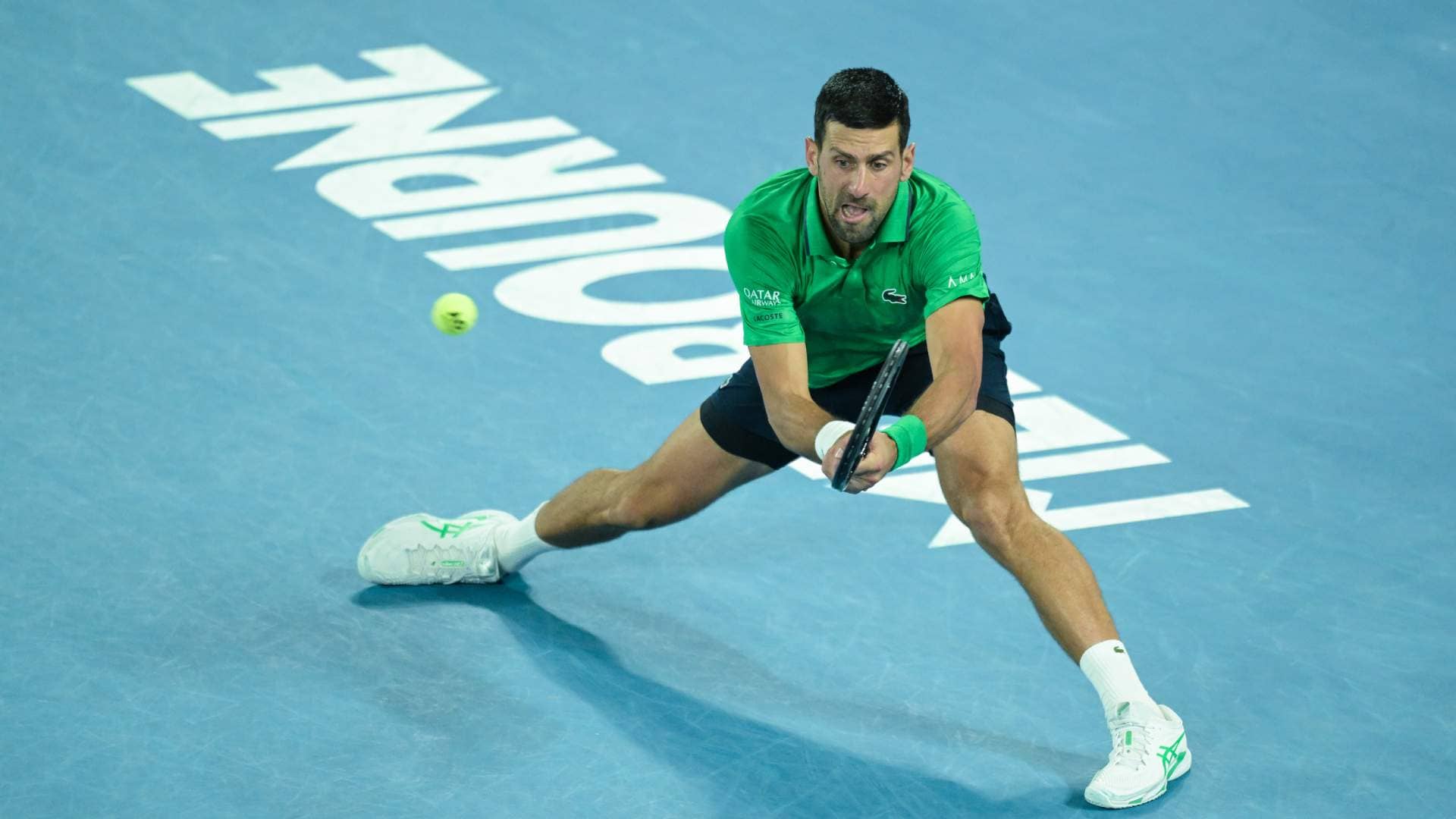
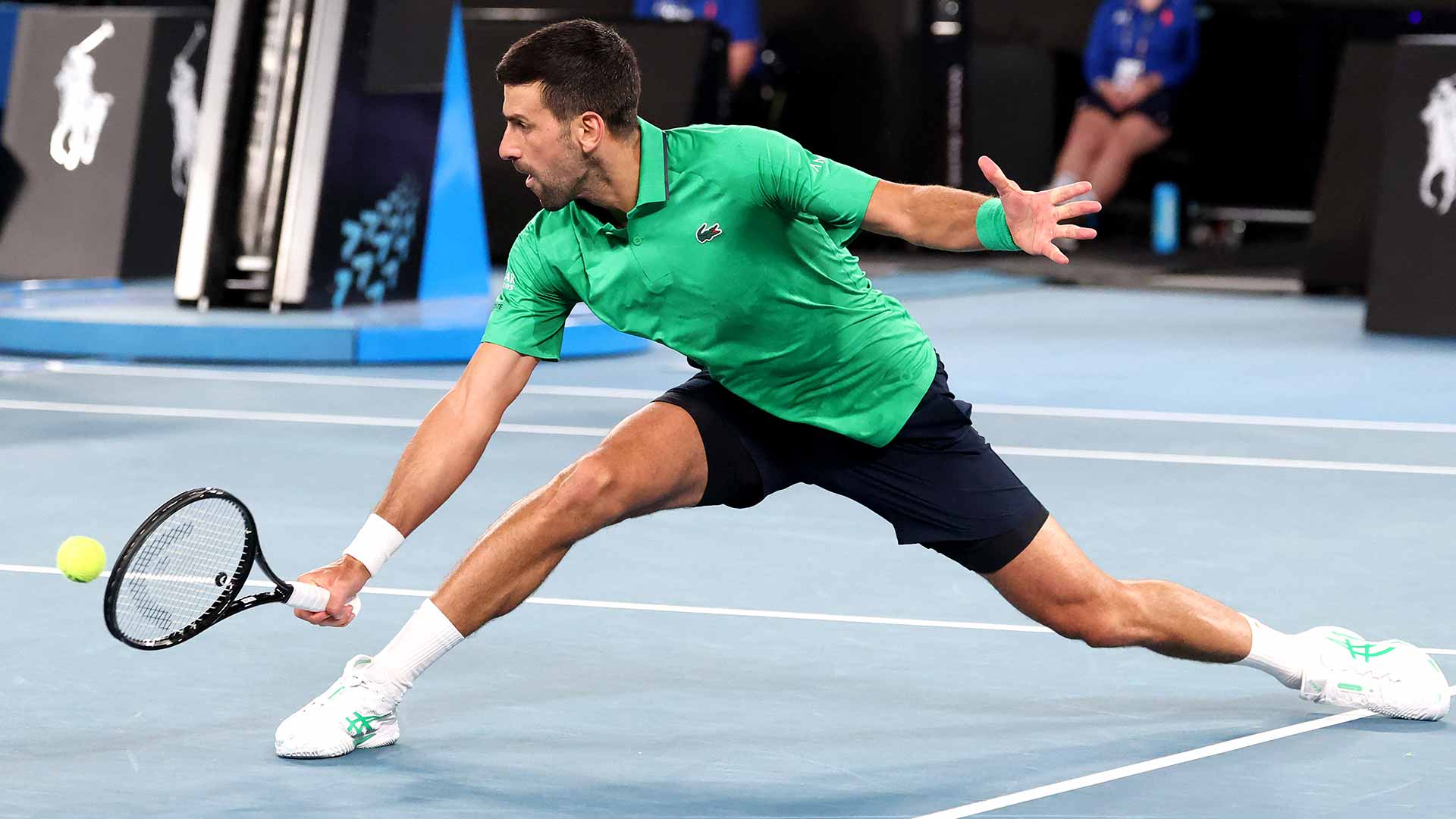
The championship match opened with Djokovic dictating terms, his heavy topspin forehands forcing Alcaraz into crosscourt scrambles that stretched the Spaniard’s reach. He held firm through probing returns, the first set unfolding as one of his finest in years—clean lines, minimal errors, a tempo that echoed his prime. But as the second set dawned, a subtle fade crept in, his movement tightening under the heat’s cumulative pull.
Alcaraz sensed the opening, unleashing inside-in forehands that sliced down the line, evening their head-to-head at 5-5 across three major finals. Djokovic rallied in the fourth, drawing the arena’s roar to reignite his down-the-line backhands and slice defenses, holding at 4-4 with a one–two serve-return combo that disrupted rhythm. Yet a forehand misfire on break point—a shot he had framed perfectly—flipped the momentum, the three-hour duel ending in concession after the Spaniard’s surge.
“The first set was one of the best sets I’ve played the last couple years,” Djokovic reflected. “Then I kind of regained my energy back and momentum in mid-fourth. I asked the crowd to get involved. They did.
Just bad miss at 4-4 and break point, and that forehand, I had a good look at that forehand. My forehand broke down in important moments. That’s what happens. One or two shots can change the momentum of the match and switch things around, which happened. I’m just very disappointed I wasn’t able to maintain that kind of feeling that I had in the first set. A lot of what-if scenarios in my head, and I guess it is what it is. You have to just accept it as it is.”
This Australian Open marked Djokovic’s 10th final here, a streak unbroken until now, yet he frames it as progress—a step past 2025’s barriers. The semi against Sinner had demanded everything: neutralizing flat groundstrokes with underspin slices, extending points into marathons that tested endurance on the slower hard courts. Beating one top seed en route felt like validation, a tactical foothold for the seasons ahead.
Admiring ambition in the next generation
Alcaraz’s Melbourne crown, completing his Career Grand Slam at 22, earned Djokovic’s straightforward respect for a career already carving deep marks. He highlighted the young man’s poise and family roots, qualities that ground his explosive game amid the tour’s demands. In their clash, Alcaraz’s variety—drop shots pulling Djokovic forward, inside-out lasers wrong-footing returns—mirrored the evolution Djokovic has long mastered.
“I lowered my expectations the last couple of years, which also, I think, allows me to be able to let go of some of that unnecessary additional stress,” Djokovic explained. “it’s always tension and stress and pressure, and I just don’t want to be overwhelmed by it.
“It also feels good a little bit not being always the main favourite to win Slams. I think that kind of gives you a little bit of that extra motivation, I guess, when it comes down to the last rounds of the Slam.”
Overall, Djokovic called the tournament fantastic, knowing toppling seeds like Sinner and Alcaraz was essential for the crown. Felling one advanced his case, encouragement amid the grind. As 2026 unfolds, from sun-baked hard courts to clay’s deliberate roll, that core belief sustains him—transforming this final’s echoes into fuel for the 25th Slam’s pursuit.
“The results are a testament to his already stellar career. I can’t think of any other superlatives about him,” Djokovic said. “He deserves every bit of the praise that he gets from his peers, but also the whole tennis community.
“He’s a very nice, young man. Good values, nice family. Of course, already a legendary tennis player that made already a huge mark in the history books of tennis, I mean, with only 22 years of age. it’s super impressive.”
“Overall, for sure it’s been a fantastic tournament,” Djokovic added. “I knew that I’d probably have to beat two of them on the way to the title. I beat one, which is great, so it’s a step further than I have gone in Grand Slams than last year. Very nice, encouraging.”