A Year On, Fonseca Eyes Deeper Australian Open Run

Joao Fonseca returns to Melbourne as the No. 28 seed, his game sharpened by a breakthrough 2025 and tactical offseason tweaks, ready to build on last year’s Rublev upset.
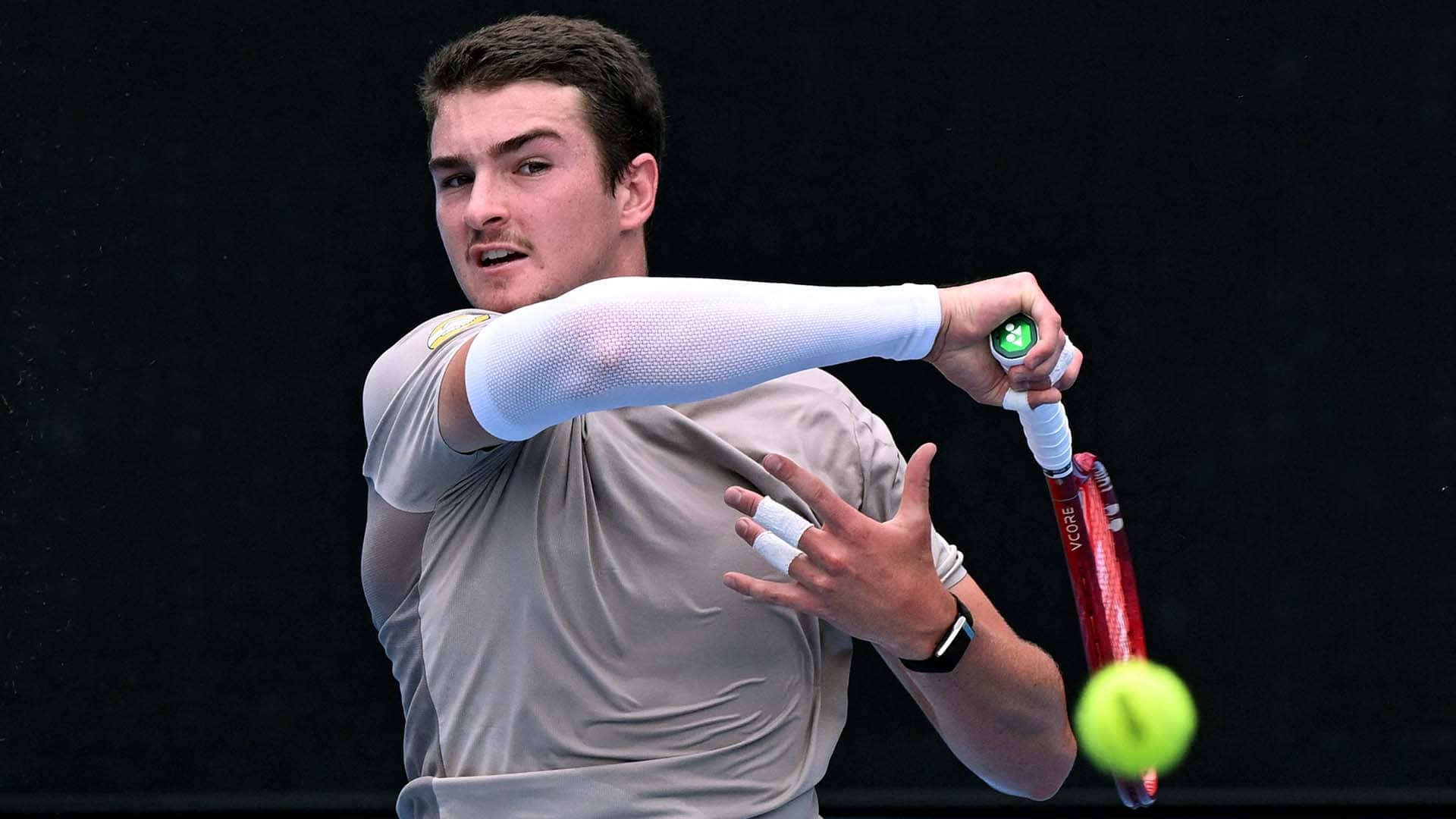
In the January scorch of Melbourne Park, Joao Fonseca steps back onto the hard courts that launched his surge a year ago. The 19-year-old Brazilian, now seeded 28th, carries the weight of a season that turned qualifiers into main-draw threats, his straight-sets takedown of then-World No. 8 Andrey Rublev still echoing through the draw. That upset, fueled by heavy topspin forehands that jammed Rublev in crosscourt exchanges, marked his major debut and sparked a confidence wave he rides into 2026.
Fonseca’s path from the Joao Fonseca qualifiers to the spotlight mirrored the Australian Open‘s own rhythm—gritty, unrelenting. Fresh off his win at the Next Gen ATP Finals presented by PIF, he arrived with raw power but left with poise, the heat mirroring Brazil’s embrace to ease his five-set baptism. Now, facing Eliot Spizzirri in the opener after back injury withdrawals from Brisbane and Adelaide, he aims to channel that maturity into longer rallies and net charges.
“It was where everything started,” the 19-year-old Fonseca told ATPTour.com last week ahead of his return, one year on, to the Australian Open. “My confidence and everything [went up]. I’m looking forward to the AO this year. I think I play well on those courts and I like playing there. “I think the heat is similar conditions to where I live in Brazil. So I’m looking forward to it as a much more mature Joao, with much more experience.”
Breakthrough Momentum Carries Through Slams
The Andrey Rublev shock rippled outward, propelling Fonseca to main-draw victories at every major in 2025. He outbattled Hubert Hurkacz on the clay of Roland Garros, his inside-in forehands skidding low to force errors in extended baselines, reaching the third round amid the Parisian clay’s grip. Wimbledon’s grass tested his serve’s down-the-line bite, another third-round exit that honed his slice backhands to disrupt rhythm on the slick surface.
Closing the circuit, he dispatched Miomir Kecmanovic at the US Open, securing that debut win across all four Slams and capping a 26-16 record. Titles in Buenos Aires and Basel followed, blending clay aggression with hard-court precision, but the real shift came in mental endurance—learning to reset after deuces, turning crowd murmurs into focus fuel. “For sure [the Australian Open] helped,” he said. “It gave me confidence for the whole year. I say that everything started [in Melbourne], because I got experience of playing five sets for the first time and of playing in the main draw of a Grand Slam for the first time. So it gave me confidence to be ready for the next tournaments.”
Offseason Tweaks Hone Net Game
Back in Rio de Janeiro and Miami, Fonseca linked with coaches Guilherme Teixeira and Franco Davin for a preseason heavy on recovery and versatility. They drilled volleys to finish short balls, emphasizing approaches after deep returns that set up one–two patterns—forehand crosscourt opener into a backhand down-the-line finisher. Nutrition tweaks and daily resets addressed the tour’s grind, transforming his flat serve into a kick variant that arcs high on hard courts, disrupting Spizzirri‘s steady returns.
This evolution targets modern tennis’s net demands, where low-bouncing hard-court shots invite aggressive follows. The No. 32 in the PIF ATP Rankings feels the difference in his footing, ready to vary pace with underspin slices when rallies stretch. “It was different. I think I’m much more mature and more experienced,” he said. “We focused a lot on nutrition and recovering day by day. Every week there was a specific thing, so it was a very complete preseason. “We focused a lot on volleys, serving, returning… mostly everything. Focusing more on serve and return, and volleys, approaching to the net, which is [a big part of modern] tennis nowadays. People are improving those things a lot, so we worked a lot on that.”
Federer’s Endorsement Lights the Path
On Friday at Melbourne, Roger Federer, the 103-time tour-level champion, weighed in on the Brazilian’s rise, spotting familiar traits in his balanced power. Their meeting at the Laver Cup lingered, Federer praising the point-after-point intensity from courtside. “I think what separates him from a lot of the other guys in the draw are his power, forehand, backhand, serve, what he’s able to bring point for point,” Federer told media at the Australian Open. “He’s exciting. He has a good aura. I feel like he’s a very likeable character as well. I like watching him play. I briefly met him at the Laver Cup. I saw him also courtside and also from the back. It was impressive to see.”
The Swiss sees echoes of his own arc and Jannik Sinner’s in Fonseca’s need to calibrate aggression, a nod that fuels the young player’s chilled resolve. Twelve months past that Rublev stunner, he brushes off the constant questions with ease, his 2025 exploits now a foundation rather than a fixation. “I don’t mind [talking about it],” said Fonseca with a smile. “I’m very chilled, so I don’t mind people talking about last year, which was a great result and I was playing good.” “I just think he’s more a little bit like me in the sense he needs a little bit more time to work on his game,” said the Swiss. “Similar to Jannik [Sinner], as well, to know when to dial back and when to unload his shots. Once he figures that out, obviously the sky’s the limit. I think he’s truly one of the guys that can compete for the biggest wins.”
As the first ball bounces on January 19, 2026, Fonseca arrives not chasing echoes but carving new ones, his tactical edge and mental steel poised to push past the second round. The Melbourne roar awaits, a canvas for inside-out winners and volley finishes that could redefine his trajectory once more.