Djokovic’s Doha Withdrawal Clears Path for Alcaraz and Sinner

Fatigue forces Novak Djokovic out of the Qatar ExxonMobil Open, handing Carlos Alcaraz and Jannik Sinner the reins in a stacked field that pulses with hard-court ambition.
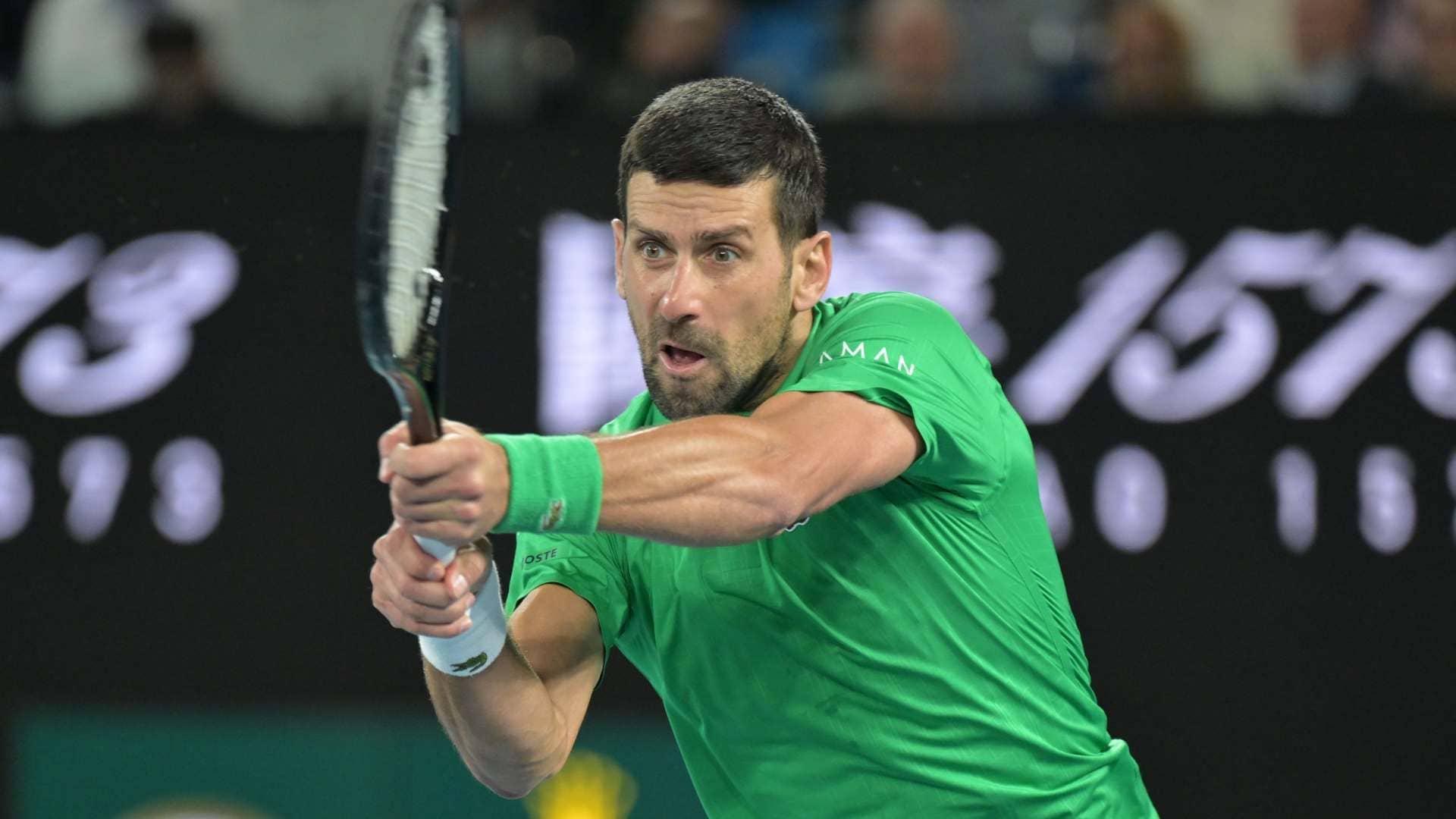
Novak Djokovic‘s withdrawal from the Qatar ExxonMobil Open lands like an unforced error in the early swing, a calculated skip amid the desert’s pull. At 38, the Serbian cited strong fatigue after clawing to his 11th Australian Open final last month, where he dropped a four-set decision to World No. 1 Carlos Alcaraz. With the ATP 500 event in Doha firing up Monday, Alcaraz and Jannik Sinner now anchor the top seeds, their baseline duels primed to fill the void left by the veteran’s rest.
Fatigue echoes from Melbourne’s grind
In Melbourne, Djokovic unleashed those signature inside-out forehands, each heavy with topspin, but the toll mounted through grueling rallies that tested his endurance. The final against Alcaraz exposed cracks—sharp returns forcing errors on down-the-line passes—leaving him drained as the hard-court season ramps up. This Doha pullout, announced Wednesday, signals a pivot toward recovery, preserving his edge for deeper runs later in the year.
“it’s about listening to the body at this stage,” a close observer noted, underscoring the mental shift in Djokovic‘s approach. His 15-3 record at the tournament, built on back-to-back titles in 2016-17, made the venue a stronghold, yet wisdom trumps nostalgia now. As he eyes the ATP Masters 1000 in Indian Wells, where he ties Roger Federer with five crowns, the focus sharpens on recalibrating that one–two serve rhythm against fresher foes.
it’s about listening to the body at this stage.
Alcaraz and Sinner claim the hard-court stage
Carlos Alcaraz steps into Doha with unfinished business, his quarterfinal exit last year to Jiri Lehecka a reminder of adapting heavy topspin to the surface’s bite. Sinner, debuting here, counters with flat backhands that carve crosscourt angles, his returns setting up inside-in winners in tight exchanges. Their seeding paths could collide in the semifinals, where Alcaraz’s explosive athleticism clashes against Sinner’s metronomic precision under the Qatari floodlights.
The draw brims with Top 20 threats: Felix Auger-Aliassime‘s booming serves, Alexander Bublik‘s erratic slices, Daniil Medvedev‘s deep counterpunching, and Andrey Rublev‘s forehand firepower all promise rallies that swing on mid-point adjustments. For Alcaraz, refining 1–2 patterns will counter aggressive net rushes, while Sinner hones low slices to disrupt power baselines. Doha’s atmosphere, thick with anticipation, amplifies these tactical layers, crowds leaning into every point as the next generation asserts control.
Renewal awaits in California’s sun
Djokovic’s absence elevates the stakes, turning Doha into a proving ground where endurance meets invention on fast hard courts. Alcaraz and Sinner, carrying Melbourne’s momentum, navigate a field ripe for upsets, their mental fortitude key to extending runs before the clay shift. As the tournament unfolds, it hints at a tour evolving, with Djokovic poised to reenter sharper, ready to challenge the young guns’ surge in the months ahead.


