Cousins Charge into Shanghai’s Quarterfinal Spotlight

Bound by family ties and college camaraderie, Arthur Rinderknech and Valentin Vacherot are turning the Shanghai Masters into a personal redemption arc, their upsets against seeded foes igniting a whirlwind of support from a tennis-loving clan.
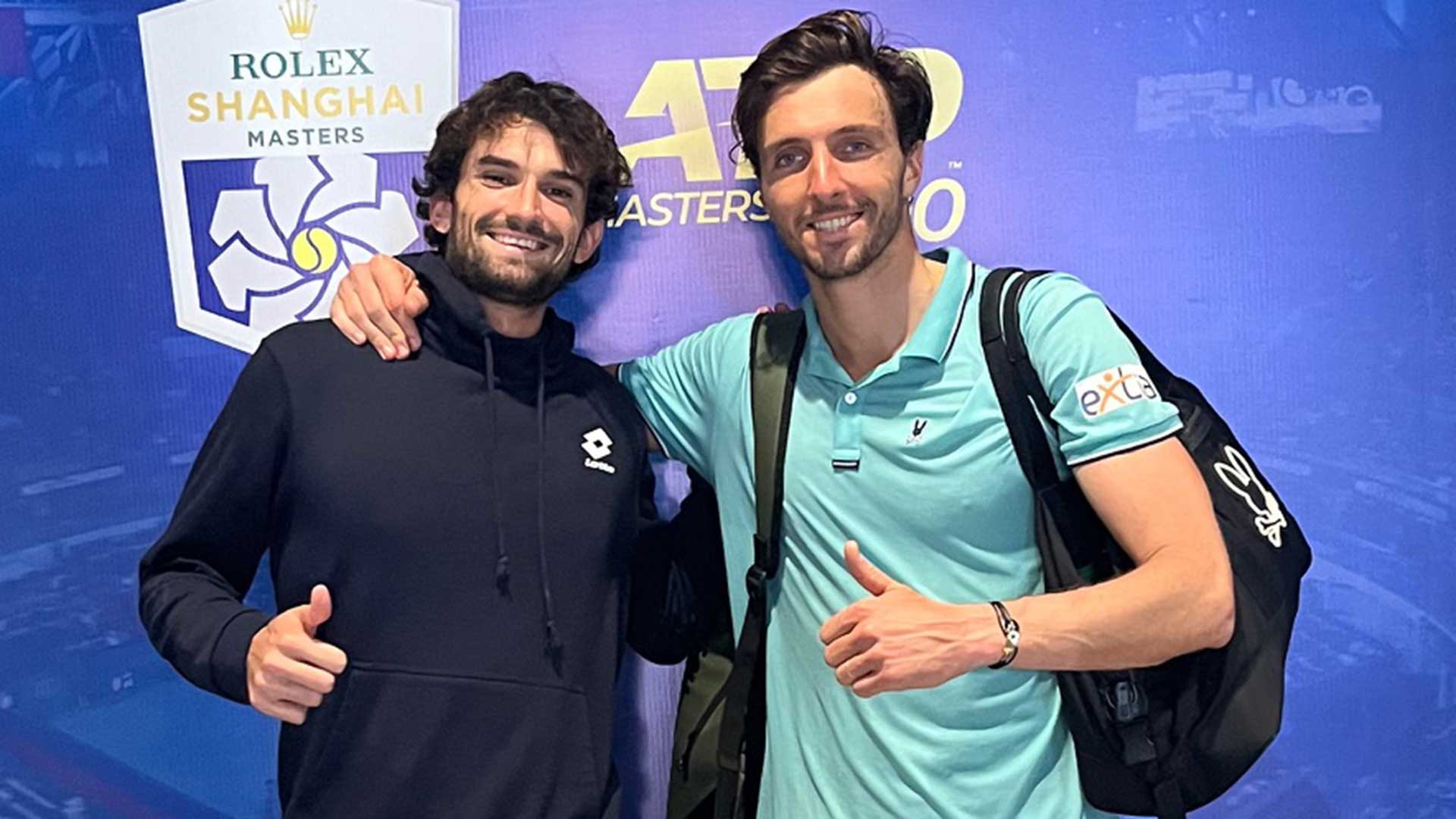
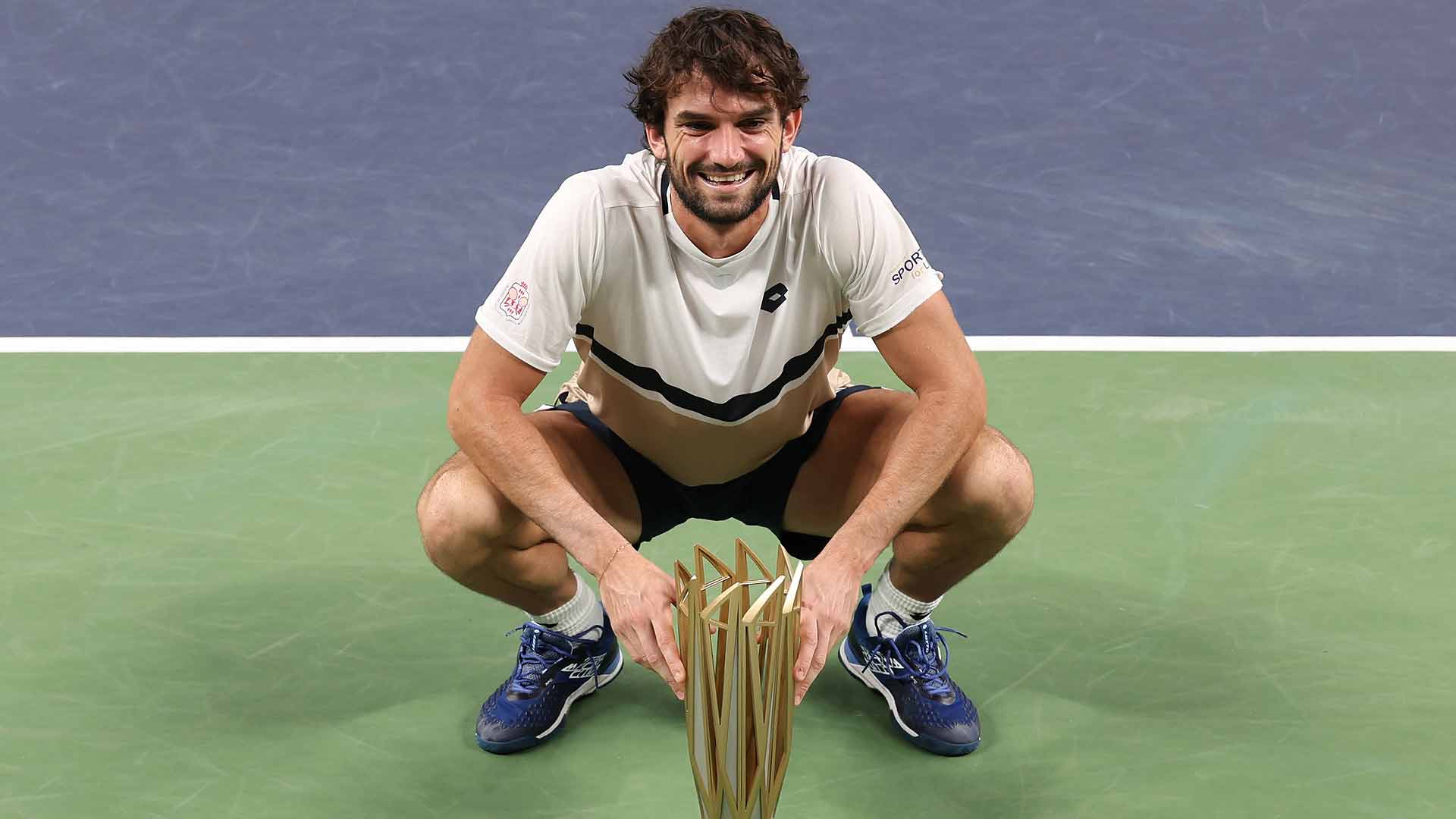
Under the relentless humidity of Qizhong Forest Park, cousins Arthur Rinderknech and Valentin Vacherot have ignited the Shanghai Masters with a rare double breakthrough, both reaching the quarterfinals for the first time at an ATP Masters 1000 event. The Frenchman, once mired in a string of losses against elite opponents, has dismantled three seeds in succession, his serve slicing through the medium-paced hard courts like a well-timed underspin. Vacherot, the Monegasque qualifier starting from the pack, grinded out his spot with tactical depth, his backhand crosscourts redirecting power on a surface that rewards precision over brute force. Their shared history—roommates and teammates at Texas A&M—now echoes in every point, transforming individual battles into a collective surge that draws crowds sensing an underdog narrative unfolding.
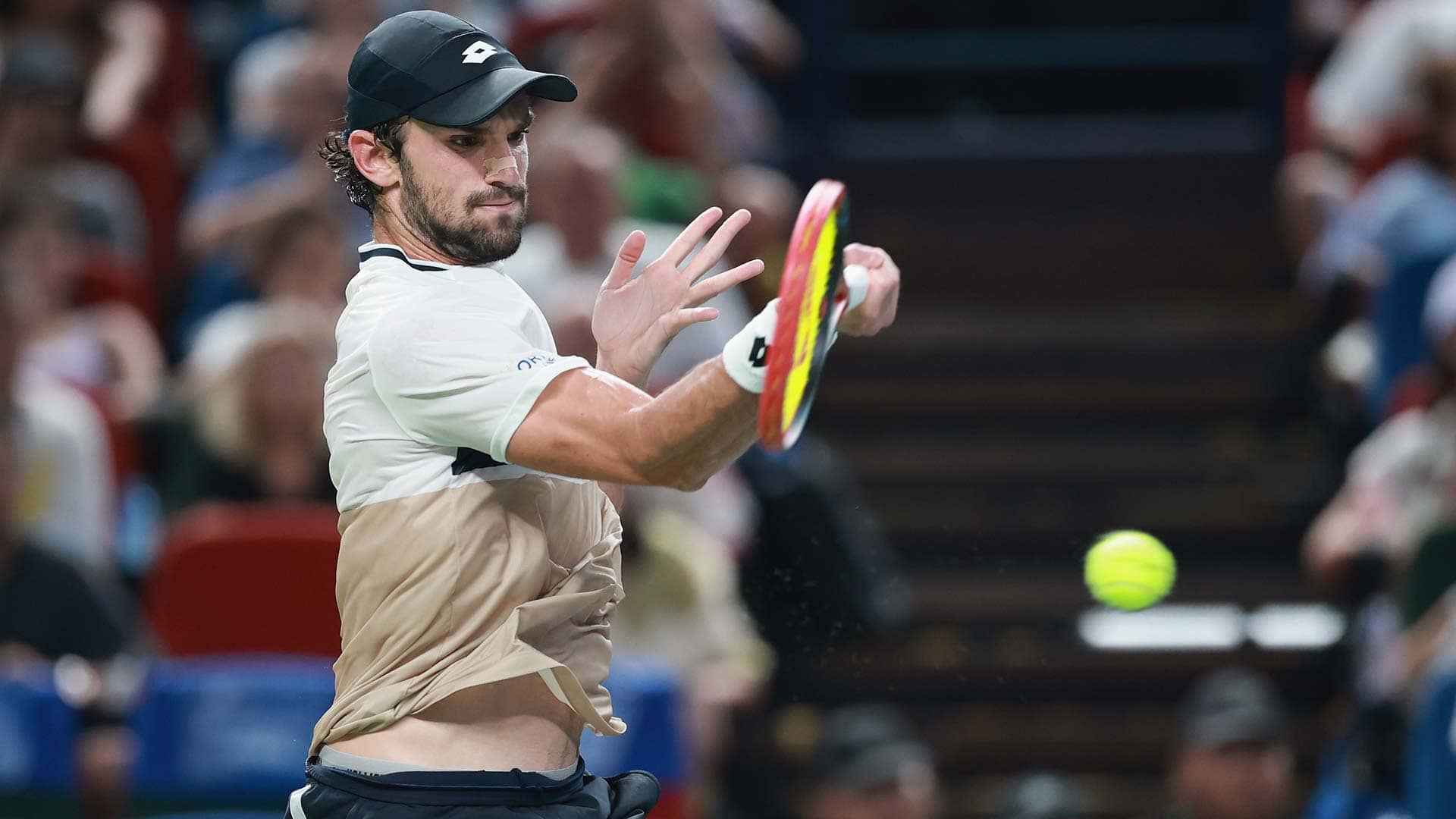
Rinderknech’s momentum built steadily, peaking with a 6-3, 7-5 dismissal of Jiri Lehecka on Wednesday, a match where his first-strike serves forced the Czech into defensive lobs early. He had already toppled 28th seed Alex Michelsen in the second round and third seed Alexander Zverev in the third, notching multiple Top 20 wins in one tournament for the first time and flipping his record to 6-3 against them since June— a stark reversal from 0-16 through early 2023. Vacherot, meanwhile, outlasted Tallon Griekspoor in three sets the night before, using varied depths to pull the Dutchman forward before unleashing down-the-line passes that exploited the court’s quick bounces.
“Our family WhatsApp group is buzzing a lot the past few days,” Rinderknech said, after signing the courtside camera lens ‘I follow you Val’ with a heart. “I can’t complain, it’s great and it’s reuniting the family together, at least online, having some fun. Everybody’s watching each other. So it’s really cool.”
Family roots fuel shared excitement
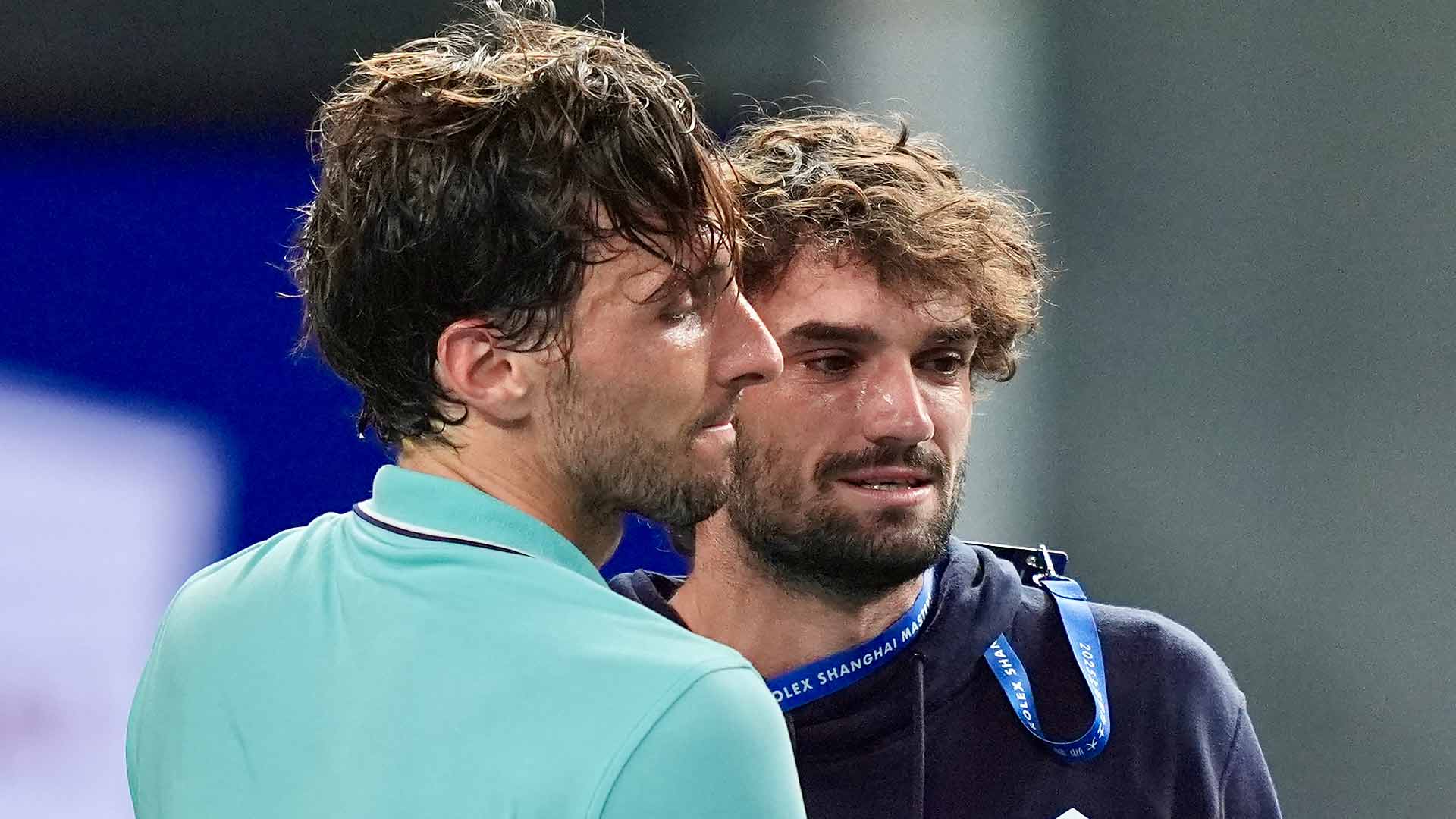
The cousins’ family WhatsApp group, swelling to 20 or 25 members, pulses with reactions from a lineage steeped in tennis—Rinderknech’s mother a player, Vacherot‘s a coach, and Vacherot’s half-brother Benjamin Balleret, who peaked at No. 204 on the ATP Tour in June 2006, now guiding from the bench. This heritage turns every rally into a group affair, blending match analysis with plans for future getaways, the virtual cheers bridging the distance to home. Balleret describes the chatter as nonstop, a supportive echo that sustained him in his playing days and now amplifies the duo’s runs, where one cousin’s hold becomes a collective celebration.
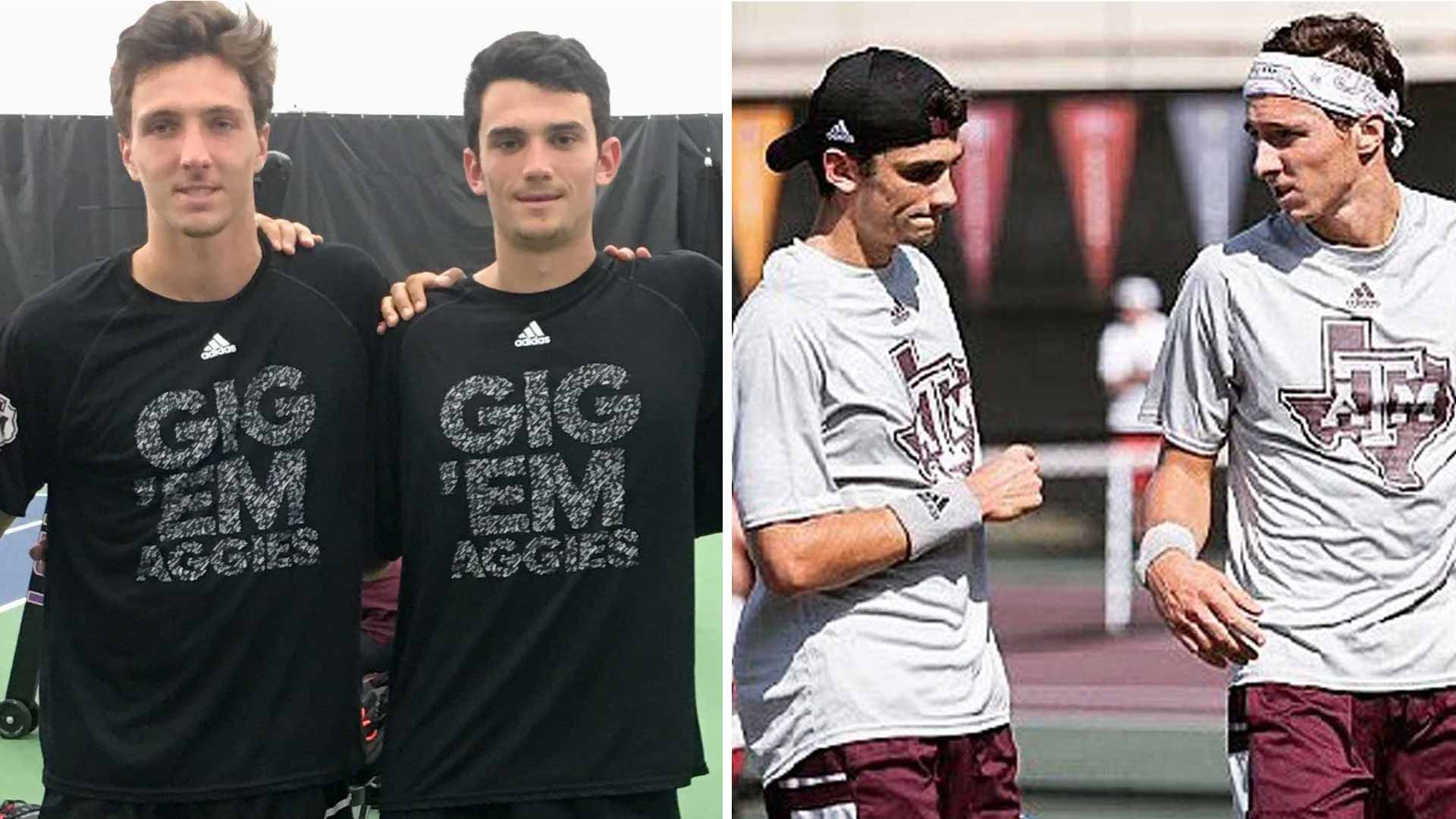
Their bond deepened at Texas A&M, where Rinderknech recruited Vacherot for two and a half years overlapping from 2016 into early 2018, sharing practices, doubles courts, and off-court laughs that built unbreakable trust. Those formative sessions honed patterns like one–two serves followed by inside-out forehands, tools they’ve refined for Shanghai’s conditions, where the ball skids low and demands quick adjustments. As they track each other’s progress from separate hotel rooms, this foundation sharpens their focus, turning potential fatigue into fueled determination amid the tournament’s packed schedule.
“There are 20, 25 people in the WhatsApp group,” Balleret explained. “Everybody loves tennis and the mother of Arthur played tennis. My mother played, our mother with Val was a tennis coach. Everybody loves tennis and follows and they supported me when I was playing, now [it is the same] for Val and Arthur. It is basically almost all now only about tennis and where the next holidays will be and how it will be.”
Serves and scars drive tactical rebounds
Rinderknech’s serve proved decisive against Lehecka, a fellow strong server, as he started hot with deep kicks that jammed returns and opened angles for crosscourt winners, closing in straight sets to conserve stamina on the humid hard courts. From No. 54, he’ll rise to No. 43 in the live rankings, edging toward his career high of No. 42 from October 31, 2022, a climb built on varied deliveries that avoid predictability and exploit the surface’s pace. His post-match relief highlighted the mental edge gained from overcoming early-season slumps, where footwork tweaks on returns now turn pressure into poise.
Vacherot’s path carries deeper scars, a right shoulder injury that erased the second half of last year, leaving him unable to serve or rip forehands and forcing a retirement in the second set of US Open qualifying after one full match. At 26, in just his second tour-level event of the season after a second-round showing at Monte Carlo in April—his Masters 1000 main-draw debut—he’s leaped from No. 204 to No. 130, with a win over 10th seed Holger Rune on Thursday vaulting him to No. 92 and the Top 100. As the lowest-ranked quarterfinalist here since 2009 and only the third qualifier to reach this stage, joining Matthew Ebden in 2011 and Mischa Zverev in 2016, he mixes underspin slices to disrupt and inside-in forehands to counterattack, his 22-16 Challenger record this year—topped by a runner-up in Francavilla al Mare in May—proving his readiness once healthy.
“My serve was good today and I am really glad,” Rinderknech reflected. “I knew it was going to be important against a player like Jiri, because he’s really good on serve as well. So the serve was going to be really important. I came out a bit on fire today and it was a good match and being able to close in two sets, that was important and really happy about it.”
Redemption arcs test deeper resolve
Rinderknech praises Vacherot’s consistency, noting how injuries masked a game always capable of shining, his cousin’s Shanghai form a harbinger of bigger stages where battling through three-setters reveals the grit forged in rehab. Balleret recalls the fear of a two-year hiatus, the exhaustive trials that rebuilt shoulder strength for the torque of hard-court swings, now evident in Vacherot’s high-percentage patterns that stretch points without strain. Facing Rune’s baseline barrage, the Monegasque will rely on error-forcing returns and net poaches, the crowd’s growing roar a backdrop to a matchup where tactical patience could flip the script.
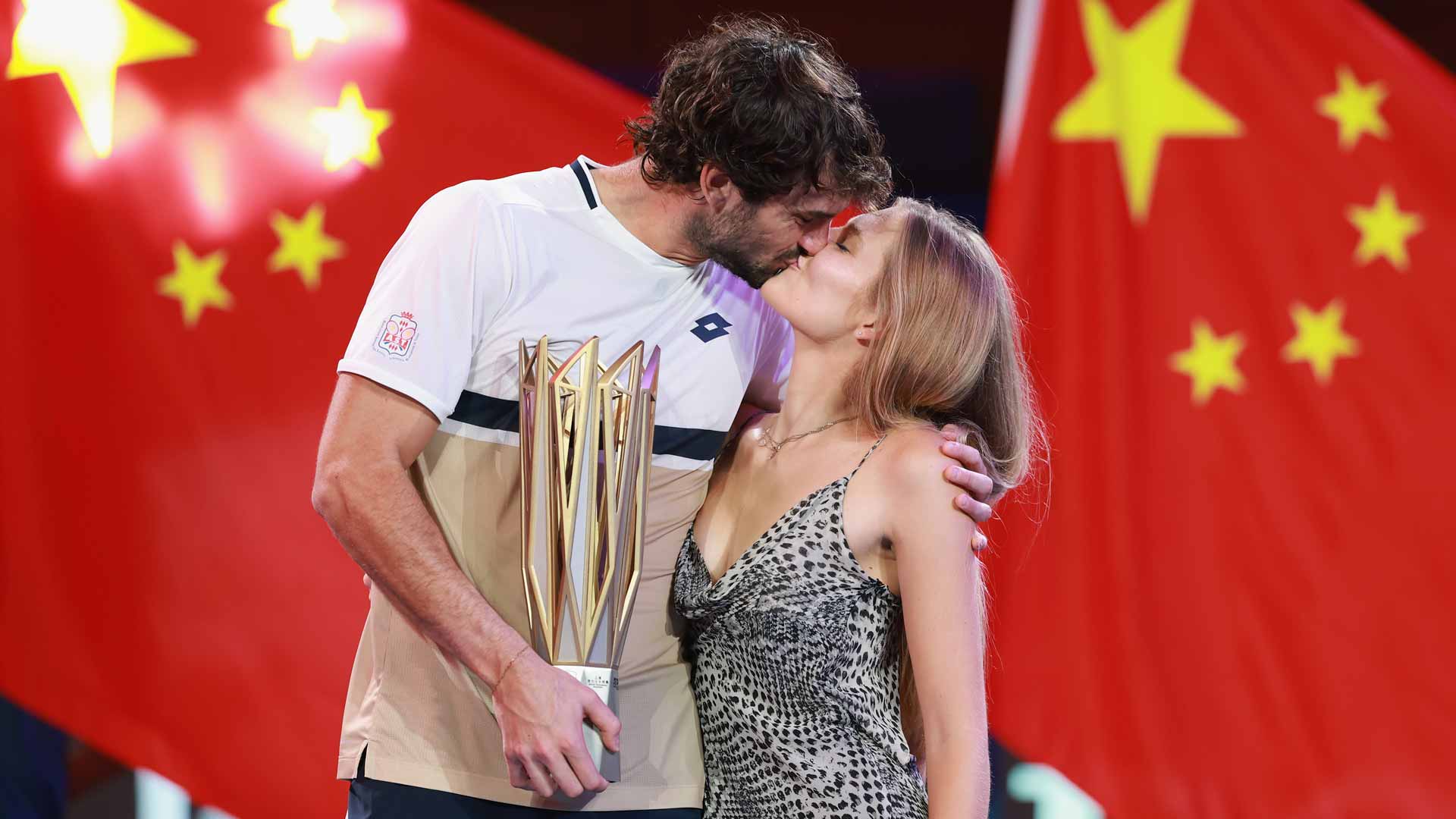
The emotional peak hit Vacherot after Griekspoor, the victory unleashing a wave of realization about his week’s feats, shared instantly with his brother-coach and girlfriend amid thoughts of recent hardships. Rinderknech’s own surge, signing that heartfelt message to his cousin, underscores a mutual lift that transcends rankings, their family network a steady pulse against the tour’s solitude. As quarterfinal tensions mount, this cousinly alliance promises to push boundaries further, where one breakthrough inspires the next in Shanghai’s unforgiving draw.
“He’s playing good tennis this week and has been playing great tennis for few years now,” Rinderknech said of Vacherot. “He just battled a few injuries, but whenever he’s playing he’s always doing great, so just a matter of time for him. I’m really happy and glad that he’s showing his best tennis this week. I hope and I think that’s only the beginning for him.”
“He couldn’t serve or hit a forehand,” Balleret said. “We were almost scared at some point that he couldn’t play tennis for even two years or something. We tried many things and he actually tried to play at the US Open qualies but he played one match, and in the second match he retired in the second set. So it was a tough moment.”
“I don’t think I could realise what I was doing this whole week, and it kind of all just hit me when I just won that match,” Vacherot said after his win. “Generally I was happy this whole week, but not like through the roof. This one is unbelievable, so much emotions. Just thinking of the tough times I had last year, even this year, and just to share that with my coach, brother, and my girlfriend, it’s just unbelievable. I’m having one of the best times of my life.”
“I recruited him to College Station,” Rinderknech added. “I was there two years ahead of him, and we had two and a half years I think in common. It was a great time together and we spent so many days doing many things and having a lot of fun, so it was really cool to be together in the same team and same place for a few years.”
With Rinderknech eyeing his next challenge and Vacherot bracing for Rune, their story hints at sustained impact, the family buzz a reminder that tennis triumphs often ripple through bonds stronger than any baseline rally.