Federer’s Basel Breakthrough Ends Nadal Drought

Home soil fueled Roger Federer’s resolve in the 2015 Swiss Indoors Basel final, where he dismantled a two-year rivalry silence with a 6-3, 5-7, 6-3 victory over Rafael Nadal, igniting his own streak in their storied head-to-head.
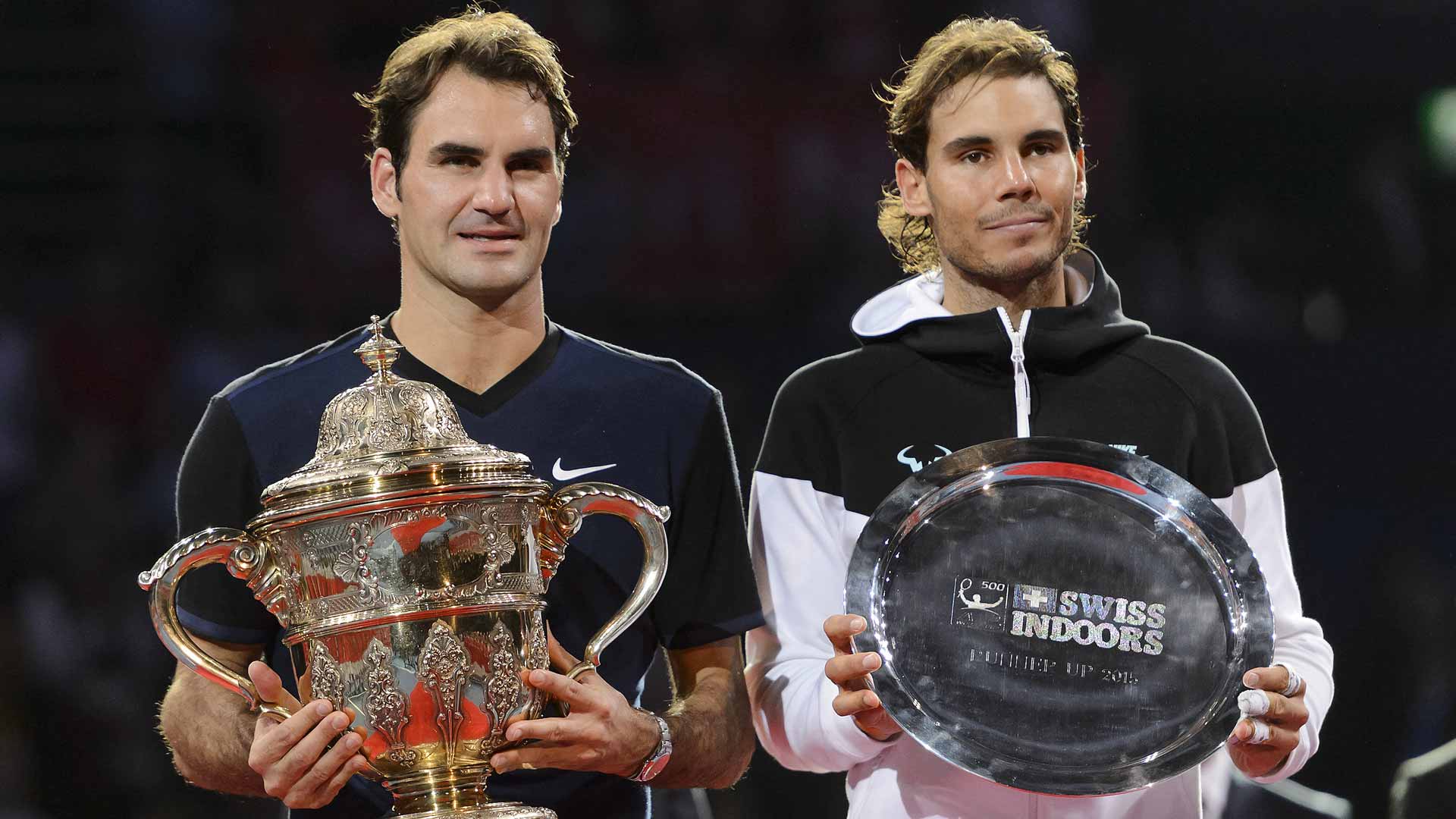
Under the lights of St. Jakobshalle, the air hummed with hometown energy on that October day in 2015. Roger Federer stepped onto the court carrying the weight of five straight losses to Rafael Nadal, their last meeting a grueling five-set semifinal at the 2014 Australian Open. The Swiss Indoors Basel final offered more than a title; it promised a reset for the Swiss master, drawing strength from a crowd that remembered him as a young ball boy chasing shots.
Federer seized the first set with precise serving and inside-out forehands that exploited the indoor hardcourt’s speed, breaking Nadal at 3-3 to lead 6-3. The Spaniard fought back in the second, his topspin rallies forcing errors until a break at 5-5 leveled the match at 5-7. In the decider, Federer varied his returns with slice to disrupt rhythm, setting up aggressive one–two combinations that pressured Nadal’s baseline game.
“Six hundred-plus days have gone by, so a lot of things have happened,” Federer reflected on the long gap. “Definitely I had the right game plan today.” “It was a very special day,” he added later. “Probably it was my best victory here in Basel.”
Home crowd fuels tactical surge
The third set turned on Federer’s break to 5-3, a sequence of crosscourt backhands and down-the-line forehands that overwhelmed Nadal‘s defenses after two hours of intense exchanges. This win snapped the losing streak, trimming Nadal’s head-to-head lead to 23-11 and launching Federer’s five-match run against him. Their Basel clash stood alone that year and the next, heightening anticipation for future battles and underscoring the rivalry’s intermittent intensity.
Federer’s adjustments highlighted his all-court adaptability on the faster surface, where he mixed net approaches with groundstroke winners to keep Nadal off-balance. The victory marked his 88th tour-level singles title and seventh at home, part of a career total of 103 trophies that placed him second only to Jimmy Connors' 109. He would later claim a record 10 crowns in Basel, each building on the psychological edge gained that day.
Streak reshapes rivalry landscape
Momentum from Basel carried Federer into 2017, where he outlasted Nadal in a five-set Australian Open final, then secured straight-sets wins at the Masters 1000 events in Indian Wells, Miami, and Shanghai. These triumphs widened the head-to-head to 23-15, showcasing Federer’s versatility across hardcourt variations. Nadal responded in 2019 with a decisive Roland Garros semifinal victory on clay en route to the title, but Federer countered in a four-set Wimbledon semifinal on grass, using slice and volleys to prevail.
Nadal ended with a 24-16 overall edge, powered by three five-match streaks in 2005-06, 2008-09, and 2013-14, while Federer managed consecutive wins just three times, his longest being the five sparked in Basel. Off the court, Federer celebrated by hosting a pizza party for the ballkids, a nod to his roots at the event. That hometown spark not only realigned their duel but echoed through Federer’s later triumphs, proving tactical evolution could bridge even the widest gaps in a rivalry defined by endurance.