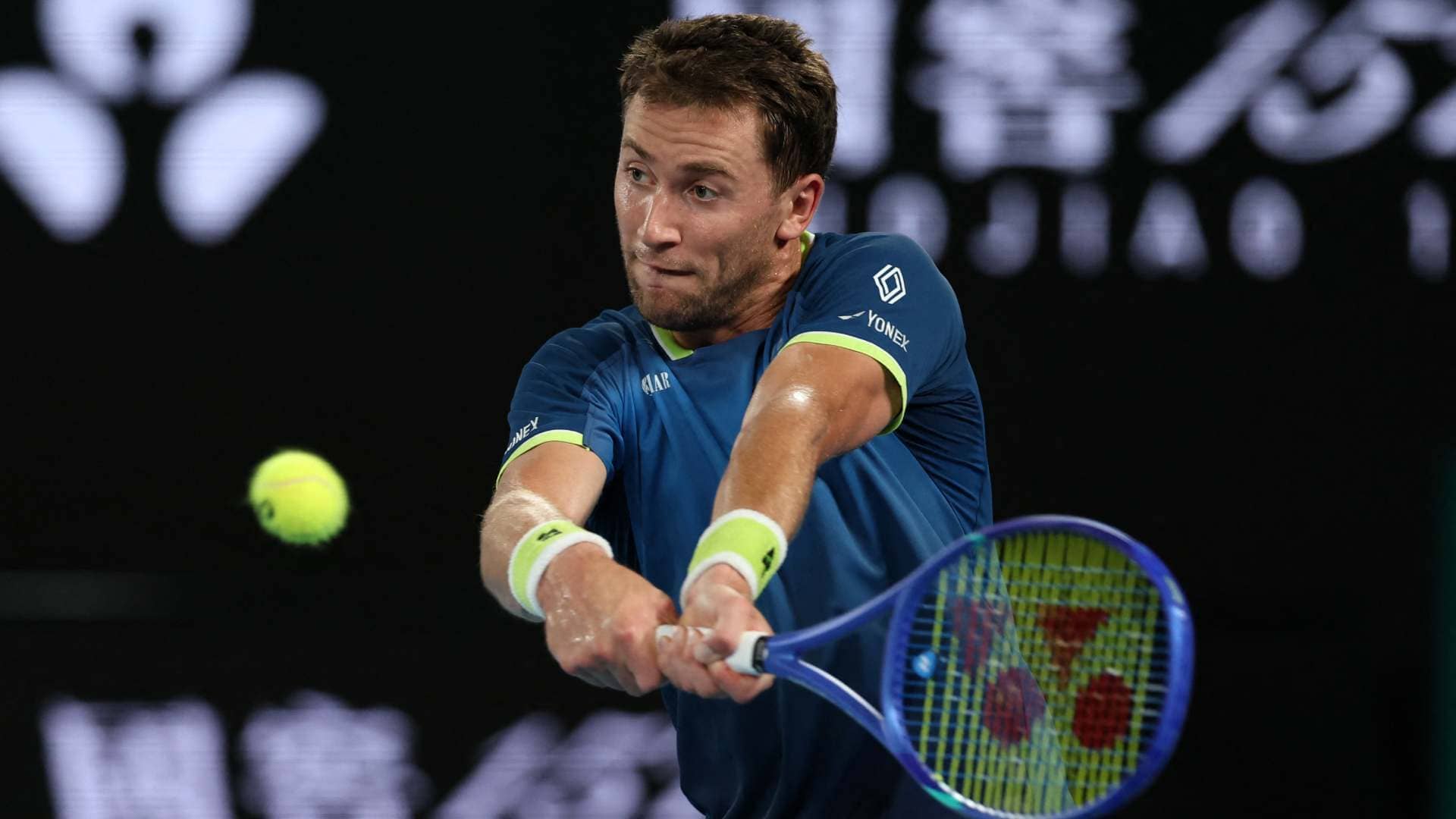
Ruud Chases Evolution Amid ATP’s Youthful Onslaught

Casper Ruud arrives in Auckland not as the steady force of old, but as a player dissecting the explosive rise of Sinner, Fonseca, and their peers. With his baseline craft under siege, the Norwegian’s off-season studies signal a bid to reclaim ground in a game tilting toward raw power.

Casper Ruud strides into the Auckland sunshine, racket bag slung over his shoulder, the harbor breeze carrying whispers of a tour in flux. At 27, he’s tasted the heights—No. 2 in the PIF ATP Rankings, three major finals etched in his ledger—but the past two years belong to others. Carlos Alcaraz and Jannik Sinner have scooped all eight Grand Slam titles, their fearless inside-out forehands and flat backhand bombs rewriting point construction before Ruud’s heavy topspin can settle the rhythm.
This surge doesn’t stop at the top; a fresh cohort, led by 19-year-old Joao Fonseca and 20-year-old Jakub Mensik, barrels forward with bilateral firepower that leaves little margin for error. Ruud’s recent United Cup stint in Sydney—a straight-sets takedown of home favorite Alex de Minaur followed by a tight two-setter loss to Mensik—laid bare the challenge, as the Czech’s serve and crosscourt backhands pierced his defenses. Now, as second seed at the ASB Classic, he carries those lessons into a draw that could pit him against Mensik again in the semis, turning analysis into action under the New Zealand lights.
“Seeing how the game has changed has made me realise that maybe I need to change my game a little,” Ruud said in a pre-tournament press conference in Auckland on Monday. “Trying to look for improvements, I have been studying a lot of the younger guys over the last weeks and months how my game needs to develop to handle their type of tennis.”
Dissecting dual-winged threats
Ruud’s game, forged on clay with patient 1–2 patterns and forehand depth, thrives in extended exchanges, yet these newcomers compress rallies with equal menace from both sides. Against Alcaraz, he clings to one win in six meetings, that 2024 Nitto ATP Finals upset born from exploiting a rare lapse in the Spaniard’s all-court frenzy. Sinner, unbeaten in four clashes, enforces a different pressure—his flat backhand down-the-line winners often seal holds before Ruud’s returns can bite.
The generational span Ruud scrutinizes, from Sinner at the elder end to Fonseca at the cusp, spans five to six years of players who rip the ball without favoritism to one wing. Mensik‘s United Cup victory last week hammered this home: a booming serve setup for backhand lasers that flattened crosscourt, forcing Ruud to scramble from deep positions. These opponents don’t just attack; they dictate tempo, blending heavy topspin forehands with underspin slices to disrupt footing on Auckland’s medium-paced hard courts.
Hard-court recalibration takes shape
To counter this, Ruud eyes sharper returns and more net forays, shortening his backswing to redirect inside-in and preserve energy in shorter points. On surfaces where balls skid low, his traditional topspin loops risk floating into targets, so he’s experimenting with flatter drives to match the pace, particularly on the backhand where Sinner and Mensik excel. The psychological edge sharpens too—adapting means embracing discomfort, trading clay-court security for proactive risks that could flip tight sets.
Auckland’s outdoor air, crisp and quick, amplifies these tweaks; a potential Mensik rematch would test serve-body targets to jam that lethal wing, followed by low-slice approaches drawing errors from deep. Ruud’s 14 ATP Tour titles stem from consistency, but survival now demands bilateral bite, elevating his slice to neutralize flat hitters and varying depth to unsettle Fonseca’s emerging power. As the crowd builds from the stands, each adjustment carries the weight of a season where early momentum fuels Slams ahead.
Auckland ignites the season’s pivot
Seeded second, Ruud’s path offers immediate lab work, with the compact draw turning every hold into a statement against this evolving elite. Victory here won’t erase head-to-head deficits overnight, but stringing wins could rebuild confidence, bridging his baseline solidity with the aggression that defines the new guard. In a tour accelerating toward Melbourne’s hard-court crucible, Ruud’s evolution unfolds point by point, a Norwegian resolve pushing back against the tide of youthful audacity.