Vacherot’s Improbable Run Claims ATP Breakthrough Award

A Monegasque qualifier storms from the shadows to Masters glory, capping a 2025 surge with the inaugural Breakthrough of the Year honor and rewriting underdog tales on the ATP Tour.
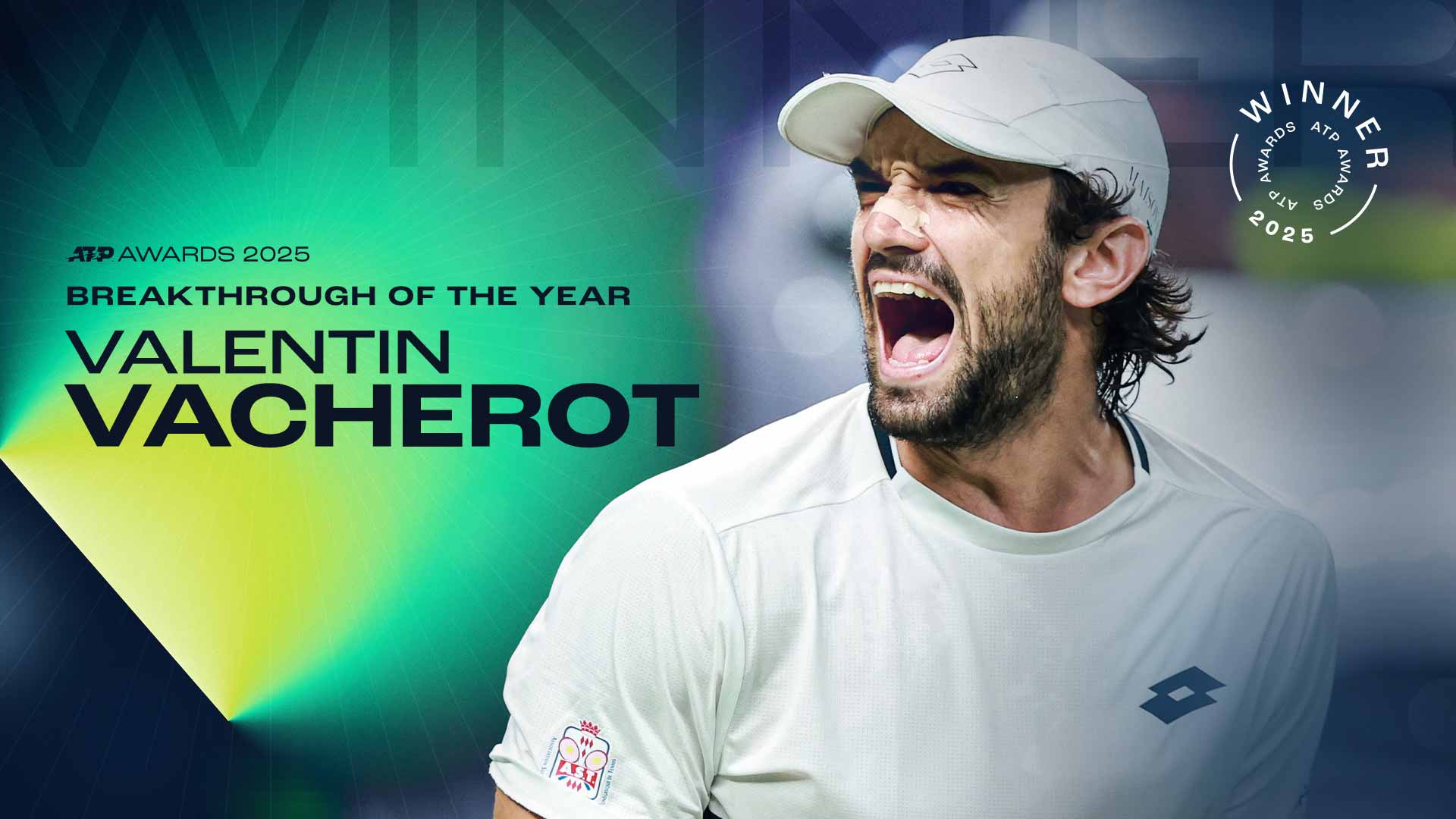
In the closing weeks of 2025, Valentin Vacherot turned a season of quiet persistence into a thunderclap of achievement. The Monegasque, starting as world No. 204 in Shanghai, carved through the draw with nine straight wins, becoming the lowest-ranked ATP Masters 1000 champion in history. His path blended raw determination with tactical precision, silencing doubts under the glare of packed stadiums.
The four nominees for Breakthrough of the Year—Jack Draper, Joao Fonseca, Jakub Mensik and Vacherot—were selected by the International Tennis Writers’ Association vote. The ATP No. 1 Club’s 29 members, drawing from their own experiences at the pinnacle, chose him for the inaugural award. This nod arrived on December 10, 2025, affirming a late bloom that propelled him from obscurity.
“I’m super happy to have won the Breakthrough of the Year award for the 2025 season,” said Vacherot. “It’s such an amazing achievement for myself and for the whole team, and it’s the product of all the work we have put in all these years. All this work came into the light a little bit in October in Shanghai and Paris, and now I have my highest ranking. I’m really happy to have won the award and hopefully this will bring many more for the following years. Thanks again to the ATP and see you in 2026.”
Drumroll please…
Introducing your breakthrough player of the year, @val_vacherot as voted by members of the No.1 club #ATPAwards pic.twitter.com/XJMRtM88dn— ATP Tour (@atptour) December 10, 2025
Qualifier’s fire ignites Shanghai shock
Entering the Shanghai Masters with just one tour-level win, Vacherot unleashed heavy topspin forehands in crosscourt rallies that pinned Alexander Bublik deep, forcing errors on the outdoor hard courts. He followed with a 1–2 pattern against Holger Rune, mixing serve and forehand to disrupt the Dane’s baseline rhythm amid rising crowd energy. The semifinal against Novak Djokovic demanded even more, as Vacherot’s inside-out backhands neutralized the Serb’s power, turning the humid October air thick with tension into his ally.
The final against cousin Arthur Rinderknech wove family threads into the drama, Vacherot’s slice backhands slicing through serves on the fast surface to secure the title. This wasn’t brute force but adaptive play, where down-the-line passes exploited openings after long exchanges. The roar from the stands swelled as he lifted the trophy, a moment that echoed far beyond the court.
Paris clash deepens the family saga
Weeks later at the Paris Masters, Vacherot faced Rinderknech again, the indoor hard courts amplifying his low-bouncing serves and precise footwork. He prevailed in a quarterfinal that layered emotional weight onto tactical battles, using underspin to vary pace and keep his relative off-balance. The win propelled him to the quarters, sustaining momentum from Shanghai’s highs.
This rematch highlighted his growth under pressure, where recovery from the outdoor grind met the enclosed intensity of Paris. Crowds fed off the personal stakes, their cheers pushing him through fatigue. Each point felt like a step in reclaiming a career once mired outside the Top 250.
Rankings leap sets 2026 stage
By November 3, Vacherot reached a career-high No. 30, settling at No. 31 for 2026’s opener—a vault from early August’s sub-Top 250 position. His surge, blending Shanghai’s nine wins with Paris progress, showcased mental steel against Top 20 foes. The No. 1 Club’s decision, announced via @val_vacherot under #ATPAwards, crowned a year of breakthroughs.
Ahead lies a tour ready to test this fire on clay and grass, where his hard-court savvy could evolve further. Vacherot’s story proves that sustained focus amid isolation can erupt into contention. With No. 31 seeding, deeper runs await, carrying the weight of newfound expectations.