Coaches forging paths through 2025’s trials

The ATP Tour’s grueling demands revealed the quiet architects behind its biggest stories, as five nominees transformed setbacks into seasons of unbreakable momentum.
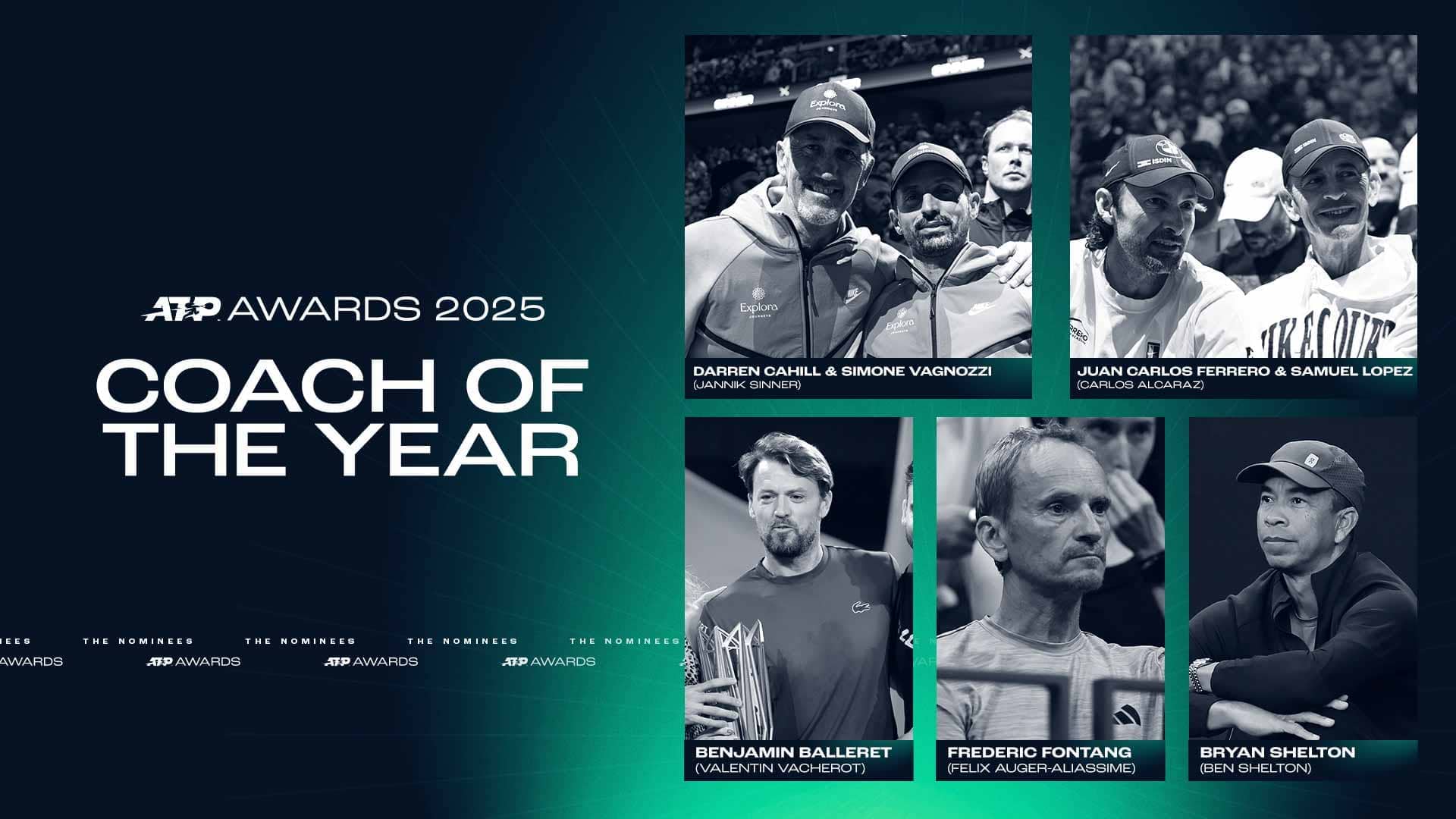
Success on the ATP Tour emerges from more than solitary skill; it stems from coaches who craft strategies, adjust under fire, and instill unyielding confidence. Their influence shapes not just matches but entire careers, turning the chaos of a global circuit into calculated ascents. In 2025, peers voted five coaches or teams as nominees for Coach of the Year, recognizing their role in navigating surfaces from clay to hard courts amid roaring stadiums and tense tiebreaks.
Rebounding from clay court heartbreak
Darren Cahill and Simone Vagnozzi guided Jannik Sinner through a year of sharp contrasts, adding six titles to his collection. Weeks after an agonizing loss in the Roland Garros final, where baseline exchanges dragged under Paris’s heavy air, he claimed his first Wimbledon crown on swift grass, using crosscourt backhands to pin opponents deep. The pair’s post-US Open tweaks to his serve—refining toss height for better slice variation—ignited four wins in two months, including a title defense at the Nitto ATP Finals, where improved second serves held firm in prolonged rallies.
Their methods blended technical precision with mental reinforcement, helping Sinner reset after clay’s slow grind to dominate faster surfaces. Crowds at the All England Club felt his growing assurance as inside-out forehands clipped lines, converting doubt into a season of relentless pursuit. This partnership promises further evolution as he eyes deeper runs on all terrains.
Securing year-end dominance on multiple fronts
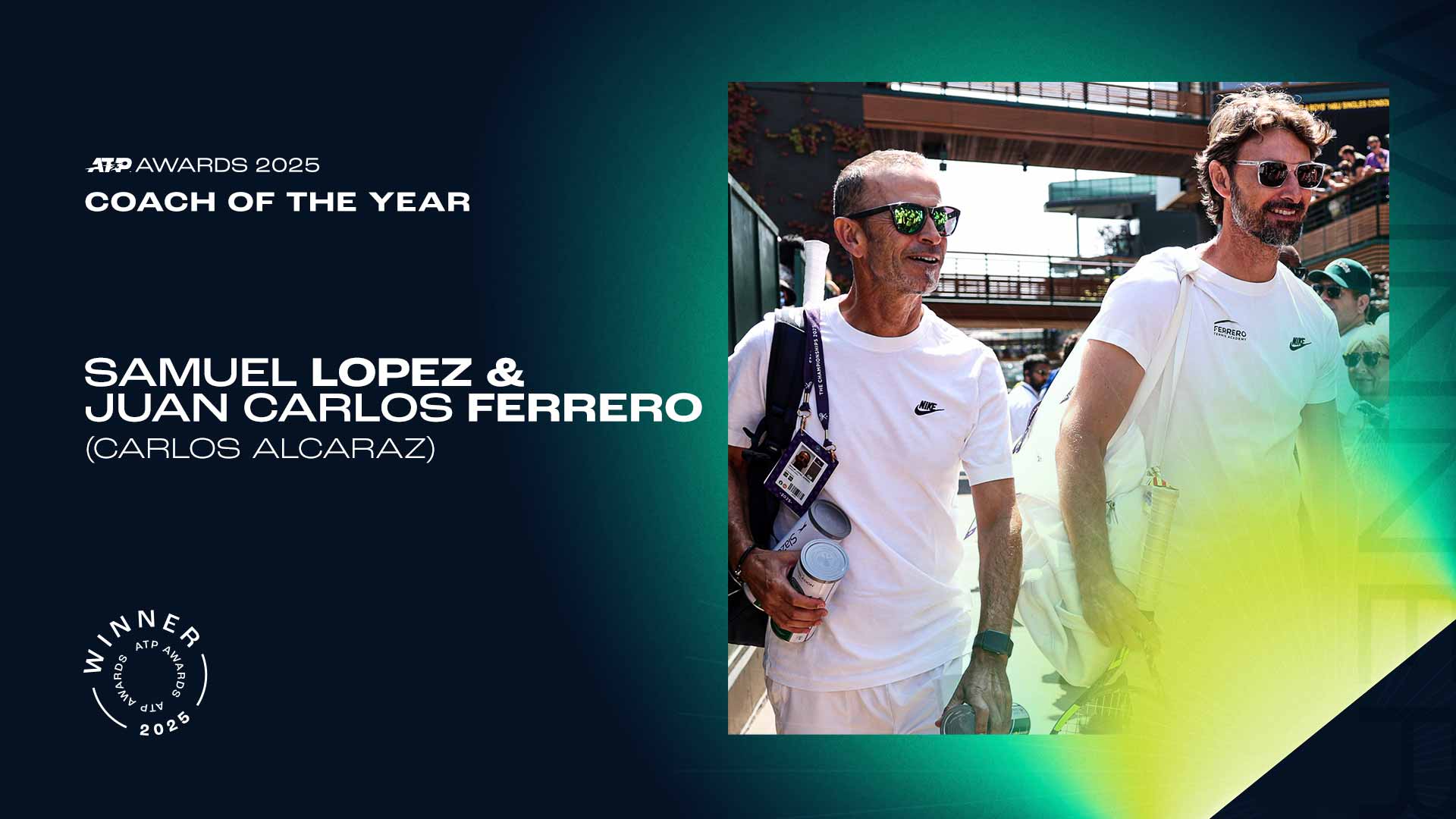
Juan Carlos Ferrero and Samuel Lopez elevated Carlos Alcaraz to a tour-high 71 match wins, clinching ATP Year-End No. 1 honors with eight titles, two majors among them. In their Roland Garros semifinal epic against Sinner, Alcaraz leaned on drop shots and inside-out forehands to exploit gaps on the red dirt, his large team’s cheers cutting through the Philippe-Chatrier humidity. He repeated the feat in the US Open final, reclaiming the top ranking via a 1–2 punch that blended powerful serves with down-the-line backhands on New York’s hard courts.
The duo’s focus on recovery and adaptability kept Alcaraz sharp across a demanding calendar, turning potential fatigue into explosive net approaches. Stadium energy in Arthur Ashe fueled his poise during break-point stands, underscoring how their guidance wove emotional backing into tactical depth. As rivals regroup, this team’s blueprint sets the stage for Alcaraz’s continued reign.
Underdog leaps to top-tier contention
Frederic Fontang, mentoring Felix Auger-Aliassime since 2017, lifted the Canadian from World No. 30 in May to a top-five finish, reaching five finals with wins in Adelaide, Montpellier, and Brussels. On indoor hard courts, Fontang emphasized underspin on returns to disrupt big servers, paving Auger-Aliassime’s path to a second ATP Masters 1000 final in Paris and his second Nitto ATP Finals appearance. These shifts turned early vulnerabilities into steady crosscourt patterns that wore down opponents in tight sets.
Bryan Shelton shared a courtside embrace with son Ben Shelton after the 23-year-old’s triumph at the National Bank Open Presented by Rogers in Toronto, his first Masters 1000 title as the youngest American winner there in 20 years, hitting career-high No. 5 in November. Their bond honed lefty slice serves that drew foes wide, setting up inside-in forehands on the medium-paced surface, with the crowd’s roar amplifying each ace.
Family ties also drove Benjamin Balleret and half-brother Valentin Vacherot to a dream run at the Shanghai Masters, where the then-No. 204 Monegasque claimed the lowest-ranked ATP Masters 1000 title since 1990, defeating cousin Arthur Rinderknech in the final. Balleret’s drills sharpened Vacherot’s down-the-line backhands on fast indoors, building confidence that propelled him to No. 31 by season’s end. These stories of ascent, from personal connections to long-term partnerships, signal a tour where coaching innovation keeps the competitive edge ever-shifting into 2026.