Bencic and Kenin claw back from the brink in Tokyo

Under the lights of Ariake Coliseum, Belinda Bencic and Sofia Kenin turned looming defeats into semifinal survival, their grit forging a rematch rich with tactical depth and personal stakes.
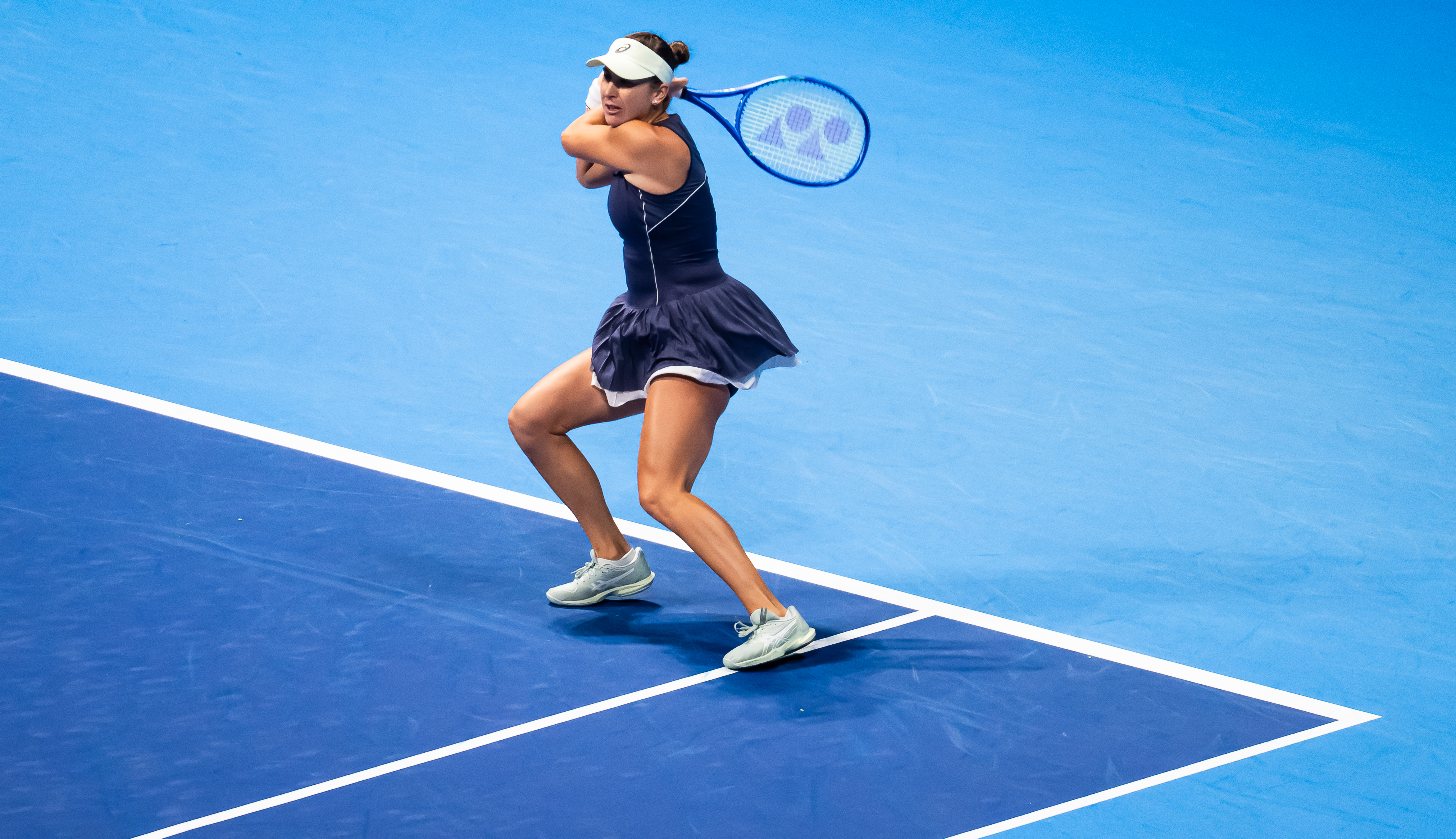
In the charged atmosphere of Tokyo’s Ariake Coliseum, where the hard courts hummed with tension and the crowd’s murmurs built like a gathering storm, the Toray Pan Pacific Open quarterfinals delivered raw drama. Belinda Bencic, the No. 5 seed, outlasted Karolina Muchova in a 3-6, 7-5, 7-5 thriller that spanned 3 hours and 8 minutes, saving a match point to advance. Across the draw, Sofia Kenin, seeded No. 10, erased a 5-2 third-set deficit against No. 3 seed Ekaterina Alexandrova, winning 6-0, 2-6, 7-6(3) after fending off four match points. Their semifinal collision now looms, a clash blending Bencic’s baseline power with Kenin’s all-court cunning on a surface that rewards those who can shift tempos mid-rally.
Bencic pushes through exhaustive duel
The Swiss player’s victory capped her latest endurance test, the 48th tour-level match of 2025 to exceed three hours and a mark of her deepening involvement in the season’s grueling affairs. She has featured in four such epics, three across her past four outings, including last week’s 3-hour-33-minute second-round win over Yuliia Starodubtseva in Ningbo—the longest of the year—and a 3-hour-22-minute quarterfinal loss to Jasmine Paolini. At 28 and balancing motherhood with the tour’s demands, Bencic entered Tokyo aware of her mounting court time, yet her body adapted to the hard court’s consistent bounce, where every slide tested recovery.
Muchova dominated the opener with defensive finesse, her touch volleying back Bencic’s attempts at inside-out forehands and forcing 14 unforced errors against only five winners. An ankle injury prompted a medical timeout in the second set’s second game, but the Czech broke immediately after, surging to 5-3 with crosscourt backhands that pinned her opponent deep in the deuce court. Bencic’s fightback ignited with a towering lob to break at 5-5, sparking a seven-game swing fueled by aggressive one–two patterns that opened angles for down-the-line passes.
“it’s my third match in the last four that went over three hours, so I feel like I should try to play a regular match,” she said in her on-court interview. “I’m exhausted now but really happy to win; I think it was a big fight from both of us. On the final point, I was just hoping it was over and I just tried to go for it, tried to be aggressive and tried to take my own luck in my hands.”
Muchova served for the match at 5-4 in both the second and third sets, holding one match point in the decider after carving open the court with a sharp inside-in forehand. Her backhand sailed long on that chance, followed by a mishandled smash that Bencic exploited with a crisp passing shot. The final stretch demanded clutch resolve, as Bencic navigated multiple deuces in the last three games, her serve holding with varied spins to deny breaks and secure her first win from match point down since saving three championship points against Liudmila Samsonova in the 2023 Abu Dhabi final.
This triumph underscores a season where marathons define the tour, from Coco Gauff’s 3:32 Rome semifinal over Zheng Qinwen, a tiebreak duel of top-tier baseline wars, to Viktorija Golubic’s 3:30 Cluj-Napoca opener against Arantxa Rus, grinding through super-tiebreak tension. Maria Sakkari’s 3:29 Beijing first-rounder with Ashlyn Krueger featured relentless crosscourt exchanges, while Ella Seidel’s 3:28 Seoul upset of Beatriz Haddad Maia blended youthful aggression with tactical slices. Lucia Bronzetti’s 3:27 Cincinnati clash with Zhu Lin and Laura Siegemund’s 3:26 Montreal battle against Tatjana Maria highlight how indoor and outdoor hard courts stretch rallies into psychological battles.
Further examples abound: Aliaksandra Sasnovich and Lois Boisson both logged 3:24 wins at Wimbledon and Beijing, with Gao Xinyu matching that against Haddad Maia in the United Cup round-robin. Paolini’s 3:22 Ningbo quarterfinal over Bencic herself turned into a forehand showcase amid fatigue, while Daria Kasatkina, Liudmila Samsonova, and Diane Parry hit 3:21 marks in Brisbane, Berlin, and Hamburg—contests where mental edges outlasted physical tolls. Emma Navarro’s 3:20 Australian Open first-rounder versus Peyton Stearns and Wang Xinyu’s Singapore quarterfinal echoed the intensity, as did Siegemund’s 3:16 Australian Open start against Hailey Baptiste.
Jaqueline Cristian and Yuliia Starodubtseva reached 3:16 in Indian Wells and Montreal, with Yulia Putintseva and Harriet Dart at 3:14 in Adelaide and the Australian Open. Rebecca Sramkova’s 3:13 Nottingham victory over Siegemund, Jule Niemeier’s 3:12 Stuttgart win, and Magdalena Frech’s similar effort against Sara Errani illustrate the tour’s depth in endurance tests. Emiliana Arango and Leylah Fernandez joined at 3:12 in Rome and Washington, the latter’s semifinal against Elena Rybakina a tiebreak epic under night skies.
Clara Tauson and Renata Zarazua struck 3:10 in Washington and the US Open, with Aryna Sabalenka’s 3:09 Cincinnati third round against Emma Raducanu pulsing with high-stakes returns. Moyuka Uchijima’s 3:09 US Open opener over Olga Danilovic, Anastasia Zakharova’s 3:08 Cleveland start, and Bencic’s Tokyo match itself fill the upper echelon. Jessica Bouzas Maneiro’s 3:06 Montreal win, Katie Volynets and Leolia Jeanjean’s 3:05 efforts in Auckland and Cincinnati, and Barbora Krejcikova’s 3:04 US Open fourth round against Taylor Townsend layer recurring themes of resilience.
Cristina Bucsa, Bencic once more in a 3:03 Madrid third round versus Haddad Maia, and Cristian’s Rabat semifinal at the same length tie into familiar narratives. Haddad Maia’s 3:02 Strasbourg quarterfinal over Navarro, Sorana Cirstea’s 3:01 Dubai third round, Camila Osorio’s Beijing opener, and Siegemund’s Wuhan second round all weave this web of attrition. Destanee Aiava, Anna Bondar, Ajla Tomljanovic, and Diana Shnaider closed out multiple 3:00 battles in the Australian Open, Hamburg, Monterrey, and another Monterrey quarterfinal, painting 2025 as a year where court time mirrors inner fortitude, much like Bencic’s latest escape.
Kenin rediscovers edge amid pressure
For the American, Tokyo represented a ranking lifeline, her climb to No. 25—highest since 2022—threatened by a post-April slump that yielded just 9-15 main-draw wins and no quarterfinals. Last year’s runner-up finish here to Zheng Qinwen ignited a spark, but finals points loomed large; an opening-round loss could have dropped her from the Top 30. Instead, she defended them through consecutive third-set tiebreaks, first against 17-year-old wildcard Wakana Sonobe, then Alexandrova, reaching her second semifinal of the season.
Kenin blitzed the first set 6-0 with all-court construction, deploying underspin slices on backhands to disrupt Alexandrova’s rhythm and setting up inside-in forehands that wrong-footed the Russian. The second fell 6-2 to the higher seed’s power, but the decider turned chaotic with medical timeouts at 4-2 and 5-2 for Alexandrova, who still forged four match points. Kenin saved two with flat crosscourt winners that hugged the lines and two more via unreturned serves, grinding through four-deuce games as the crowd’s energy surged with each denied break point.
“I had pressure coming into the tournament because I had finals points falling off,” she reflected afterward. “But luckily I was able to defend it, more or less—I definitely feel more at peace. Of course, I waited til the last second to catch up, but it’s OK!”
Mentality anchored her survival, as the rollercoaster of timeouts and momentum shifts tested focus; she dropped a tight game post-treatment before rallying. This marked her third match-point comeback in 2025, after saving two against Marta Kostyuk in Dubai’s second round (5-7, 7-6(7), 7-6(5)) and two more versus Anastasia Zakharova in Wuhan’s opener (3-6, 7-6(5), 6-3). Balance cuts both ways, though—she has lost from match point up three times this year, missing one to Clara Tauson in Auckland’s second round, two against Anastasia Potapova in Madrid, and three to Madison Keys at Roland Garros.
Kenin’s 2-0 head-to-head over Bencic adds layers, from a 6-7(2), 7-6(5), 6-4 2019 Mallorca final on grass where she saved three championship points, to a dominant 6-0, 6-3 Charleston third-round win this year on clay. Their styles mesh intriguingly on hard courts: Bencic’s topspin drives probing wide with inside-out arcs, met by Kenin’s variety—drop shots pulling opponents forward, followed by lobs over stretched reaches. As the semifinals near, consult the Scores, Draws, and Order of play for the latest, with the Coliseum’s lights set to illuminate another test of wills where past escapes could unlock fresh momentum.
Semifinal brews tactical intrigue
The hard-court canvas in Tokyo amplifies transitions, where Bencic’s one–two serve-forehand combinations aim to dictate from the baseline, forcing Kenin into defensive slices that slow the ball’s flight. Yet the American thrives in disruption, her crosscourt returns inviting net rushes while underspin backhands buy time against power. Crowd anticipation thickens the air, echoes of saved points lingering like humidity, as both players carry seasons of marathons into a duel that could extend the three-hour trend.
Bencic’s recent deuce dominance, turning pressure into aggressive down-the-line finishes, contrasts Kenin’s tiebreak poise, honed in third-set escapes. Their history suggests no easy path—Kenin’s 2019 grass-court grit previewing hard-court resolve, where mental clicks override physical strain. This matchup, forged in brinkmanship, probes deeper into arsenals, promising a semifinal where Tokyo’s escape room yields either breakthrough or another chapter in perseverance, the court’s blue lines ready for history to unfold.