Paolini rediscovers rhythm in Merida breakthrough

Jasmine Paolini shakes off a shaky start to 2026 with a commanding 6-0, 6-2 win over Priscilla Hon, advancing to the Merida quarterfinals on a wave of rediscovered confidence.
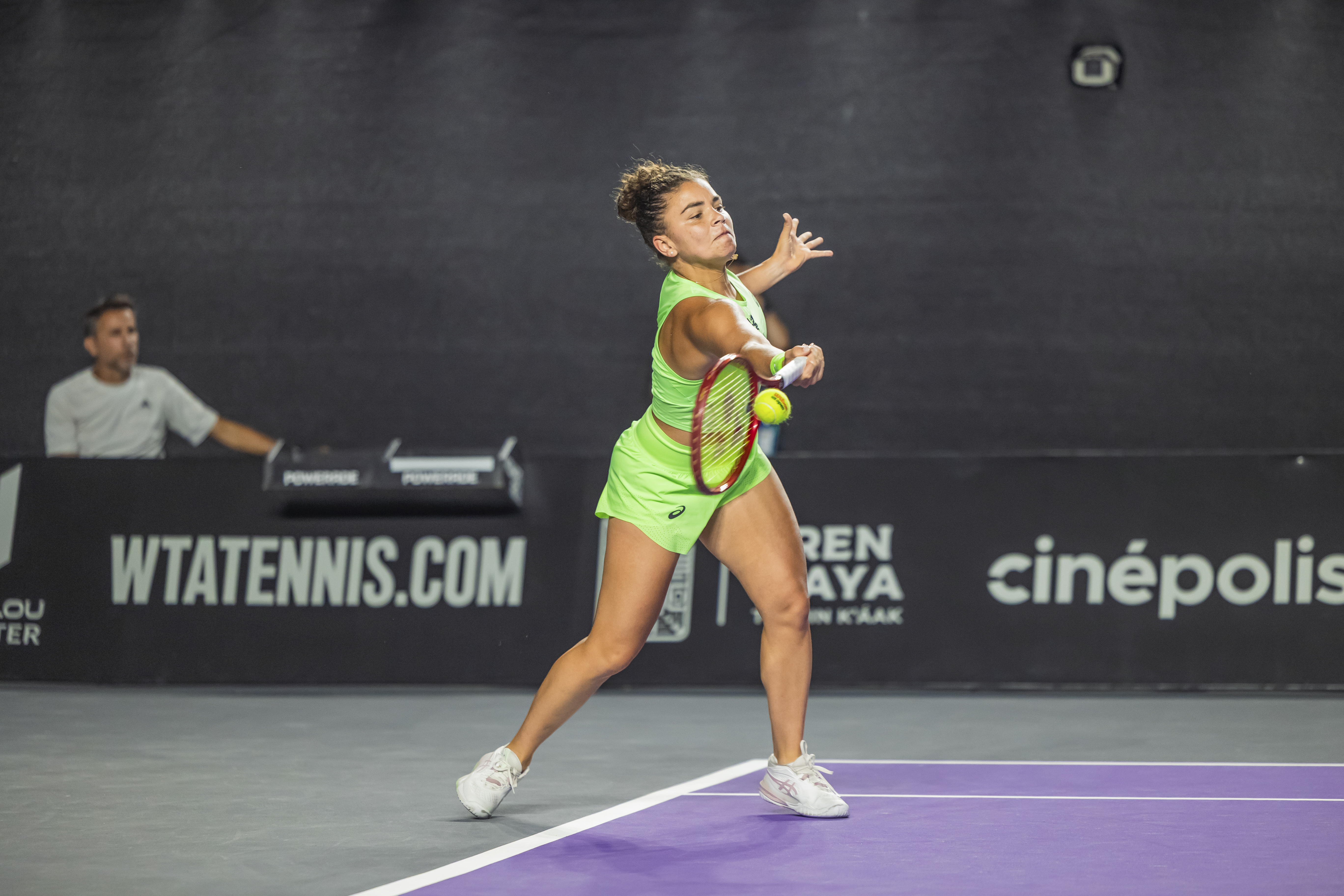
In the warm glow of Merida’s night session, Jasmine Paolini arrived with the quiet urgency of a top seed seeking redemption. The World No. 7, who slipped into this WTA 250 as a late wildcard after a 3-7 slump in her last 10 matches, faced lucky loser Priscilla Hon on hard courts that promised a fresh start. What followed was a 6-0, 6-2 dissection in 1 hour and 11 minutes, Paolini’s steady baseline game unraveling her opponent’s serve from the first point—a lucky net cord that dropped short, followed by a swift break for 2-0.
That early momentum sparked an eight-game surge, Paolini mixing crosscourt forehands with down-the-line backhands to keep Hon pinned deep. The Australian, thrust into the main draw unexpectedly, landed just 43 percent of her first serves and won only 55 percent of those points, her second delivery even shakier at 22 percent efficiency. Paolini capitalized ruthlessly, converting 6 of 11 break points while her own second serve held firm, claiming 90 percent of points—9 out of 10.
“Usually, you always play in the same places in tennis, but I’m so happy to visit a new place,” Paolini said in her on-court interview. “Tournaments in Mexico are always nice, organized and the crowds are really passionate, so I’m happy to be back in Mexico and the first time in Merida.”
Early breaks silence the doubts
Paolini’s last quarterfinal dated back to October in Ningbo, a gap that had widened amid her Middle East struggles on slower surfaces. Here, the medium-paced hard courts suited her quick adjustments, allowing her to redirect Hon’s flatter shots with heavy topspin and occasional underspin slices to disrupt rhythm. The crowd’s passionate cheers built with each hold, their energy feeding into her focus as she closed the first set without concession, turning recent frustrations into controlled aggression.
Hon managed a break early in the second to narrow it to 2-1, injecting a flicker of tension into the humid air. But Paolini reset immediately, employing a 1–2 pattern—crosscourt backhand into an inside-out forehand—to reclaim the edge and reel off four of the final five games. This resilience spoke to her tactical evolution, prioritizing depth over risk to force 14 unforced errors against her own 13 winners, a stat line that balanced precision with poise.
For the full tournament pulse, follow Merida: Scores | Draws | Order of play.
Second serve unlocks the flow
Paolini’s second serve, a point of vulnerability in her early-year losses, emerged as the match’s quiet hero, its consistency allowing her to dictate exchanges without overextending. She kept rallies alive, backing up steady groundstrokes with movement that covered the court efficiently, turning potential defensive scrambles into offensive opportunities. The Italian’s discipline shone through, her game plan exploiting Hon’s inconsistencies while avoiding the unforced error piles that had plagued her abroad.
This victory marked her first quarterfinal of 2026, a step toward rebuilding momentum in a season heavy with expectations after her 2025 breakthroughs. Mexico’s vibrant atmospheres have long favored her aggressive style, and Merida’s debut felt like a circuit breaker, the new venue sparking a lighter step amid the tour’s grind. With 12 of 14 games secured, Paolini exited the court to applause that echoed her growing assurance.
Boulter clash revives old rivalries
Next awaits Katie Boulter, an in-form opponent whose powerful serves and flat groundstrokes test Paolini’s defensive depth on these courts. Paolini leads their head-to-head 3-2, with straight-sets wins in the last two meetings, often by extending points until Boulter’s power wanes. This matchup, on a surface where topspin can neutralize aggression, positions the Italian to leverage her versatility—mixing one–two combinations with down-the-line passes to stretch the angles.
Boulter’s recent momentum adds intrigue, but Paolini’s psychological edge, honed from those prior victories, could prove decisive. As the top seed, she’s not merely advancing; she’s dictating terms, the pressure of her top-10 perch transforming into fuel for deeper runs. In Merida’s rising heat, this quarterfinal promises to gauge whether Paolini’s reset endures, potentially vaulting her toward a rankings rebound one precise point at a time.