Guiding voices behind rising stars

In tennis’s isolating arena, Martin Landaluce and Federico Cina draw strength from coaches who blend discipline with deep care, propelling their climbs toward the Next Gen ATP Finals amid a season’s relentless tests.
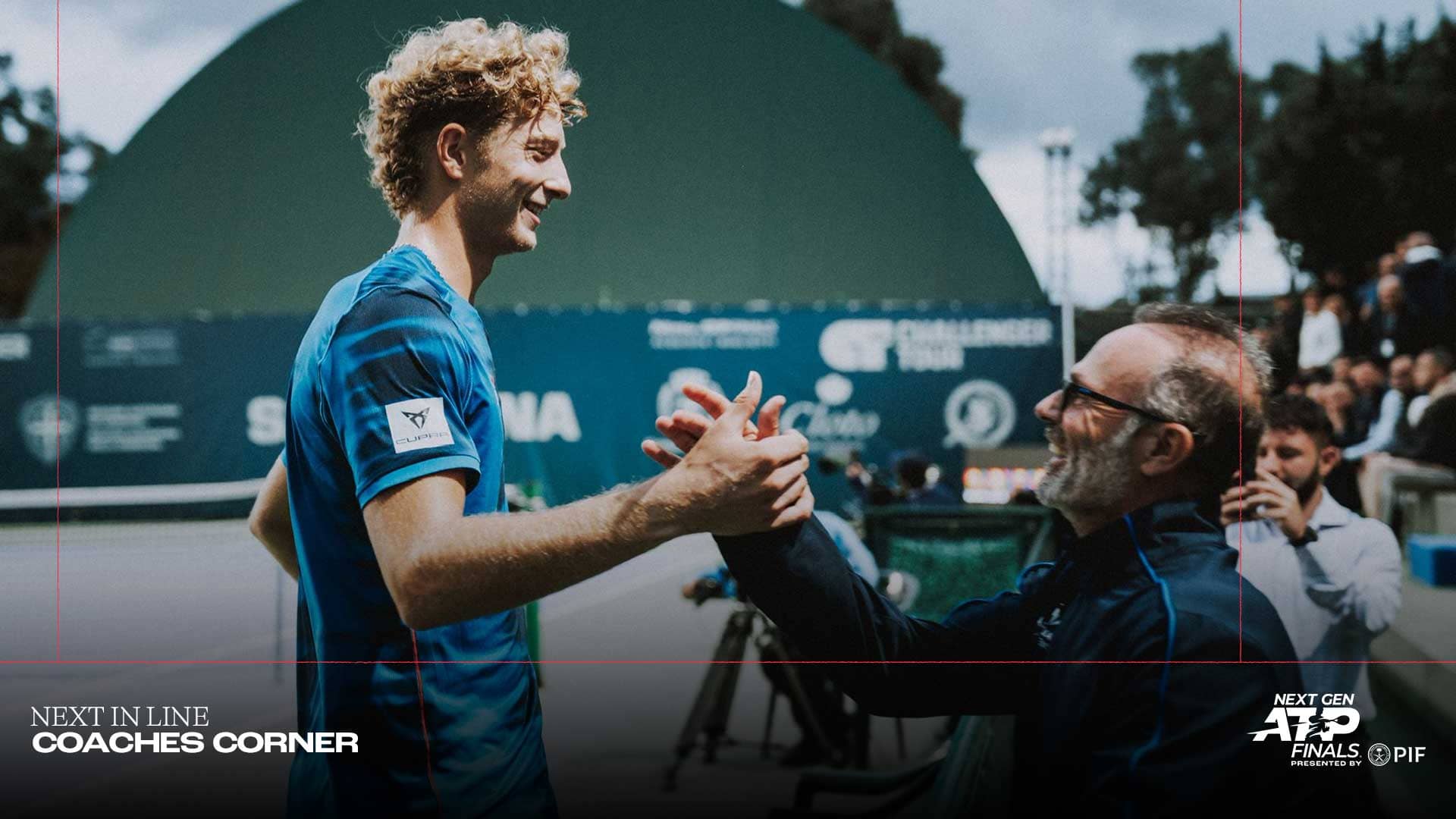
In tennis, where the spotlight falls on a single figure battling across the net, the influences that mold a player’s core often linger in the shadows long before the first serve. For Martin Landaluce, the path to the 2025 Next Gen ATP Finals presented by PIF weaves through more than technical drills and match wins; it’s anchored by the steady counsel of coaches who instill resilience amid the tour’s unyielding demands.
Partnership sparked by early promise
Landaluce’s collaboration with Oscar Burrieza took root through a father’s outreach when the Spaniard was only 14, a time of raw talent yet unproven paths. Burrieza, coaching established players in Madrid, reviewed footage and sensed immediate potential in the boy’s work ethic and maturity. Their initial meetings flowed with ease, setting the stage for a bond that now includes Esteban Carril as co-coach, guiding Landaluce through the pro circuit’s tactical shifts.
“I remember his dad called me and talked to me about the possibility of coaching Martin,” Burrieza shared in a September ATPTour.com interview. “He wasn’t sure if I’d be open to coaching a 14-year-old. He asked me if I knew him.”
“Immediately, I liked what I saw,” Burrieza said. “From the first time we met, we had a good connection. Even early on, I could see he was a really nice kid, mature for his age, responsible. On court, he was ready to work and eager to learn. Honestly, it was easy to start working with him.”
This foundation has propelled Landaluce‘s ascent, from his 2022 US Open Boys’ singles triumph on hard courts to ATP Challenger Tour titles in 2024 and 2025, culminating in a career-high No. 110 in the PIF ATP Rankings by October. Burrieza’s approach emphasizes consistent routines, whether preparing for clay’s grinding rallies in Madrid or hard-court bursts in Miami, where deep crosscourt forehands open angles for inside-out attacks.
Mental balance as core strength
What distinguishes Landaluce at 19 lies in his emotional steadiness, a quality Burrieza cultivates through space and trust, allowing the young player to process defeats without lingering doubt. Tennis extracts a toll with its weekly losses, yet he rebounds swiftly, treating a Futures event with the same focus as a Masters 1000 clash. This reset enables sharper decisions, like varying underspin backhands to disrupt aggressive returns during extended exchanges.
Burrieza values the everyday rhythm over fleeting highs, traveling and training in tandem while fostering independence. Their connection runs deeper than strategy, rooted in genuine concern that sustains Landaluce through the season’s physical and mental strains.
“As a coach, every time you get a good result with your player, you feel proud and happy,” Burrieza reflected. “Happy for them, but also for yourself and the work you’ve put in. When Martin became World No. 1 in juniors, when he won the US Open junior title, those were very special moments. But honestly, not much changes. We enjoy the training weeks, not just the competition.”
“For me, his balance, mentally, is one of his biggest talents,” he added. “Tennis is mentally brutal. Most weeks, you lose. But Martin has this ability to wake up the next day and get back to practice like nothing happened. He resets emotionally. Whether he’s about to play at the Madrid Open or a Futures match, he acts the same. That consistency in attitude is rare.”
“We don’t need to be friends because I’m his coach,” Burrieza said. “I care about him a lot, as a person. I love him, and I truly want the best for him.”
In Jeddah’s fast-paced Next Gen format, with its short balls and no-ad scoring, this poise will prove vital, turning potential pressure into precise one–two combinations that exploit openings down the line.
Family guidance for Italian prospect
Across the tour, Federico Cina mirrors this dynamic through his father and coach, Francesco Cina, whose dual role demands clear boundaries to balance instruction with paternal warmth. The Italian’s 2025 breakthroughs—a tour-level victory in Miami’s humid hard-court nights and three ATP Challenger Tour finals—stem from joint breakdowns of opponents, mapping crosscourt patterns to counter defensive slices with aggressive inside-in forehands. Francesco’s reminders to savor practice keep enjoyment alive amid clay’s tactical demands or hard’s quick tempos.
“That’s maybe the hardest part, he’s the coach on court and dad off court,” Cina noted. “But my dad is really good at separating the two. On court, he talks to me like a coach, and off court he’s just my dad. I like having that balance. It’s very cool, and I feel lucky.”
“My coach and my dad remind me to keep enjoying practice,” he continued. “Keeping that spirit is very important, and the results will come.”
For Cina, eyeing a 2026 Next Gen ATP Finals berth under the 20-and-under rules, this synergy builds momentum, adapting serves—wide to the deuce side on faster surfaces, body targets on slower ones—to neutralize returns and sustain ranking climbs. These guiding voices, whether from coaches or kin, transform tennis’s solitude into shared progress, positioning both players to thrive in Jeddah’s spotlight and beyond. This narrative aligns with the Next Gen ATP series Next in Line, including Wimbledon dreams, Nishikori’s run & Vinci’s courtside lessons: Next Gen stars share memories, Next Steps: How Tien, Basavareddy & Engel are making the leap, Learning from Legends: Nadal, Cilic & Ram inspiring #NextGenATP stars, and Fuel for the future: Inside the mindset of the best youngsters.