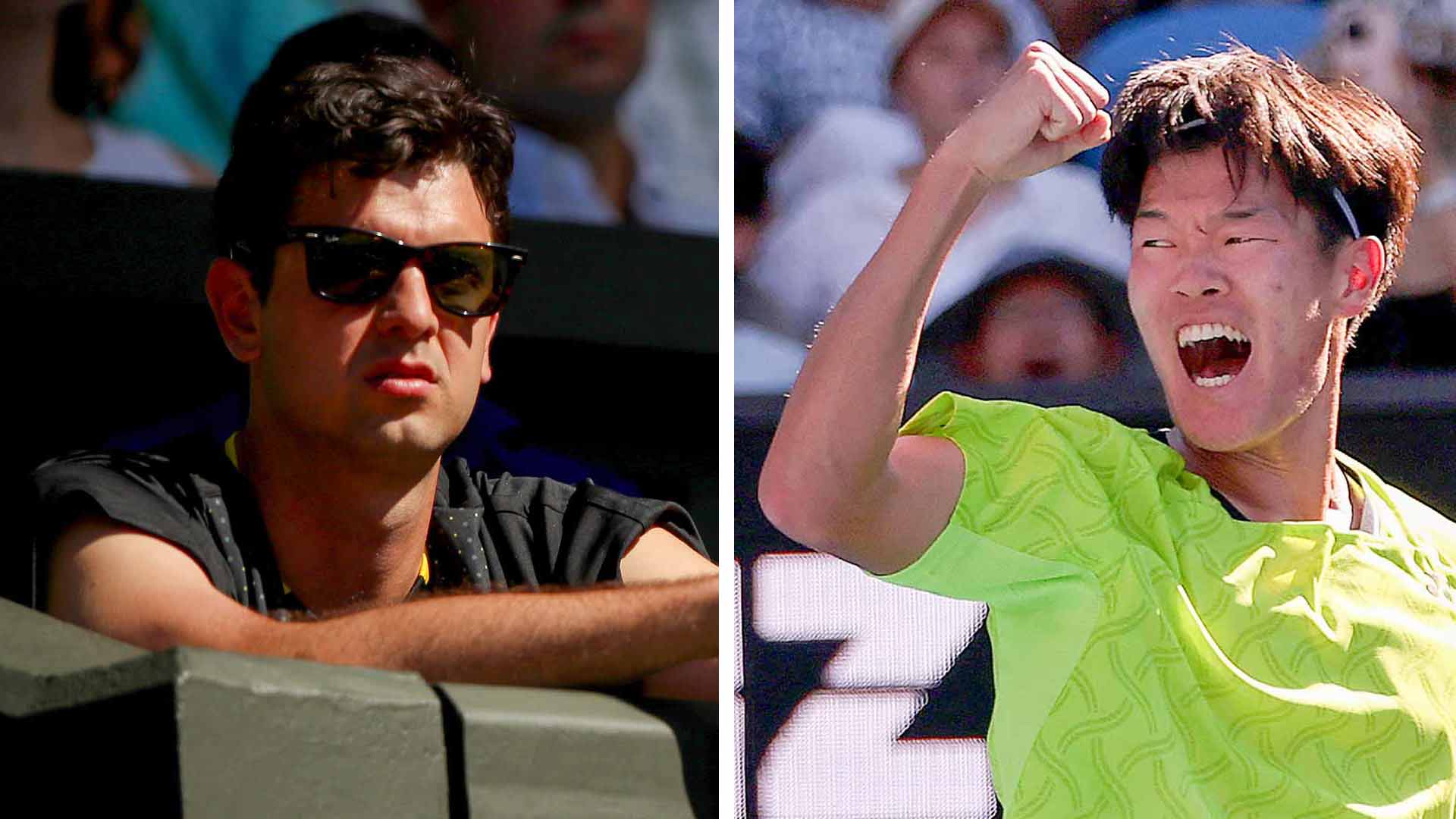
Michael Zheng Balances Ivy League Grind and Australian Open Debut

As Columbia senior Michael Zheng steps onto Melbourne Park for his first Grand Slam main draw, the weight of five upcoming courses clashes with the thrill of facing Sebastian Korda— a testament to a year where academic poise fueled his ranking climb.
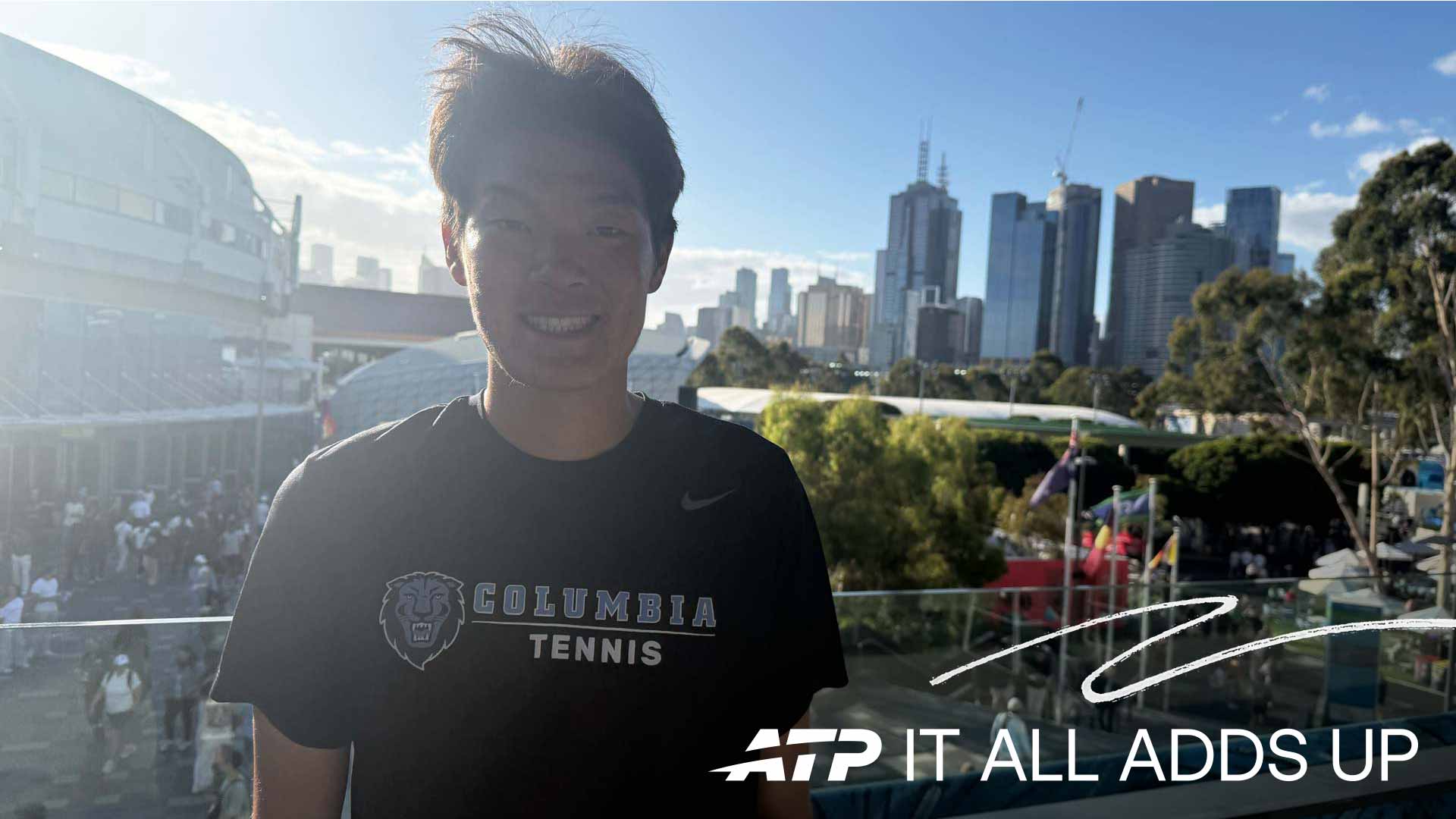
In the humid haze of Melbourne’s summer, Michael Zheng absorbs the buzz around Rod Laver Arena, his first Grand Slam main draw just hours away at the Australian Open. The 21-year-old Columbia University senior, ranked No. 174, has clawed through qualifying with a steady baseline game that turns pressure into points. While school resumes on January 20 with five psychology courses, tennis commands his focus now, a rare inversion of his dual existence.
Zheng’s path here weaves family roots and relentless training. Growing up in New Jersey, his father Joe introduced him and sister Amy to tennis at their local high school after immigrating from China and discovering the sport. Three days a week in middle school, he honed his strokes at the USTA Billie Jean King National Tennis Center, home of the US Open, building a foundation that led to the 2022 Wimbledon boys’ singles final, where he overcame Coleman Wong and Martin Landaluce in sharp grass-court exchanges.
“Right now, I’m really excited,” Zheng, a qualifier, told ATPTour.com. “And relieved to get through that and get the chance to play my first main draw.”
Ivy demands sharpen mental edges
Columbia’s academic intensity has molded Zheng into a competitor who thrives under layered stresses. Earning Academic All-American honors and the Rafael Osuna National Sportsmanship Award in 2025, he defended his NCAA singles title while navigating a pro circuit that demanded tactical shifts on varied surfaces. Coach Howard Endelman views this balance as a core strength, fostering focus that extends to court rallies.
“The academic rigour has helped Michael in many ways, especially mentally,” Endelman said. “The schoolwork is complementary; It allows Michael to focus and develop aspects of his life outside of tennis. Although it might be counter-intuitive, this combination has helped Michael develop as a complete person which has actually helped his tennis.”
Zheng, initially drawn to economics, switched to psychology and finds it aids time management without direct court ties. He dismisses overhyping studies, opting for manageable classes amid travel disruptions. This mindset translates to composed serves in tiebreaks, where he resets like flipping through notes before an exam.
Challenger titles test dual pursuits
From outside the Top 700 in early June, Zheng’s surge began with a Little Rock Challenger final, followed by triumphs in Chicago and Columbus that showcased his adapting heavy topspin forehands to indoor hard courts. The Tiburon Challenger title in October capped the run, but he boarded a red-eye Sunday night to attend a Monday in-person exam in New York City. Endelman marvels at this seamless integration, noting how it builds resilience for pro-level grinds.
“He just takes it all in stride,” the coach observed of Zheng’s post-victory flight. Balancing five classes with these victories, he defended his NCAA crown, using slice backhands to disrupt aggressive returns and inside-out forehands to finish points. “Definitely not easy. At the same time, I think people tend to overestimate the studies. I think you can make it as hard or as easy as you want it to be,” Zheng, a Psychology major, said. “I’m travelling, missing quite a bit of class, so I’m not going to do anything too crazy, like neuroscience, biology or something like that. But at the same time, you can sign up for whatever classes you want to take.”
“You learn how to manage your time and in the pressure moments, I think you can manage a little bit better, because you put all that work in and at the same time, you’re balancing school,” he added. “I think it just gives you that little bit of a mental edge, that you’re doing maybe a little bit more than these other guys, and at the same time, your level is there.”
Qualifying poise previews Korda clash
Sunday’s opener against Sebastian Korda at Melbourne Park amplifies Zheng’s story, arriving after a qualifying path that nearly ended in the final round versus Lukas Klein. Trailing at 9/10 in the third-set tiebreak after leading 7/1 and 9/7, he unleashed an ace wide to save match point, then sealed it with down-the-line backhands slicing through the heat. This unflappable recovery mirrors his off-court calm, turning potential setbacks into momentum shifts.
“Nothing seems to bother Michael — on or off the court — especially when things go wrong,” Endelman said. “Michael lost the lead after being up 7/1 and 9/7 in the final-set tiebreaker, then all of a sudden was serving down 9/10. With no emotion, he calmly goes up to the line and saves match point with an ace wide.”
Against Korda’s powerful groundstrokes, Zheng plans to extend rallies with crosscourt angles and 1–2 patterns—kick serves setting up low-bouncing underspin approaches. His junior pedigree and recent hard-court adaptations position him to absorb pace and counter with precision. “I had some talent, so he wanted to see how far he could take it,” Zheng said of his father. “And now we’re here playing my first main draw [of a major]. It’s been quite a tournament.”
“I’m not thinking too longterm right now,” he concluded. “I’m just focussing on seeing how far I can take the tennis and giving 100 per cent focus on that at least.” As the Australian Open unfolds in 2026, Zheng’s blend of student discipline and rising talent could push him deeper, redefining underdog narratives on these sun-baked courts.