Billie Jean King closes her academic chapter with the same resolve that built a sport

Sixty two years after pausing her studies the tennis pioneer confronts the lingering pressure of an unfinished goal, channeling the mental edge that once powered her through packed stadiums and landmark decisions.
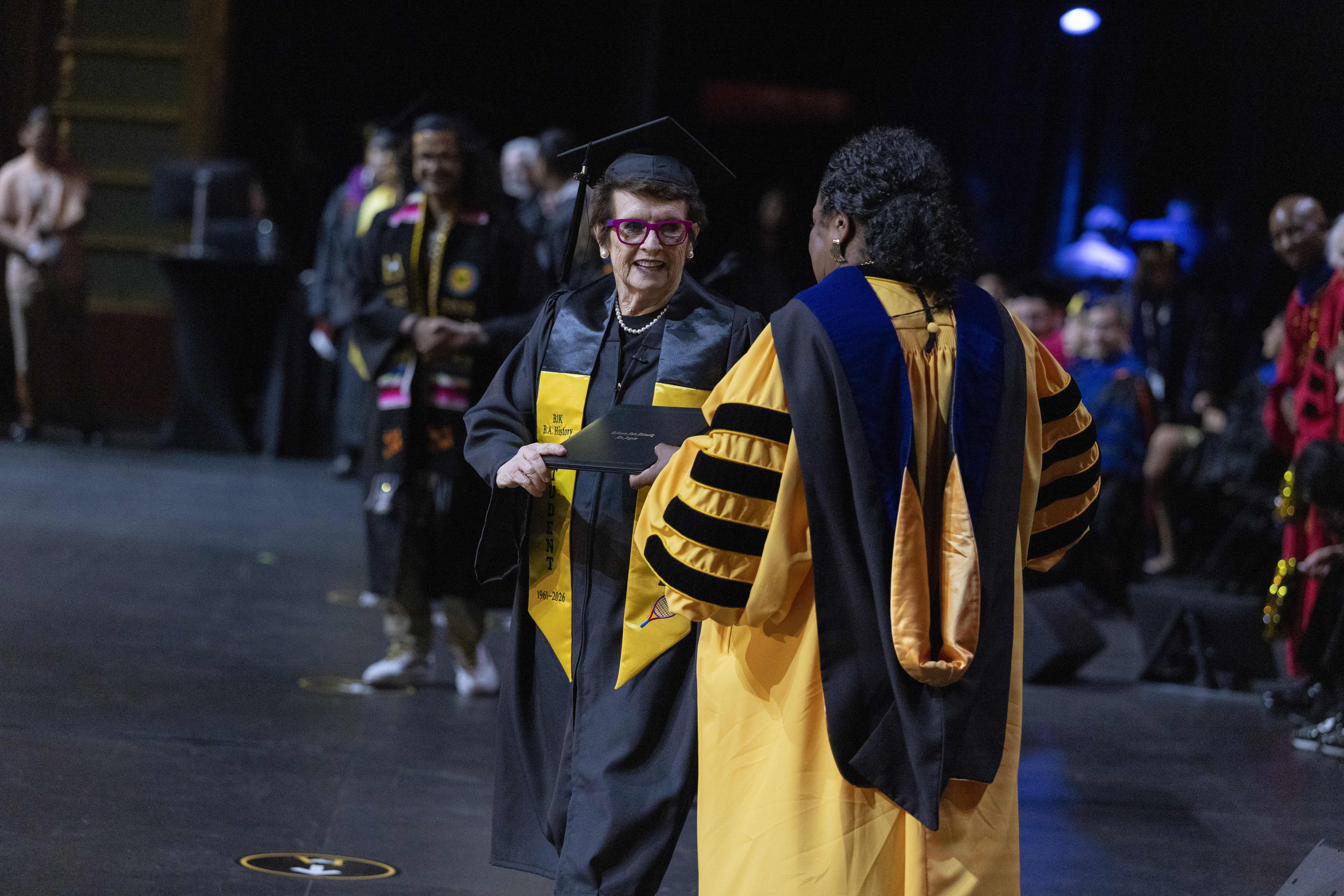
Billie Jean King crossed the stage at California State University Los Angeles carrying the same quiet intensity that once carried her through five set battles and boardroom standoffs. At 82 she finally collected the bachelor degree in history she had set aside in 1961 closing a loop that had lingered through every title and every reform she drove forward.
Returning to the classroom after decades away
She had already rewritten prize money structures and launched a tour when the thought of returning first surfaced again. Three years of prior coursework sat on record enough to pull her back into remote classes that mixed historiography with the very movements she had shaped. The decision carried the same internal calculation she once applied to an inside out forehand under pressure assess the gap commit fully accept the tempo shift.
Early mornings on the practice court had trained her to treat every unfinished point as a fresh contest. Now the syllabus forced her to examine Title IX through primary documents while recalling the 1970 Original 9 stand that helped make the law possible. The psychological loop tightened when she realized the paper she submitted analyzed events she had lived rather than merely studied.
King described the moment the numbers clicked. The three years already banked removed any excuse to stay away and the remaining twelve months of work became the new target. That clarity mirrored the one two pattern she once used to seize control of rallies serve wide then dictate the next ball before the opponent could settle.
Family expectations added another layer. As the first in her immediate circle to finish college she carried the voices of parents who had stressed education even while she chased Wimbledon crowns. Their absence at the ceremony left a private ache that no diploma could erase yet the act of completing the work honored the standard they had set long before her first Grand Slam final.
Balancing coursework with ongoing advocacy
Remote classes amid a public career required the same schedule discipline that once kept her sharp across a 129 title career. Remote lectures on historical research replaced the daily gym sessions yet the mental repetition of reading and revising echoed the hours spent grooving crosscourt patterns until they became automatic. The campus itself had changed names and methods since 1964 yet the core demand remained show up prepared.
She delivered the commencement address the same day she received her diploma wearing a golden stole that read student athlete and G.O.A.T. The crowd responded with the kind of sustained energy once reserved for her 1973 Battle of the Sexes victory. In that moment the psychological arc came full circle the woman who had once felt the weight of representing an entire generation now stood as living proof that education can resume at any age.
This is it! I’m graduating from college today! #Classof2026 @CalStateLA
This is it!
I’m graduating from college today! 🎓💛🖤#Classof2026 @CalStateLA— Billie Jean King (@BillieJeanKing) May 18, 2026
Messages arrived from strangers who cited her example as the reason they returned to school at 75. King had not anticipated that ripple effect when she first enrolled again yet the response supplied fresh motivation during late night paper revisions. The same drive that once pushed her to 20 Wimbledon titles now fueled a different kind of endurance.
Her 39 Grand Slam trophies including 12 singles 16 doubles and 11 mixed had already secured her place in the International Tennis Hall of Fame as both an individual in 1987 and as part of the Original 9 group in 2021. Still the degree carried a distinct weight because it belonged to the person rather than the public figure. The coursework forced her to confront how history gets written including the chapters she helped author through the 1972 legislation and the WTA launch.
Leaving a final lesson on the court of life
She hit tennis balls from the stage to fellow graduates a light gesture that recalled the joy she first found on Los Angeles State College courts while winning her opening Wimbledon doubles title. The action bridged the 1964 departure and the 2026 completion without erasing the decades between. In that simple motion the pressure narrative resolved the unfinished task no longer sat as an open point.
King later reflected that the thrill came less from the diploma itself and more from the way people across age groups connected with the story. The response mirrored the electricity she once felt after a decisive down the line winner that shifted an entire match. Here the victory belonged to persistence rather than spin or footwork yet the satisfaction carried the same clean finish.
She closed the day by telling the graduates that it is never too late to pursue education. The line landed with the authority of someone who had tested the claim across six decades of tennis and activism. The psychological arc that began with a paused transcript in 1961 ended with a diploma in 2026 proving that the same focus once applied to a 1–2 combination can still serve long after the final match point.