Rybakina meets Sabalenka in Wuhan’s tense quarterfinal

Elena Rybakina and Aryna Sabalenka advance with unbreakable serves, priming their 13th rivalry clash on hard courts where recent momentum favors the challenger and WTA Finals dreams intensify the pressure.
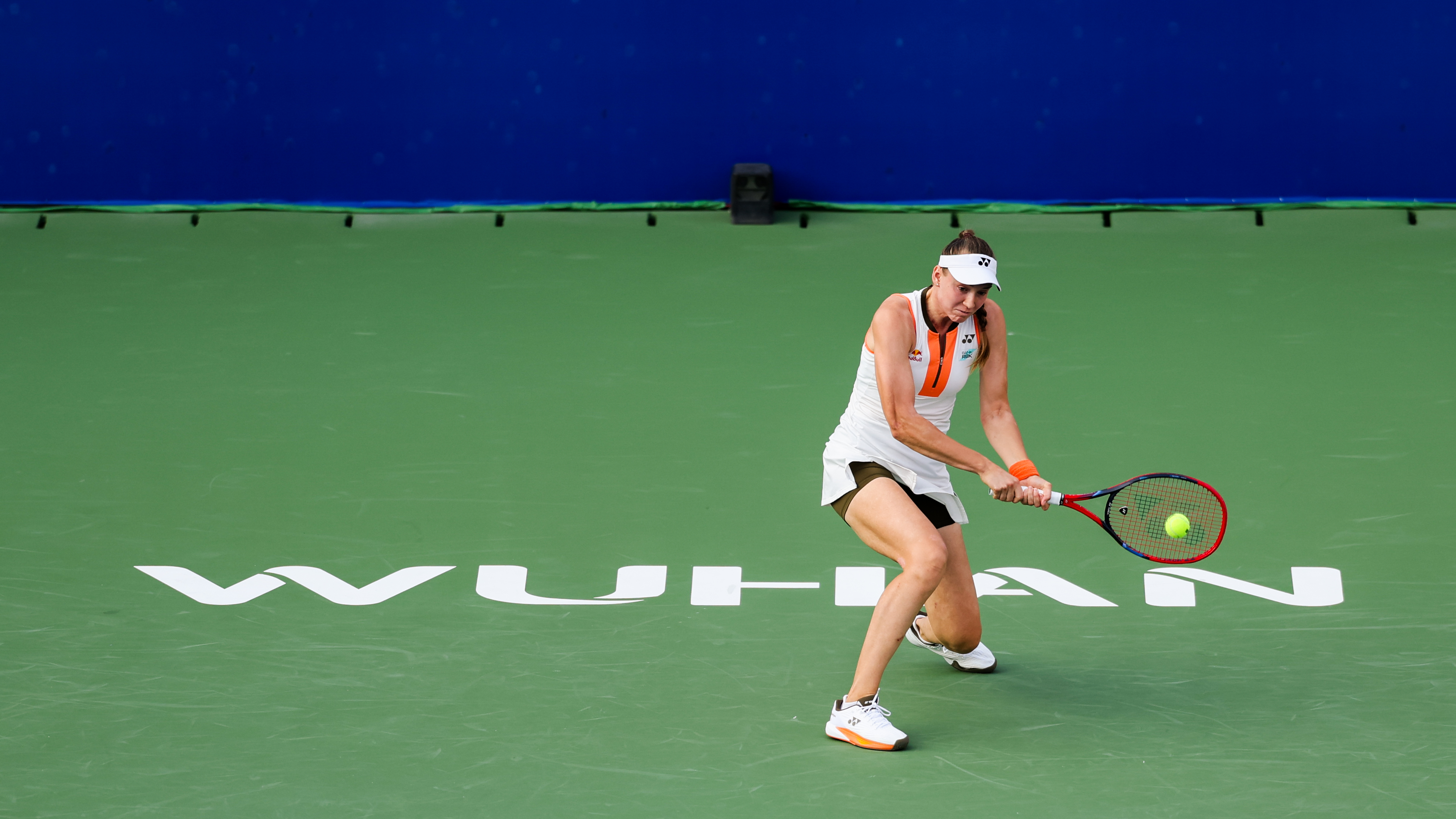
In the electric hum of Wuhan’s Optics Valley International Tennis Centre, Elena Rybakina and Aryna Sabalenka have powered into the quarterfinals with serves that silenced any hint of vulnerability. Both claimed straight-sets wins on Thursday, their deliveries untested by breaks amid the fast hard-court bounce that amplifies power and precision. This renewed encounter, the 13th in their storied series, carries the weight of past finals and shifting hard-court dominance, as the world No. 1 faces a rival who’s mastered the surface lately.
Serves dominate early rounds
Aryna Sabalenka dismantled Liudmila Samsonova 6-3, 6-2 in just 75 minutes, her first serve clicking at 66% and conceding only 10 points total on delivery. The Belarusian, a three-time champion here, extended her Wuhan record to 19-0 and her winning streak to eight matches, flipping a 1-2 skid against Samsonova into three straight-set triumphs over the past 14 months. Samsonova mustered pressure in just one return game, but Sabalenka’s mix of flat bombs and kick serves to the body kept rallies short, often ending in crosscourt winners that exploited any hesitation.
Elena Rybakina, seeded eighth, steadied against a resilient Linda Noskova, taking a 6-3, 6-4 decision in her first Wuhan quarterfinal since 2019. Landing 49% of first serves, she still faced no breaks, holding firm through four deuce games with deep second deliveries that forced errors on the return. The 20-year-old Czech saved 10 of 12 break points with aggressive inside-out forehands, but a double fault at 4-3 in the first set cracked her resolve, allowing Rybakina to build momentum with patient one–two patterns that neutralized Noskova’s flat groundstrokes.
These unbreached services underscore a tactical foundation: on Wuhan’s medium-paced hard courts, both players lean on low-error patterns to control tempo, blending power with placement to deter deep returns. The crowd’s rising cheers after each hold amplified the psychological edge, as Sabalenka’s roar and Rybakina’s quiet focus hinted at the mental steel needed for their upcoming duel. With no break points faced, the stage is set for a battle where serve holds could dictate the flow, pushing rallies toward down-the-line passes or inside-in approaches that test footwork under pressure.
Rivalry balances on hard-court edges
Their Friday quarterfinal echoes their pro debut at this exact stage in 2019, where Sabalenka prevailed 6-3, 1-6, 6-1 in a three-set grind that kicked off four straight deciders in her favor. She leads the head-to-head 7-5 overall, with every victory stretching to a third set, including the 4-6, 6-3, 6-4 Australian Open final in 2023 and a dramatic 7-6(6), 3-6, 7-6(6) Berlin escape this year from quadruple match point down. Those marathons reveal her knack for rallying from the brink, using varied serves to extend points and force unforced errors in clutch tiebreaks.
Rybakina flipped the script with a 7-6(11), 6-4 Indian Wells final win in 2023, sparking a run where she’s captured five of their last eight meetings, including a swift 6-1, 6-4 Cincinnati quarterfinal in August that lasted just 75 minutes. On outdoor hard courts, she holds a 5-4 advantage, her four straight-set wins showcasing a level that smothers Sabalenka’s aggression with penetrating backhands and slice approaches that disrupt rhythm. The Kazakhstani’s only three-set success came at the 2024 WTA Finals in Riyadh, a 6-4, 3-6, 6-1 effort that highlighted her composure when deciders loom.
Sabalenka hasn’t topped Rybakina on hard since the 2023 WTA Finals in Cancun, prompting potential tweaks like more underspin on second serves to vary bounce or aggressive net rushes to shorten points. Rybakina, returning to these courts with quiet intensity, might counter with deeper returns to jam the serve, setting up crosscourt exchanges that exploit any overhit forehands. The pattern suggests straight sets favor the challenger’s precision, but if tiebreaks arise, the world No. 1’s proven resilience could swing the mental tide, especially with the home crowd’s energy building toward a potential epic.
Finals race heightens stakes
Two spots remain for the WTA Finals in Riyadh, and Rybakina’s ninth-place position strengthened with Noskova’s 15th-ranked exit, joined by losses from 11th-placed Clara Tauson and 10th-placed Ekaterina Alexandrova. Jasmine Paolini, eighth in the race, advanced when Tauson retired with a right thigh injury at 3-6, 6-1, 3-1, while Jessica Pegula, third overall, outlasted Alexandrova 7-5, 3-6, 6-3 to lock in her lead. These results widen the gap for the leaders, ensuring no one can pass Rybakina directly this week in Wuhan.
To overtake seventh-placed Mirra Andreeva, who fell early to Laura Siegemund, both Paolini and Rybakina need a final appearance, their opposite draw sides avoiding a semifinal clash. The Kazakhstani must advance further than the Italian to swap positions; matching round losses keep Paolini ahead. For Sabalenka, already qualified, the focus sharpens on momentum, her unbeaten Wuhan run a mental boost amid a season of triumphs like the Australian Open and recovery from mid-year setbacks.
The psychological freight of Finals qualification adds layers to every point, as Rybakina chases a berth that has slipped away despite her major pedigree, while Paolini builds on recent breakthroughs. Check the Scores, Draws, and Order of play for the latest developments in this unfolding chase. As twilight settles over the centre court, this quarterfinal blends rivalry tactics with season-defining urgency, where a deep run could secure Riyadh dreams and redefine hard-court supremacy heading into the tour’s final stretch.