Medvedev flips script on Zverev in epic rivalry

Two 6-foot-6 powerhouses, Daniil Medvedev and Alexander Zverev, bring their blend of booming serves and defensive reach to Beijing’s hard courts, where Medvedev’s recent dominance could decide another semifinal thriller amid mounting year-end stakes.
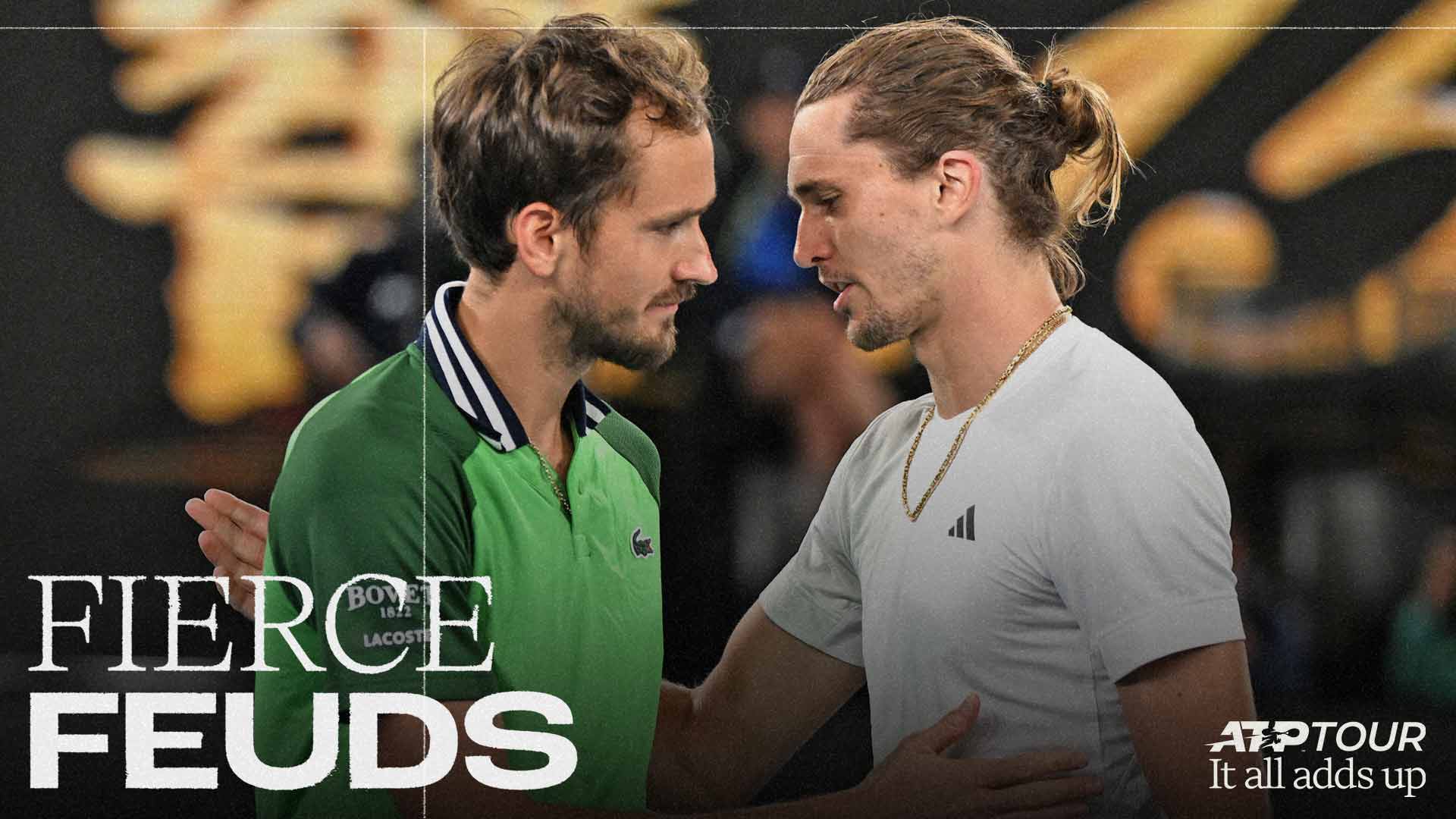
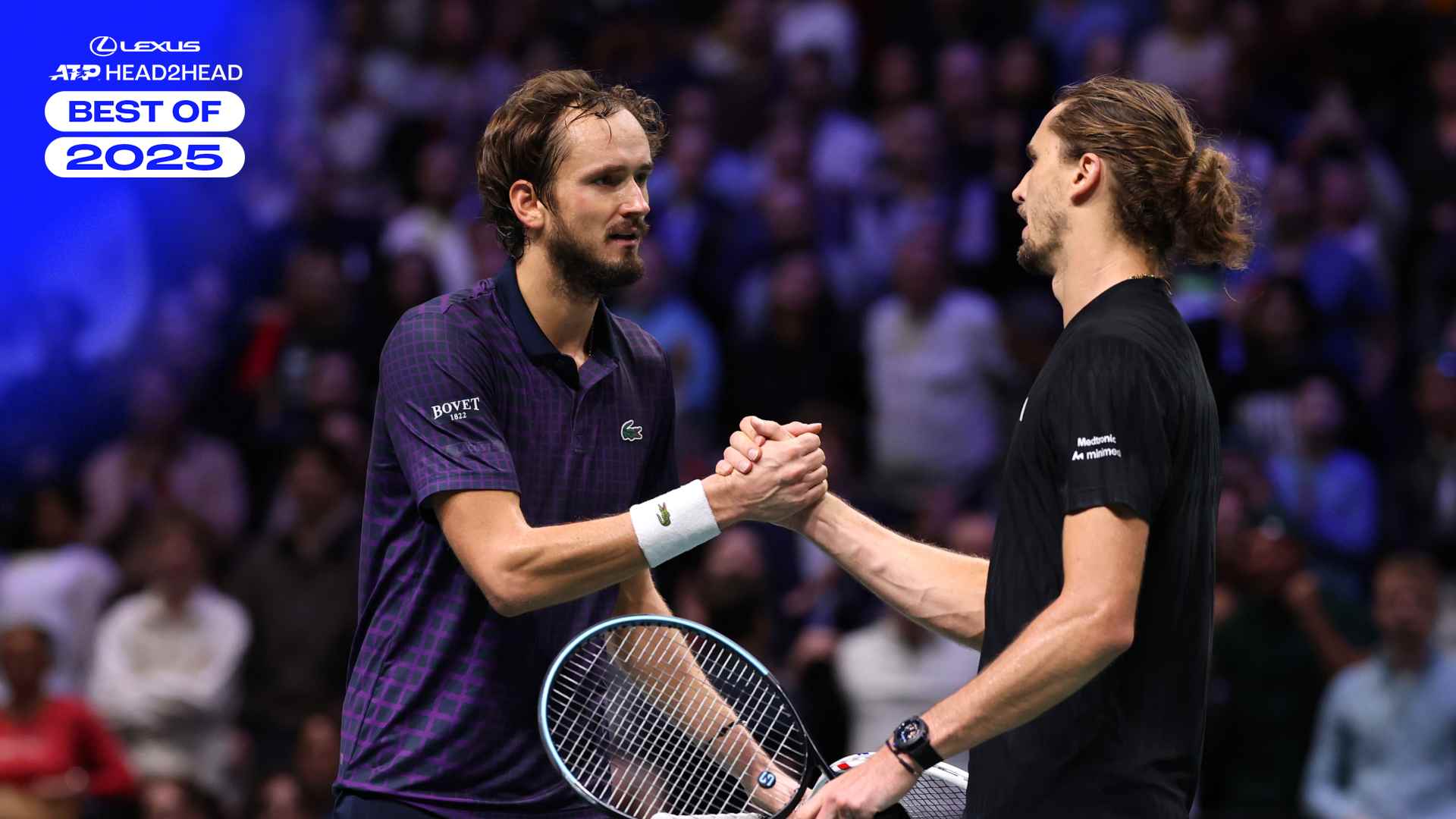
Standing at 6’6”, Daniil Medvedev and Alexander Zverev‘s attributes have propelled them to the pinnacle of professional tennis. They unleash crushing serves and excel as defenders, their extended reach enabling them to prolong rallies and flip momentum from the back foot. This symmetry has sparked a rivalry of razor-thin margins on the ATP Tour, where Zverev captured the opening four clashes before Medvedev reversed course, securing 13 of their subsequent 16 meetings for a 13-7 head-to-head lead. Entering their 21st encounter with a semifinal spot at the China Open in Beijing at stake, the pressure of the late-season grind tests their ability to adapt tactics and mindset under the lights.
From the outset, their battles have hinged on who first cracks the other’s armor of power and patience. Zverev built an early psychological edge through those initial triumphs, but Medvedev’s persistence began eroding it, turning potential routs into grueling tests of will. As the calendar advances, these shifts reveal how endurance and subtle adjustments define their dynamic on varied surfaces.
“I was a little bit lost but during the third set I said if I was going to lose this match I was going to be proud of myself. I want to fight until the end and if I lose, I lose. I managed to win, and I am very proud.”
Early edges forge resilient counters
The rivalry ignited in 2018 at the Miami Open presented by Itau second round, where Zverev dismissed Medvedev 6-4, 1-6, 7-6(5), blending forceful groundstrokes with backhand slice to lowball his foe and induce errors. At just 20, the German tallied 25 winners, capping the decider with a tie-break forehand mishit from the Russian, a win that launched him to the final at a tournament rich with personal milestones—his inaugural ATP Masters 1000 title in 2015 and a breakthrough top-10 defeat of Stan Wawrinka in 2017. This early success amplified Zverev’s confidence amid the spring hard-court swing, while for Medvedev, marking his 200th tour-level appearance, the setback to 126-74 lifetime fueled a drive to dismantle such patterns. The Miami humidity and baseline tempo underscored how disrupting rhythm could expose vulnerabilities, a lesson both carried forward into team events.
National duty intensified the stakes in the 2021 ATP Cup semifinals under the closed roof of Rod Laver Arena in Melbourne. Medvedev arrived unbeaten that year, having dispatched Diego Schwartzman and Kei Nishikori, opposite a Zverev fresh off toppling Denis Shapovalov yet rattled by a three-set reversal to Novak Djokovic. Trailing 3-6, 3-2 after a serving onslaught, the Russian repositioned deeper on returns to neutralize pace, rallying to 6-3, 7-5 when a double fault gifted the decisive break at 6-5. He then staved off five break points in his closing game, the crowd’s roar blending with the echo of national anthems to heighten the tension, transforming early-season fatigue into a momentum-building escape that hinted at his growing tactical poise.
Year-end clashes sharpen mental blades
The 2021 Nitto ATP Finals round-robin in Turin elevated their duel to a season-defining crescendo, a two-hour-35-minute barrage of fierce groundstrokes where Medvedev prevailed 6-3, 6-7(3), 7-6(6) for his fifth consecutive win over the German. Both entered 1-0, the former after ousting Hubert Hurkacz, the latter via Matteo Berrettini‘s injury withdrawal, reviving echoes of their 2020 group-stage meeting. Medvedev soaked up the heavy hitting, his deep backhand return surging him to 6-4 in the third tie-break, though Zverev erased two match points—including one during a rare serve-and-volley attempt—before the Russian converted the third to punch his semifinal ticket. The indoor swiftness amplified baseline intensity, with the arena’s hushed anticipation breaking into applause at each shift, illustrating how year-end positioning could unlock unyielding resolve amid the tour’s culminating fatigue.
Zverev exacted swift retribution five days later in the final, 6-4, 6-4, halting his skid to claim a second title and momentarily restoring balance. Yet the round-robin mental fray lingered, exposing how high-stakes indoor play rewarded the one who mixed defense with opportunistic aggression. This back-and-forth, set against the glittering Turin lights, foreshadowed the rivalry’s deepening layers, where tactical guile like varied slice and crosscourt probes would prove essential in sustaining drives toward year-end glory.
Surface pivots fuel comeback dramas
Clay’s deliberate rhythm brought fresh challenges in the 2023 Monte-Carlo Masters third round, a late-night odyssey where Medvedev trailed 3-6 before clinching 7-5, 7-6(7), his second straight rally from a set deficit against Zverev. He repelled two match points, denying serves at 5-4 in the second and third, plus another at 6-5 and 7-6 in the tie-break, amid 11 service breaks that mirrored the surface’s unforgiving slides. Pre-tournament footage of clay volatility informed his approach, allowing him to pounce when tightness crept in, the Monte Carlo breeze carrying the scent of sea salt as spectators held breath through each valley of doubt. Medvedev’s steady down-the-line finishes in tense rallies turned the tide, reinforcing his edge on slower bounces where endurance outlasts raw power.
“That was a crazy match,” he reflected on the peaks and troughs, emphasizing how clay diminishes serve dominance, enabling instant turnarounds with a well-timed one–two of defense and counter. The victory, his first major clay breakthrough in their series, boosted confidence heading into the European swing, where variable weather and footing demand constant recalibration of inside-out patterns to exploit wide angles.
Hard courts reclaimed the narrative at the 2023 BNP Paribas Open fourth round in Indian Wells, where Medvedev stretched his streak to 17 with a 6-7(5), 7-6(5), 7-5 grinder despite an ankle roll after the opener. Saving all 10 break points in the second—capped by a reflexive defensive smash in the tie-break—he forced a decider and converted his second chance at 5-4 after Zverev thwarted the first. The 27-year-old generated 40 winners, honing his baseline absorption to blunt incoming pace as the desert sun dipped, the stadium’s energy surging with each extended exchange. This adaptation, blending reach with repositioning, neutralized power across the three-hour-16-minute span, turning physical adversity into a testament of composure.
“When I twisted [my ankle], I thought I was going to stand up just fine,” he recalled of the sharp pain that threatened ligament strain, yet propelled him to push boundaries. The Indian Wells dust and crowd hum amplified the drama, highlighting how mid-tournament injuries sharpen focus, a resilience that carried him to the final and deepened the rivalry’s tactical intrigue on familiar hard courts.
Their overdue major rendezvous unfolded in the 2024 Australian Open semifinals, the 19th head-to-head but inaugural Slam clash, a four-hour-18-minute saga inside Rod Laver Arena. Medvedev, seeded third, erased two-set deficits of 5-7, 3-6 to triumph 7-6(4), 7-6(5), 6-3, rescuing two points from defeat in the fourth tie-break—his third five-setter of the event, following a second-round reversal against Emil Ruusuvuori. First-serve accuracy soared from 50 percent early to 71 percent in the fifth, unleashing 22 extra winners over the closing frames, the Melbourne heat and fervent support fueling his shift from containment to conquest. Zverev’s early command faded in prolonged points, his frustration mounting as the Russian’s defense stretched rallies into wearing marathons.
This Melbourne miracle, born of mid-match resolve to embrace full effort regardless of result, cemented Medvedev’s psychological ascendancy, pressuring Zverev to refine approaches amid the Australian summer’s relentless tempo. As Beijing looms, their shared traits promise another canvas for innovation—deeper returns against serves, crosscourt lures into inside-in finishes—where the one who masters the mental ebb first may dictate the rivalry’s next evolution. View their ATP Head2Head series here.