Paolini summons endurance to outlast Bencic

In a sweltering Ningbo quarterfinal that tested every fiber of her resolve, Jasmine Paolini rallied from a set and break deficit to edge Belinda Bencic, preserving her slim window to the WTA Finals.
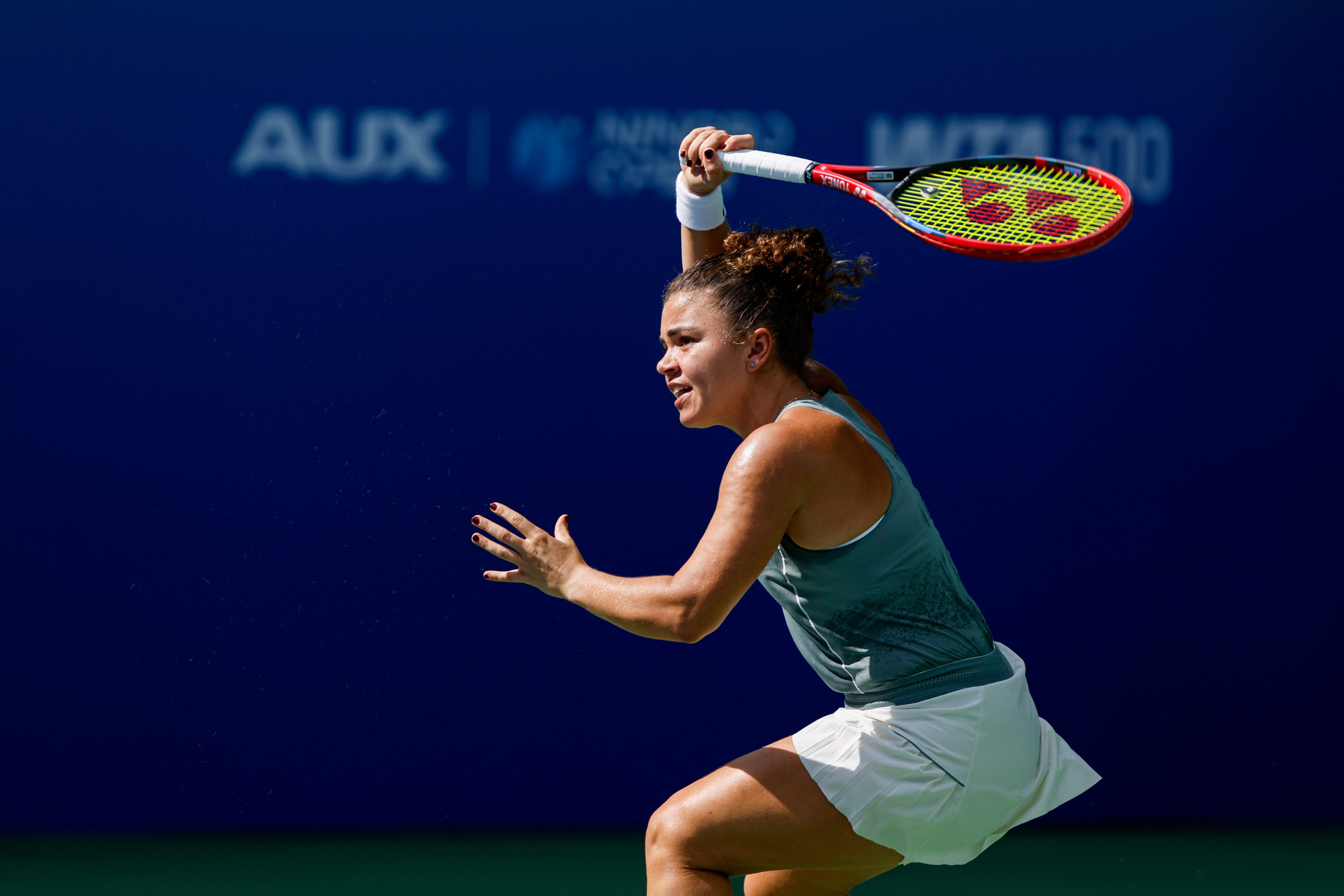
In the sticky evening air of the AUX Ningbo Open, Jasmine Paolini dug deep to claim a 3-hour, 22-minute triumph over No. 6 seed Belinda Bencic, prevailing 5-7, 7-5, 6-3 in the quarterfinals. The No. 2 seed’s comeback from a set and break down—not once, but twice—marked the longest match of her season, surpassing her 2-hour, 47-minute defeat to Amanda Anisimova in Beijing. This victory, the joint-11th longest on the WTA tour this year, keeps Paolini’s qualification for the WTA Finals Riyadh hanging by a thread, with the stakes sharpening as the tournament progresses.
Early struggles demand tactical reset
Paolini’s start faltered under the hard-court skid, her groundstrokes floating short as Bencic pounced with crisp crosscourt forehands and a reliable serve to snag the first set. Down a break in the second, the Italian faced the specter of elimination, her unforced errors mounting amid the crowd’s growing tension. She recalibrated by deepening her returns and weaving in underspin backhands to jam her opponent’s flat hitting, slowly eroding Bencic’s edge and leveling the frame at 5-5 after the Swiss served for the match.
The shift extended into the decider, where Paolini’s one–two combinations—serve followed by inside-out forehand—began forcing errors, her footwork covering the baseline with renewed purpose. Bencic, still carrying the toll from her 3-hour, 33-minute win over Yuliia Starodubtseva the round before, called for a medical timeout at 4-3 in the third, her thigh taped and lateral movement clearly compromised.
“One of the toughest I ever played, honestly,” Paolini said in her on-court interview. “Belinda, she’s an amazing player and a very good person. Today she deserved to win as well, so it was really tough. I’m happy I stayed there, because at the beginning I had too many mistakes. I couldn’t find my best tennis, but then I just tried to stay there every point and turn the match somehow.”
Injury exposes Bencic’s vulnerabilities
Post-timeout, Bencic’s reduced mobility opened the court, allowing Paolini to unleash down-the-line passing shots that threaded the needle past stretched defenses. The medium-paced surface favored Paolini’s all-court adjustments, her low slices skidding awkwardly for the Swiss’s power game and turning defensive positions into offensive opportunities. As rallies stretched under the lights, the Italian’s endurance shone, pinning Bencic deep with crosscourt drives while the crowd’s cheers built with each point clawed back.
This physical edge proved pivotal, with Paolini breaking decisively in the third after a series of inside-in forehands that exploited the gaps. The match’s tempo, a blend of grinding exchanges and sudden bursts, mirrored the psychological duel, where staying composed amid fatigue separated winner from nearly-there.
Semifinal showdown defines Finals fate
Paolini’s path now pivots on Elena Rybakina’s quarterfinal against Ajla Tomljanovic; a loss there hands the Italian direct entry to Riyadh, while a win forces a semifinal confrontation to clinch the spot. Ningbo scores capture the raw drama of these encounters, with draws laying out the bracket’s twists and order of play signaling the next pulse of action. Her blend of speed and serve placement, refined across Asia’s hard-court swing, positions her as a resilient force, ready to channel this grit into whatever the weekend demands.
The air in Ningbo hums with anticipation, the courts echoing Paolini’s transformation from early-season underdog to late-year contender, each victory layering resolve onto her game. As the semifinals approach, her ability to adapt under pressure hints at deeper runs, turning the Finals race into a personal saga of perseverance.